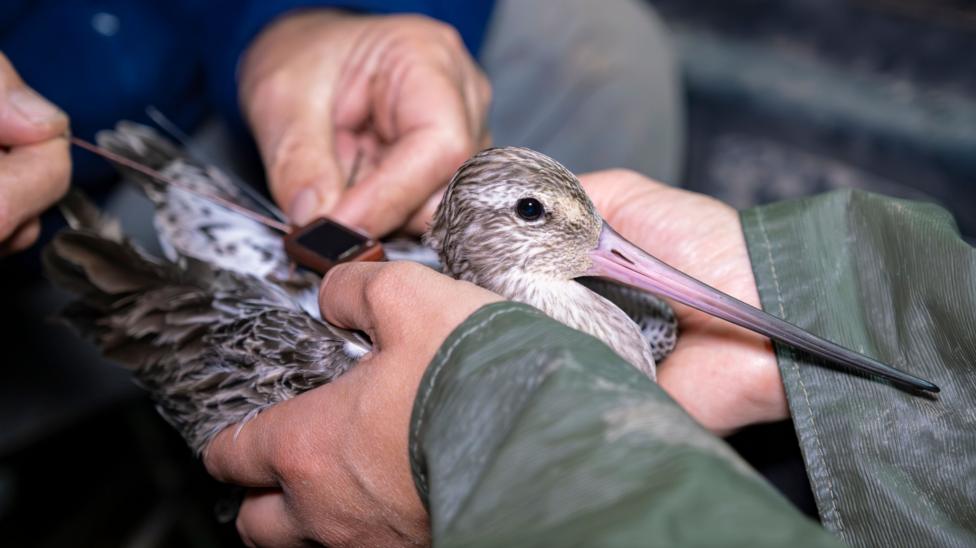
A bar-tailed godwit named Phil has completed a remarkable 6,800-mile (10,900km) round-trip journey from the east coast of England to Siberia and back. The bird’s movements were recorded by a small solar-powered tracker, providing researchers with rare insights into the specific migration routes taken by the species.
Tracking a Long-Distance Traveler
Bar-tailed godwits are known for their endurance, yet the precise paths individual birds follow between Britain and the Arctic have remained largely a mystery. Data from Phil’s tracker revealed that he departed from The Wash in England, traveling along the coastlines of the Netherlands, Germany, and Denmark before reaching his destination in Siberia.
On his return flight, Phil crossed the Arctic Ocean to reach northern Norway. He made stops on three separate islands before continuing his journey back through the Wadden Sea and finally returning to The Wash. While some subspecies of bar-tailed godwits are known for record-breaking non-stop flights—such as one that traveled 8,425 miles from Alaska to New Zealand—Phil’s journey included several stops to rest and refuel.
The Importance of Wetland Conservation
Conservationists emphasize that Phil’s journey underscores the vital role of global wetlands, which serve as essential stopovers for millions of migratory birds. Dr. Nigel Clark of The Wash Wader Research Group noted that The Wash is the most significant coastal wetland in the UK for migratory waders, hosting large populations during the autumn and winter months.
“Tracking birds like Phil the Godwit shows us how connected the Wash is with the rest of the flyway,” Dr. Clark stated. Jeff Kew, a coastal advisor for the RSPB, added that because many migratory species cross international borders, they rely on an interconnected network of habitats. “That’s why it’s so important to look after these special places,” Kew explained.
Phil is now expected to spend the winter at the Snettisham Nature Reserve in Norfolk, where he will join thousands of other wading birds.