Table of Contents
Pectoral sandpipers and other shorebirds are ultra-marathoners that fly thousands of miles each year on migrations from Alaska to distant regions like Argentina and back. Researchers tracking these birds in northern Alaska report that nearly half of the 41 shorebird species breeding in the state are declining, as a warming climate disrupts their traditional migration patterns and food sources.
Tracking Extreme Migrations
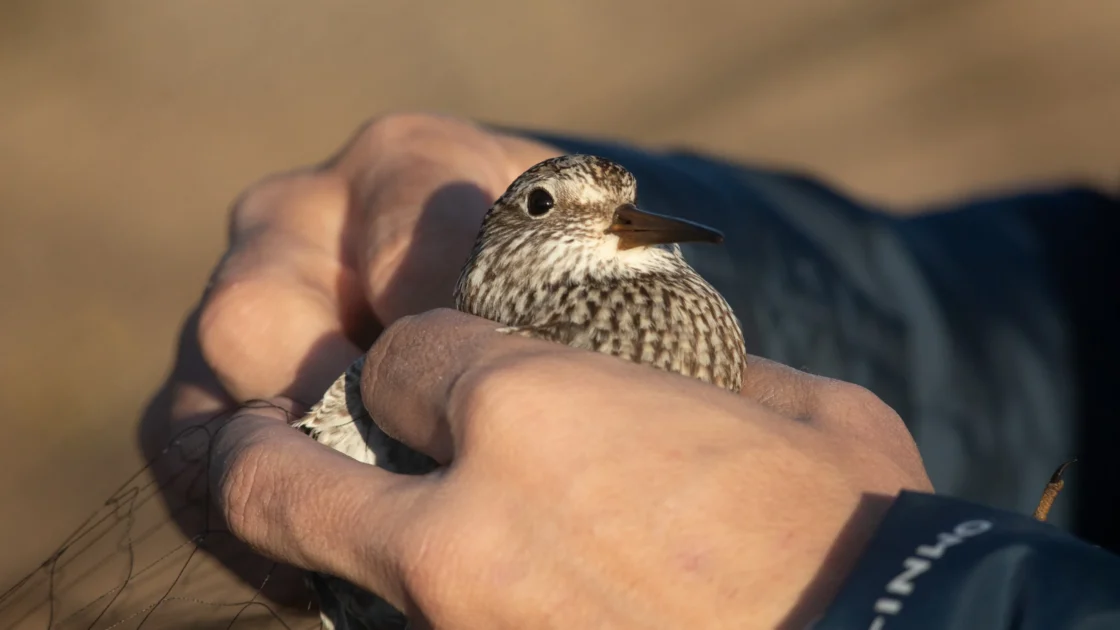
Wildlife biologist Rick Lanctot with the U.S. Fish and Wildlife Service, along with field technicians, attaches tiny GPS tracking tags to pectoral sandpipers in Utqiaġvik, the northernmost city in the United States. These tracking devices, resembling tiny backpacks or lightweight leg bands, record the birds’ locations every 15 minutes and upload data when the birds pass near cell towers. Such technology has revealed remarkable journeys, including a bar-tailed godwit that flew over 8,000 miles nonstop from Alaska to Australia.
To endure these monumental flights, shorebirds undergo dramatic physical transformations, doubling their body weight with fat reserves while shrinking nonessential internal organs like the digestive system. The roughly six weeks these birds spend in the Arctic during the summer are critical for feeding, laying eggs, and raising chicks that must quickly grow strong enough to join the return migration.
Warming Arctic Disrupts Food Sources
Local wildlife guide Robin Mongoyak notes that seasonal patterns familiar to the Inupiat people for centuries are shifting rapidly as Arctic temperatures rise four times faster than the rest of the planet. To investigate the declining bird populations, University of Texas at Austin researchers Amanda Koltz and Julia Berliner are sampling insects across the tundra, which serve as the primary diet for shorebirds.
As warming temperatures cause the permafrost to thaw earlier in the spring, flying insects like midges emerge sooner. This creates a timing mismatch where shorebirds arrive out of sync with their peak food supply. Research indicates that when chicks hatch late due to these shifts, fewer of them survive.
Challenges Across Migration Routes
In addition to changing food availability in the Arctic, migrating shorebirds face habitat loss along their long-distance routes due to development and intensifying drought. While some conservation programs pay farmers in places like California to keep agricultural fields flooded for resting birds, scientists warn that human alterations have made landscapes dangerously unpredictable.
Nathan Senner of the University of Massachusetts Amherst emphasizes that shorebirds act as vital sentinels for planetary changes. With extinction becoming a possibility for species that fail to keep pace with rapid environmental alterations, researchers are racing to determine how well these birds can adapt and how environments can be managed to support them.