Slowing down the work of the Intergovernmental Panel on Climate Change (IPCC) puts global cooperation on tackling the climate crisis at risk, according to climate scientist Johan Rockström. Rockström, the director of the Potsdam Institute for Climate Impact Research, stated that objective, evidence-based science is foundational to the Paris agreement and worldwide progress.
Disputes Over IPCC Role and Representation
Some countries are currently holding up work on the IPCC’s three-part seventh assessment report (AR7) in a dispute over the body’s role and the representation of developing countries. Certain groups argue that racist assumptions underpin some of the body’s recommendations and that its greenhouse gas mitigation scenarios are biased against the global south, as cutting emissions is often deemed cheapest in those regions. Lidy Nacpil, coordinator of the Asian Peoples’ Movement on Debt and Development, told The Guardian that powerful nations use their economic, political, and racial power to shape these outcomes.
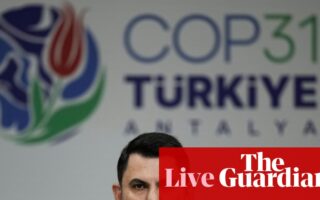
Rockström rejected these claims in an interview with The Guardian at Cop31, maintaining that the pathways represent objective socioeconomic realities without a north or south bias. He stated that science should not be used as an arena to fight for justice, human rights, or democracy. Raju Pandit Chhetri, a negotiator from Nepal, supported this view, calling the accusations of racism a political line and noting that some nations want to weaken the science to avoid pressure to cut emissions.
Other developing countries, including small island states and least developed nations, have urged that the report be completed without delay. The IPCC noted that 51% of the 664 appointed authors for its working group drafts come from developing countries and economies in transition, representing a significant increase from the 2021 report. An IPCC spokesperson stated that the body is fully committed to promoting diversity, inclusion, integrity, and equity.
Timeline and Global Stocktake Concerns
The upcoming AR7 assessment is scheduled for completion in 2028 to inform Cop33, where the second global stocktake under the Paris agreement will take place. This mechanism evaluates progress toward limiting global temperature rises to 1.5C above pre-industrial levels. However, countries including Russia, India, and the Arab group, including Saudi Arabia, want to delay the report’s publication until 2029, after the global stocktake finishes.
Rockström noted that even if AR7 experiences delays, existing evidence from the previous AR6 report is sufficient to show that current greenhouse gas emission pledges are inadequate. The UN currently projects a 2.8C temperature rise, which previous reports indicate would cause severe and irreversible consequences like melting ice caps and extreme weather. Experts fear that delaying the scientific assessments could be used to derail or modify the global stocktake process.
The ongoing dispute has reached a critical stage as the body prepares to decide its budget, which is necessary for the reports to be produced on time. While these issues must be resolved within the IPCC itself rather than at the Cop conference, government representatives meeting in Turkey are pursuing compromises, and IPCC chair Jim Skea extended his stay at Cop31 for further discussions.