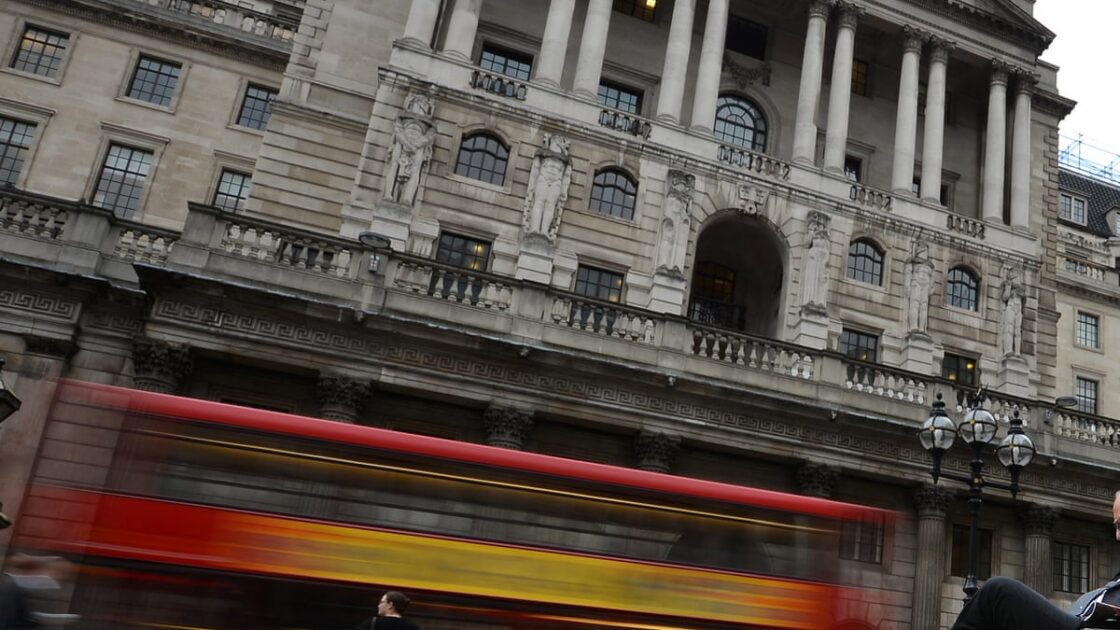
A growing momentum suggests the Bank of England will raise interest rates once more, with forecasts from the central bank pointing to inflation reaching 5% next spring. Analysts predict policymakers will announce another increase in borrowing costs during their meeting on Dec. 17.
Pressure on Borrowers and Businesses
The UK economy lacks flexibility and productive spare capacity, meaning even the recent unexpected growth must be tempered with higher interest rates to prevent inflation from surging. Huw Pill, the Bank’s chief economist, stated to the Financial Times on Saturday that more than one rate rise is almost certain.
If interest rates increase from 4% to 4.25%, mortgage deals and business loans will become more expensive. The central bank anticipates that businesses will pass these higher operational costs onto customers through price hikes, an approach that assumes consumers have money available despite evidence showing only top-income households have spent more this year by running down their savings.
Consumers remain battle-hardened from post-pandemic price increases and shrinkflation, having learned to spot retailers masking their own price hikes behind surging inflation narratives. While the Bank reports that business surveys have failed to detect intentional corporate price increases, a majority of policymakers remain convinced that underlying pressure is building and inflation will more than double its 2% target within months.
The Role of Government Spending
If cash-strapped consumers pull back on spending, the state emerges as a weak link that could aid corporations in pushing up prices. Government expenditure on goods and services accounts for 25% of overall consumption in the economy, involving major purchasers such as the NHS, local government, and agencies like Homes England and National Highways.
Suppliers are expected to charge more for everything from medical supplies and concrete to food and furniture, justifying the increases through various excuses. Corporates may blame climate change and Middle Eastern conflicts for transport and agricultural difficulties, or point to new worker protection rules and higher wages driven by skilled staff shortages.
Questions remain over whether the public sector possesses the resolve to keep costs in check after 15 years of austerity and job cuts. Spiralling budgets have affected major infrastructure projects, including the high-speed rail line between London and Birmingham, while costs for the Lower Thames Crossing linking Essex and Kent have more than doubled to £11bn. Meanwhile, government spending on consultants rose from £2.9bn in 2022-23 to £3.7bn in 2024-25.
Public sector organizations hold significant market clout and should use it to resist price increases, which would create knock-on effects for inflation deals across the business community. Policymakers at Threadneedle Street currently expect consumers, government, and businesses to yield to sellers’ demands, ultimately leading the UK’s 33 million workers to demand substantial pay rises in response.
However, if all three consumer groups adopt a firm stance against rising costs, inflation could remain below the Bank of England’s forecasts. Over-raising interest rates risks damaging whatever growth currently exists in the economy.