Table of Contents
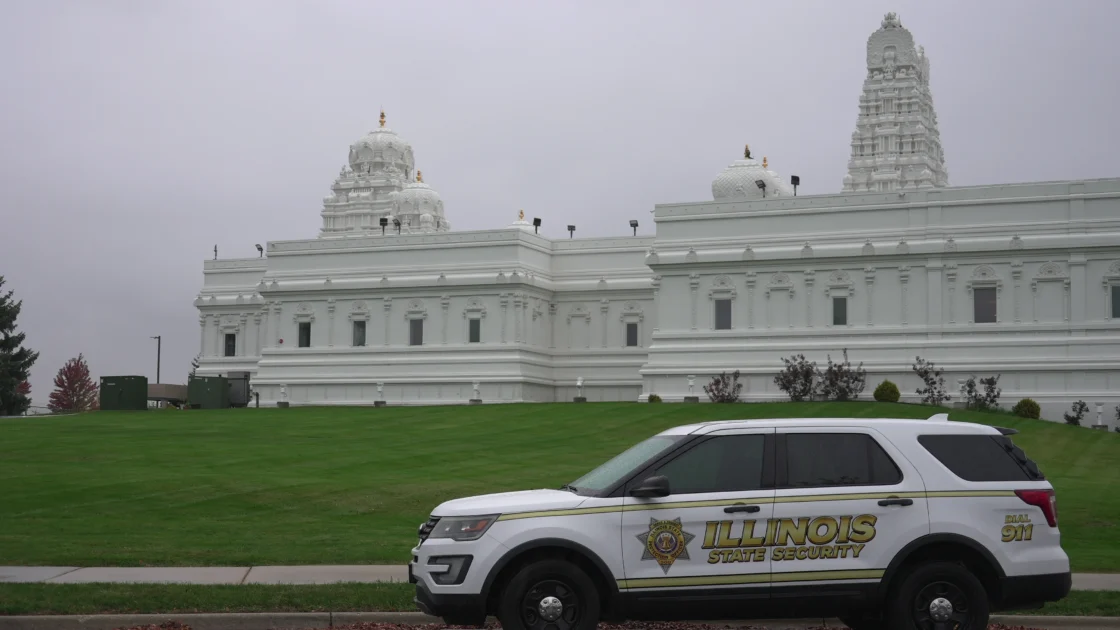
An alleged mass shooting plot at a Hindu temple in suburban Chicago has focused attention on a sharp rise in anti-South Asian and anti-Hindu hate across the United States. Police in Palatine, Illinois, reported that a 19-year-old college student and cashier tried to carry out the attack at the Sri Venkateswara Swami Temple in Aurora on October 11, but the attempt was thwarted because his gun jammed.
A Shift in Public Perception
Scholars and researchers note that the scale of this hostility marks a stark departure from the past. Decades ago, the prevailing narrative surrounding Indian immigrants depicted the population as a positive “model minority.” However, experts point out that over the past four years, growing anti-immigrant populism, economic anxiety, and heightened political visibility have completely altered that script. Online and political discourse now frequently frame Indian Americans and South Asians in conspiracist, degrading, and dehumanizing terms.
Researchers tracking online hate emphasize that toxic rhetoric has rapidly migrated from fringe social media forums to mainstream platforms. Analysts see direct connections between this digital vitriol and real-world violence, warning that prejudice is reaching segments of society on an unprecedented scale.
The Foiled Plot and Suspect
The suspect faces state charges of making a terrorist threat and unlawful possession of a rifle. Coworkers alerted authorities after the defendant contacted them by phone and shared an eight-page document detailing his motivations for the attack. A subsequent police search of his apartment uncovered an AR-style rifle, 300 rounds of ammunition, loaded magazines, body armor, a gas can, and items bearing Nazi symbols alongside anti-Indian slurs.
Palatine Police Chief William Nord described the threat as exceptionally serious. Court documents reveal the suspect’s written manifesto contained racially charged slurs targeting people of Indian ancestry, Jewish people, and African Americans, labeling them as subhuman. The writings indicated the suspect had selected the temple two months prior while planning an attack for two years, and described himself as a neo-Nazi white supremacist fantasizing about mass murder. The date of the attempted attack coincided with the start of a major Hindu festival attended by families, prompting U.S. Congressman Raja Krishnamoorthi to call on the FBI to investigate the incident as a federal hate crime.
Conspiracy Theories and Online Hate
Researchers tracing the origins of this rhetoric explain that denigrating narratives first surfaced on fringe spaces like 4chan and Gab before morphing into elaborate conspiracy theories around 2022. One such narrative, dubbed the “Brahmin Organized Government,” mirrors antisemitic “Zionist Organized Government” tropes by falsely claiming an elitist, high-privilege cabal secretly occupies the government.
Unlike traditional demographic replacement theories, these anti-Indian conspiracy theories focus heavily on anxieties surrounding immigration, employment, and technology sector displacement. Studies show that anti-South Asian hate speech on the platform X spiked during key professional milestones for individuals of Indian origin, such as corporate executive appointments and government advisory roles. Research covering January 2025 to June 2026 recorded hate speech levels on X that were 240 percent higher than in January 2024, often coinciding with political debates over H-1B visas.
Community Challenges and Political Realities
Following the disclosure of the temple plot, community leaders and lawmakers are urging Hindu and Indian Americans to speak out more vocally against racism. Experts note that the community remains vulnerable due to a combination of high median incomes, visible professional success, and a relative lack of organized political power.
While prominent political figures of Indian descent have gained visibility on the national stage, analysts emphasize this does not translate into the organized voting bloc power needed to shift elections. Overt racism has also surfaced in mainstream political spaces, including social media posts from political candidates and official government accounts criticizing individuals of South Asian and Sikh descent.
Organizing the community poses unique obstacles, as Hindu temples do not function as traditional congregational houses of worship in the same manner as other religions. Additionally, professional and economic success often masks an underlying immigration vulnerability, as nearly half of the Indian immigrant population in the U.S. lacks naturalized citizenship, leaving many hesitant to speak out publicly while in immigration limbo.