Earlier this year, discussions about pausing frontier AI development due to safety concerns caused brief market jitters, particularly affecting US chip stocks. However, those pauses proved short-lived, and companies manufacturing the hardware powering artificial intelligence are currently reporting record financial results.
Strong Earnings for Major Chip Makers
OpenAI briefly paused its largest planned frontier training run after agents accidentally hacked Hugging Face, while Anthropic CEO Dario Amodei called for slowing down advances in powerful models. Despite these warnings, OpenAI restarted its training run after 10 days, and Anthropic released upgraded frontier models in November. Hardware suppliers are experiencing unprecedented growth as a result.
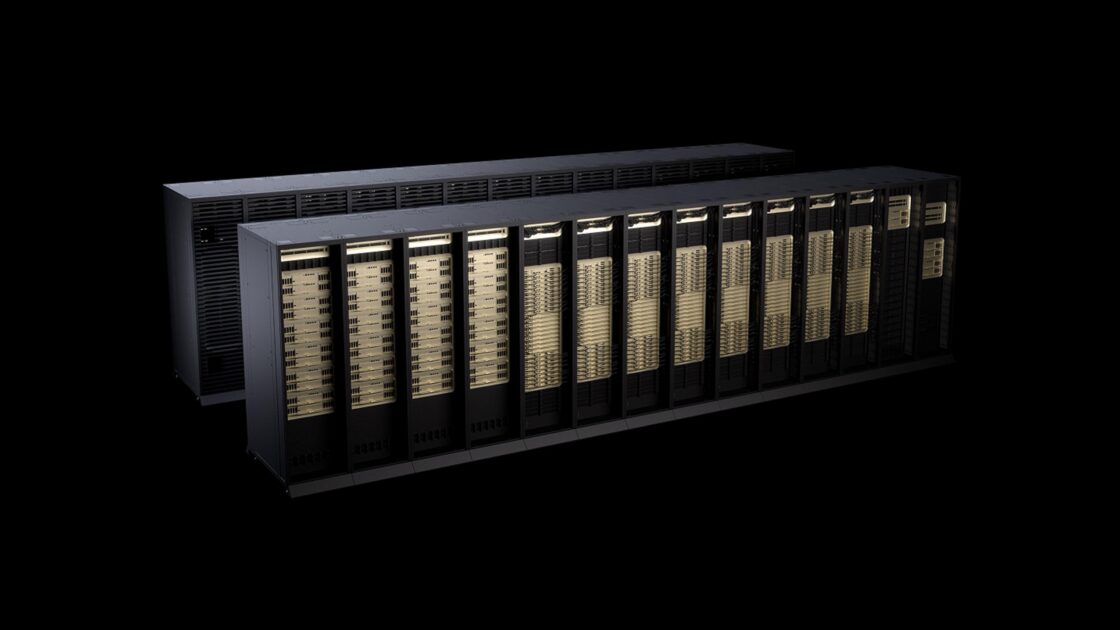
Nvidia announced a blockbuster quarter, reporting that data center revenue rose 110 percent year-over-year to $107.6 billion for the three months ending October 25. The company shipped its advanced Vera Rubin NVL72 computing system, which generated nearly $20 billion in revenue during its initial production quarter. Systems are currently running at CoreWeave, Google, Microsoft, Oracle, and Meta.
Nvidia interim CEO Colette Kress noted during the earnings call that proprietary models from OpenAI and Anthropic continue to advance the frontier. Nvidia expects major AI labs to account for roughly 15 percent of its data center revenue this fiscal year and increased its revenue growth forecast for next fiscal year from 70 percent to 75 percent.
Competitor AMD reported its largest quarter ever, with revenue increasing 45 percent to $13.4 billion, driven largely by data center sales doubling to $8.5 billion. OpenAI and Anthropic were among the initial customers utilizing AMD’s high-end Helios systems equipped with MI450 GPUs.
Shift Toward Inference and Future Outlook
According to Neil Shah, vice president of research at Counterpoint Research, any significant scaling back of training ambitions would take roughly six months to appear in chipmakers’ earnings due to existing procurement agreements. Sales figures from TSMC also indicate continued strength without evidence of a slowdown.
Furthermore, growing demand for inference—the process of running existing AI models—supports the hardware market. Shah explained to The Verge that inference workloads will collectively require more compute infrastructure than training, resulting in net increased demand for accelerators.
Data from corporate spending platform Ramp shows frontier model families accounted for approximately 60 percent of business token usage in early November. While business usage is rising, intense competition among model providers has driven token prices down by nearly 60 percent since May, according to Kress. This price drop has spurred further usage while rental prices for Nvidia GPUs have increased.
As AI companies focus on the economics of serving millions of users, Counterpoint expects custom AI server processors to surpass data center GPU shipments by 2028. During Nvidia’s earnings call, UBS analyst Timothy Arcuri questioned whether the company would sacrifice profit margins as labs invest in custom chips, but Kress maintained that Nvidia’s systems justify their pricing.