Table of Contents
While legacy automakers scale back their electric vehicle plans, electric truck manufacturer Harbinger secured $240 million in a Series D funding round earlier this month. The milestone caps off a successful period that includes a $300 million order from FedEx and a new defense contract with the US military.
Focusing on Overlooked Commercial Segments
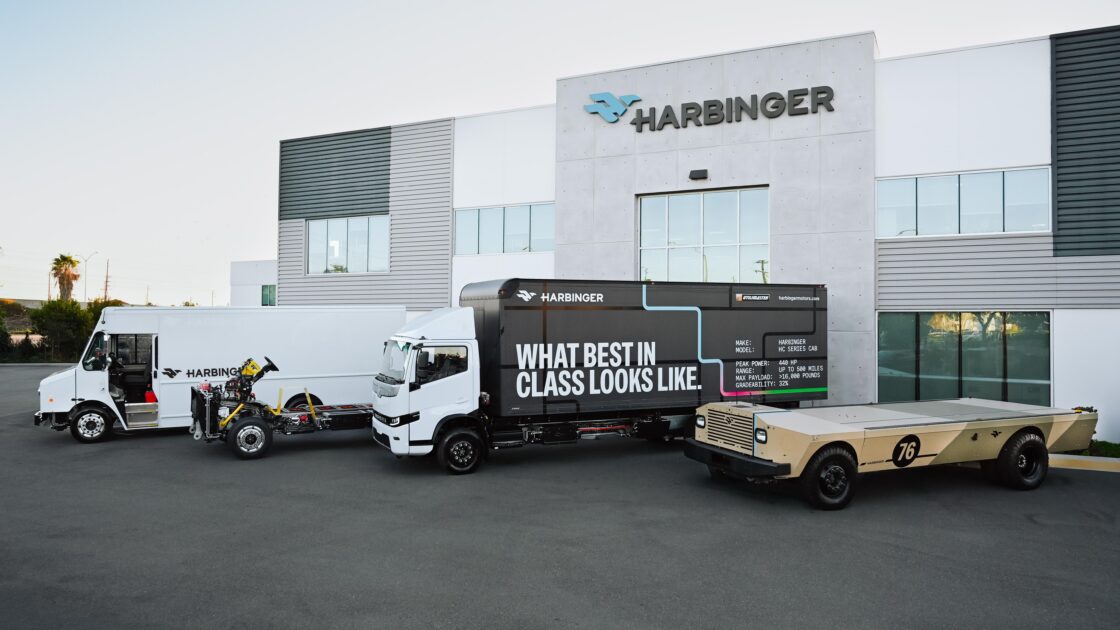
Harbinger is bypassing the consumer EV hype cycle to concentrate on the heavy-duty vehicles that sustain the economy, specifically Class 4 through 6 delivery vans and box trucks. CEO John Harris told The Verge that the company’s strategy is to target overlooked commercial sectors where legacy trucks are weak and major automakers do not compete.
Founded in 2021 by veterans of Canoo, QuantumScape, and Faraday Future, Harbinger addresses a gap in the automotive market where passenger EV platforms lack durability, while heavy-duty platforms are too expensive and heavy to scale down. Harris noted that everything between Class 1 and Class 8 companies is a wasteland that is too small for big companies to serve.
Major automakers like Ford and GM previously attempted to electrify the medium-duty sector with the E-Transit and BrightDrop delivery vans, but poor sales and the removal of federal incentives led them to cancel those models. Harris explained that large automakers struggle due to an over-reliance on third-party suppliers, making the manufacturing process too spread out and costly.
Vertical Integration and Pragmatic Approach
To avoid these pitfalls, Harbinger utilizes a vertically integrated model, assembling its own battery packs and drive units internally, with inverters planned next. Harris stated that electric vehicles are only viable when their acquisition prices compete directly with combustion vehicles.
The cofounders previously experienced failures in past ventures, such as CTO Phillip Weicker cofounding Canoo, which filed for bankruptcy in 2025 after running out of cash, and Harris working at Faraday Future, Xos Trucks, and Anduril. Harris emphasized that those companies failed because of leadership and market fit issues rather than engineering or electrification readiness.
Harbinger offers both battery-electric and plug-in hybrid powertrains for its medium-duty trucks, while avoiding heavy-duty Class 8 trucks like the Tesla Semi due to unworkable long-haul economics. Harris rejected the notion that Class 8 electrification fits the majority of the market.
Expanding Beyond Delivery Trucks
As companies like Amazon and FedEx seek more electric delivery vehicles, Harbinger is positioned as a key supplier. Rising diesel prices stemming from the conflict with Iran are also prompting more businesses to adopt EVs to reduce costs.
Beyond delivery trucks, Harbinger supplies battery power systems to Airstream and collaborates with American Rheinmetall and Forterra on autonomous hybrid supply vehicles for the US Army. The company also acquired Phantom AI to integrate advanced driver-assistance features into commercial fleets.
With substantial capital and major contracts secured, Harbinger has surpassed the initial hurdles that affected its founders’ previous companies. The next challenge is demonstrating its ability to manufacture these vehicles at scale.