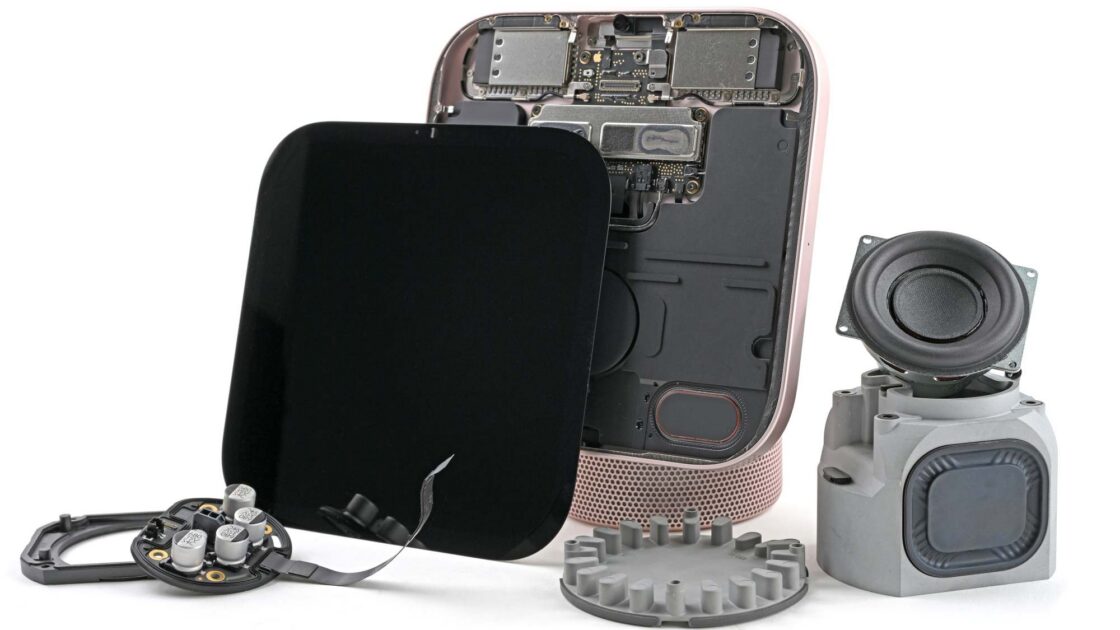
Apple has been moving toward more DIY-friendly devices in recent years, but its new HomeView smart display sharply reverses that trend. According to a full analysis by iFixit, the device broke apart during attempts to access its internal components.
The Disassembly Challenges
Making repairs more accessible helps sustain a secondary market for independent repair services that tech companies often try to control, a factor that has driven regulations like the European Union’s 2027 requirement for replaceable iPhone batteries. However, the HomeView moves in the opposite direction by using the toughest adhesive iFixit has ever encountered in an Apple product. The glue proved so stubborn that the team accidentally snapped a speaker in half while trying to take it apart, and the logic board was bound too tightly to the aluminum chassis to be removed.
According to the iFixit report, users do not anticipate accidents when buying a product, and wear and tear is difficult to predict. The report noted that the HomeView will not be an easy or pleasant repair when the time comes. Furthermore, iFixit pointed out that out-of-warranty repairs for the device typically cost as much as the $299 smart display itself. An Apple representative did not immediately respond to a request for comment regarding the findings.
Why Repairability Matters Less for Smart Displays
Smart displays do not share the same repair needs as portable electronics like phones and laptops. They lack batteries, which are a primary reason users open up iPhones or MacBooks. In addition, while broken phone screens can easily be swapped out with third-party options, there are no aftermarket alternatives for the HomeView’s custom 7-inch display. Because replacement screens must come through Apple anyway, a device that is easier to open would not actually help users fix it themselves.
Unlike phones and laptops that face constant movement, pocket dust, drops, heat, and rain, the HomeView is built to remain stationary inside a home, greatly reducing the need for DIY repairs. Still, the iFixit teardown provided valuable insights, revealing how the speakers and their connectors broke in multiple ways during removal attempts. The report highlighted that embedded speakers are a common source of failure, and the under-screen speakers inside the HomeView resemble laptop speakers more than HomePod tweeters, which can suffer from damage due to accidents and wear.
Despite these findings, potential buyers may not need to let repair fears deter them, as long-term testing of smart displays and speakers rarely shows issues with blown or faulty speakers. A more pressing concern for buyers is the compact 7-inch screen itself, which feels cramped for video viewing compared to larger displays available on competing devices.