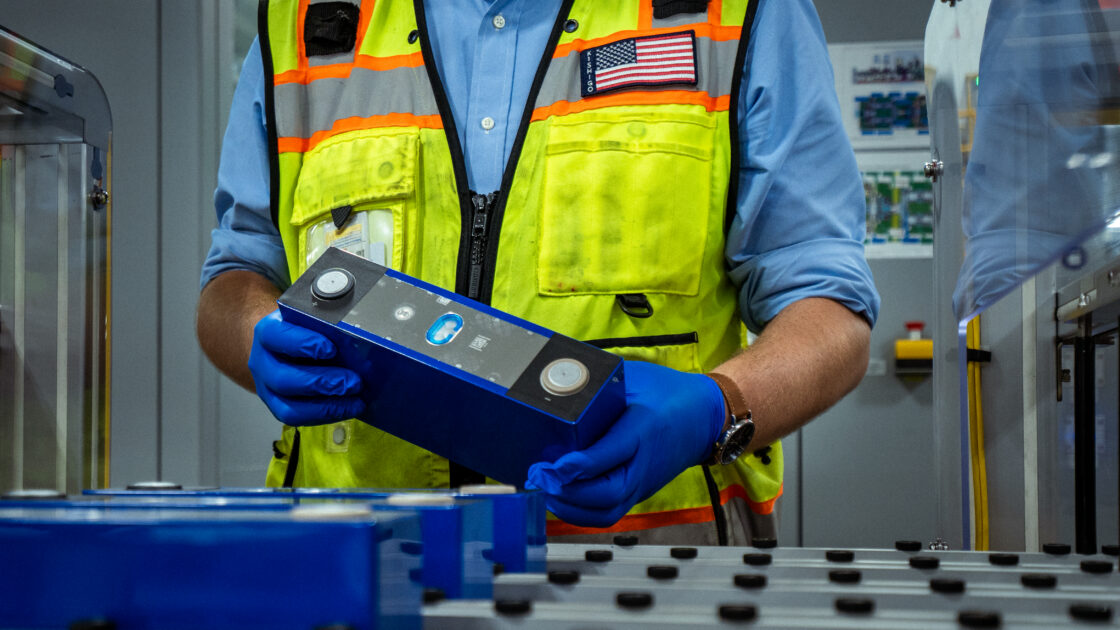
Ford is shifting its approach to electric vehicle battery safety by designing its upcoming Fathom EV battery pack to bend during a crash. During a visit to the automaker’s newly operational Blue Oval Battery Park outside Marshall, Michigan, as reported by CNET, engineers demonstrated that the battery shell and prismatic cells can flex violently under impact forces without catching fire or exploding.
The ‘Not a Jewel’ Philosophy
Conventional wisdom often treats EV batteries as fragile, explosive components requiring heavy bracing and protective structures. However, Vladimir Bogachuk, chief engineer for advanced vehicle structure architecture at Ford, told CNET that the design team’s mantra was to avoid assuming a cell must never deform. “Traditionally the battery is thought of as payload, a fragile jewel you must protect,” Bogachuk stated to CNET, adding that “the battery is not a jewel you must protect.”
For the upcoming Fathom and Ford’s Universal EV platform, known as UEV, the battery pack is built to carry up to 40 percent of side-impact forces and acts as part of the vehicle’s crash structure. Bogachuk told CNET that the best part is no part, and any necessary part must serve multiple functions, allowing the engineers to remove unnecessary armor so the battery functions as both an energy reservoir and a crash structure.
Without extra protection, the resulting EV becomes lighter and more efficient, featuring improved driving dynamics. The UEV pack integrates deeply into the vehicle structure, with its top lid serving as the cabin floor where seats bolt directly, while the bottom of the pack forms the vehicle underbody. Additionally, a service door beneath the rear seats of the Fathom provides access to charging and power electronics without needing to drop the pack.
Cells, Chemistry, and Abuse Testing
Ford engineers selected lithium iron phosphate (LFP) chemistry, prismatic cells, and jelly roll construction for the UEV platform due to low manufacturing costs, resistance to extreme temperatures, suitability for bidirectional energy use, and the ability to deform while remaining inert under designed loads. While other automakers explore solid-state batteries, the technology is not yet ready at the scale and price required for the Fathom. Though Ford did not disclose exact capacity numbers, a cutaway display suggested the pack contains between 90 and 108 individual prismatic cells enclosed in aluminum prismatic cans that provide structural support and aid thermal dissipation.
Wes Thibault, chief engineer for global energy storage systems, told CNET that Ford utilizes a dedicated abuse-testing team integrated with battery design and engineering at every manufacturing stage. This team pushes cells and full production-spec packs to their limits, testing them against over 150,000 miles of simulated daily driving, CT scans of the jelly rolls, structural integrity checks, heat soak from minus 40 to 60 degrees Celsius, IP67 water resistance, and multiaxis vibration testing.
Ford plans to capture real-world data from the first fleet of UEV vehicles once they hit the road to further refine its validation methods for future generations of electric vehicles. The Fathom and its UEV battery pack are scheduled to reach driveways and dealerships in late 2027.