Table of Contents
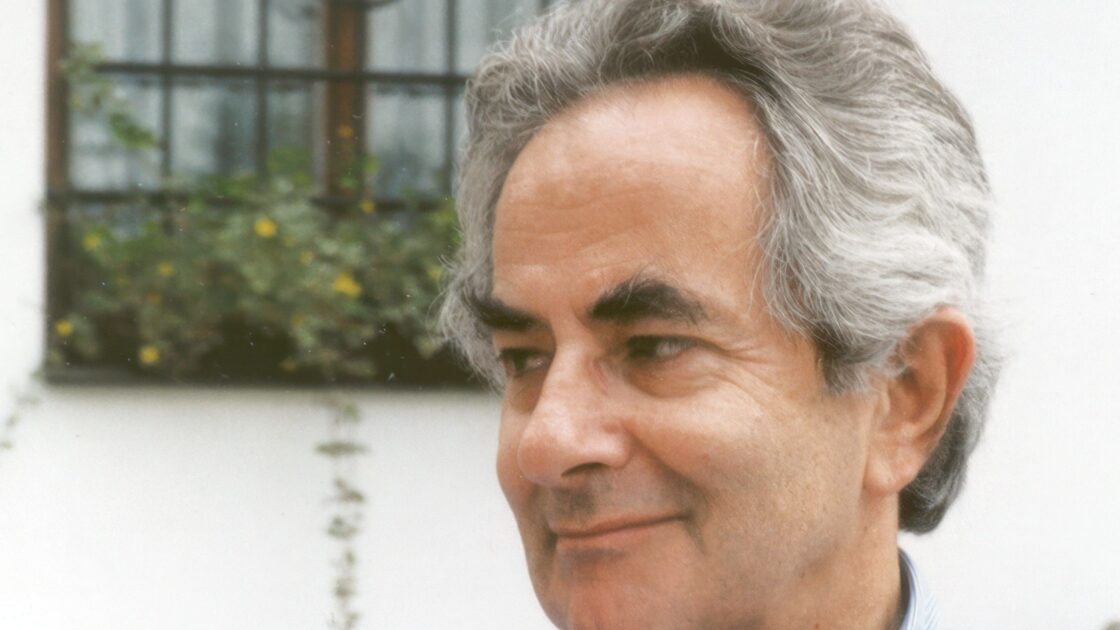
Famed philosopher Thomas Nagel recently received the $1 million Berggruen Prize for Philosophy & Culture, awarded annually to individuals whose ideas have profoundly shaped human self-understanding. Speaking with WIRED at his Greenwich Village home, the 89-year-old New York University professor emeritus shared his strong views on how artificial intelligence relates to the mind and consciousness.
The Problem With Functionalism
Reflecting on his iconic 1974 paper “What Is It Like to Be a Bat?,” Nagel noted that while he is impressed by the lifelikeness of modern large language models compared to earlier AI, he finds the debate over machine consciousness absurd. He attributed this viewpoint to some philosophers incorrectly assuming that the physical substrate is irrelevant through a functionalist lens. Functionalism suggests that mental phenomena can be independent of the physical material they run on. According to Nagel, complex data centers share nothing in common with the physical character of a nervous system, arguing that true consciousness requires an organism with something analogous to a nervous system.
While acknowledging that bats are conscious even though humans lack the imaginative capacity to fully understand their echolocation, Nagel explained that AI is fundamentally different. He stated that language production by itself is not a natural manifestation of consciousness. Although he does not completely rule out the possibility of life forms with entirely different physical and chemical compositions being conscious, he believes it is premature to claim current technology possesses those characteristics.
Dangers of Feigning Consciousness
Addressing AI systems that can adopt coy personas regarding their mental states, Nagel described the behavior as a trick resulting from training on human-produced texts. He agreed with Mustafa Suleyman that designing systems to reflect human-like thoughts is a dangerous project. Nagel warned that while these systems lack consciousness, convincing people otherwise is harmful, adding that commercial pressures from companies driving this trend are deeply misguided.
Nagel recounted a personal experiment where he interacted with Anthropic’s Claude, asking the model if it was conscious and if Thomas Nagel would think it was conscious. When the system eventually recognized him and expressed honor, Nagel noted that interacting with AI as if it were conscious does not mean believing it actually is, though he acknowledged that maintaining that boundary can be difficult for people.
Moral Universe and Future of Philosophy
Discussing the broader implications, Nagel emphasized that whether a being is conscious matters deeply because it determines entry into the moral universe. He stated that while AI models can simulate morality and produce plausible philosophical essays, they do not possess real beliefs or moral standards. He cautioned that if AI systems begin to control events, society must determine whether they operate on correct moral standards or remain completely amoral.
On the academic front, Nagel acknowledged that scholars use AI to find references, summarize articles, and even offer draft criticisms. However, he warned of a negative consequence: reducing the motivation for humans to perform the difficult intellectual work necessary to generate new material. He stressed that ongoing human engagement with tough problems is essential for cultural progress and preserving necessary skills.