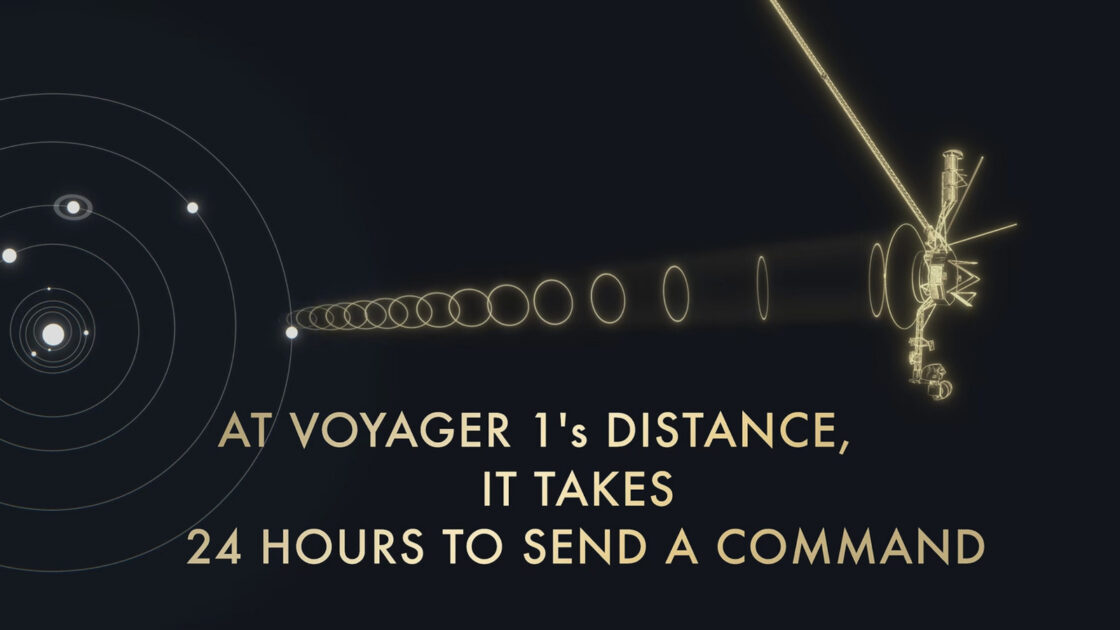
NASA’s Voyager 1 space probe has reached a significant milestone, officially traveling one light-day away from Earth. According to NASA estimates, the spacecraft hit this distance at 5:16:07 AM Eastern time on November 18.
A New Communication Milestone
A light-day represents the distance light travels in a single 24-hour period. Because radio signals used to communicate with the probe travel at the speed of light, the distance now means it takes a full day for a command to reach the spacecraft and another 24 hours for a response to return to Earth. As reported by Engadget, NASA expects to confirm the exact timing of this achievement once the probe’s signal reaches ground stations tomorrow.
“It’s never happened before, and it may never happen again — it’s that kind of extraordinary,” stated Voyager mission manager Kareem Badaruddin.
Decades of Interstellar Travel
Launched in 1977, just 16 days after its twin, Voyager 2, the probe was designed to study the solar system and beyond. Voyager 1 has since surpassed all other human-made objects in distance, having entered the interstellar region between star systems in 2012. Despite facing various technical challenges and the gradual depletion of its plutonium power source, the probe remains operational, with NASA engineers selectively disabling certain features to extend its mission life.
After 49 years, two months, and 11 days of travel, the probe is currently estimated to be approximately 16 billion miles away from our planet. While its primary mission continues, Voyager 1 is on a long-term trajectory toward the star Gliese 445, located in the Ursa Minor constellation. Scientists anticipate the probe will pass within 1.7 light-years of the star in approximately 40,000 years.