Table of Contents
Following weeks of relative stability, new fighting along the contested Ethiopia-Eritrea border has triggered concerns over a potential full-scale war. At the same time, diplomatic ties between Ethiopia and Sudan have reached a new low point.
Tensions Rise at the Historic Badme Border
Fighters allied with the Tigray People’s Liberation Front (TPLF) initiated an offensive on September 23 to overthrow the Ethiopian government as part of a larger rebel coalition. However, the Ethiopian National Defense Forces (ENDF), supported by pro-government militias, have steadily pushed the TPLF out of the northern Tigray region.
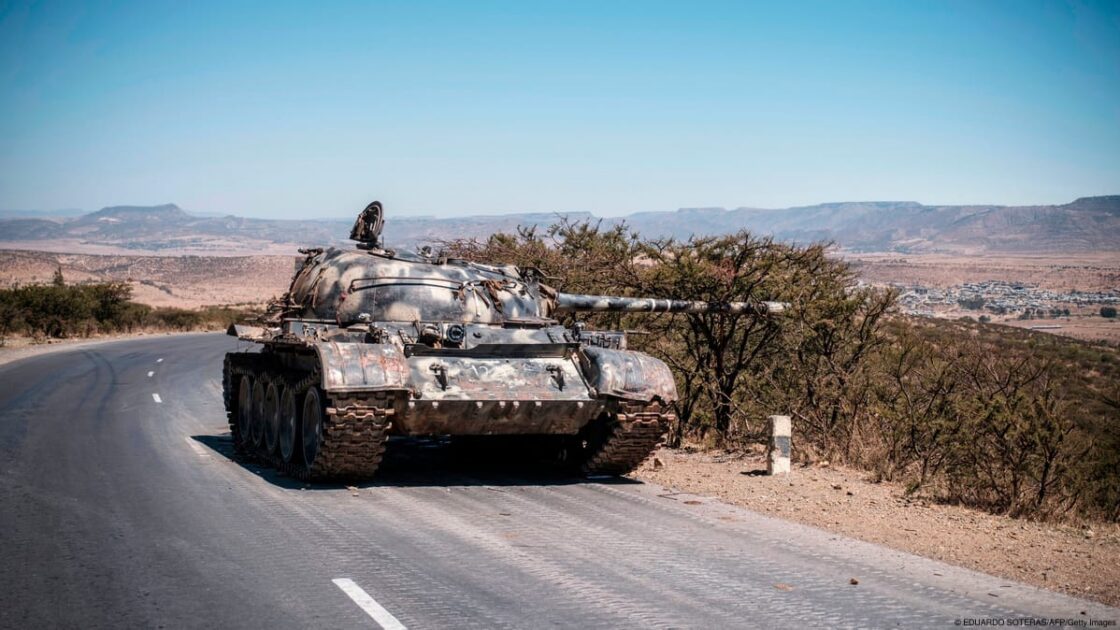
According to conflict monitoring organization ACLED, the ENDF drove the Tigrayan Defense Forces toward the Eritrean border, resulting in skirmishes in several areas. The ENDF also fired heavy artillery toward dwellings near Badme, an Eritrean border town that served as the epicenter of the 1998–2000 Eritrean-Ethiopian War.
Abdurahman Sayed, director of the London-based Horn of Africa Center for Regional Integration, told Deutsche Welle: “It seems now if the Eritreans withdrew and the Ethiopians came back, it could be to calm down the Tigrayans, especially those who are now supporting the party in power in Ethiopia.” Sayed suggested that territorial gains in Tigray could help win local support for the federal government.
The Threat of Direct Conflict With Eritrea
Eritrean and Ethiopian troops previously allied against Tigrayan forces during the 2000–22 Tigray conflict, but Eritrea’s loyalties have since shifted toward the TPLF. The two neighboring countries cut diplomatic ties in October, and Eritrean troops reportedly crossed into Tigray at one point.
Magnus Taylor, a regional analyst with the International Crisis Group, told Deutsche Welle that Addis Ababa’s immediate objective likely involves securing its northern border and cutting supply lines between Eritrea and Tigrayan forces. “So what we might actually be seeing is a kind of a function of the attempts by the Ethiopian military to consolidate its control of Tigray, which includes pushing Tigray’s borders with Eritrea,” Taylor said. Taylor added that securing Tigray could potentially lead to a direct conflict with Eritrea.
Since Eritrea gained independence in 1993, Ethiopia has been the world’s most populous landlocked nation. Prime Minister Abiy Ahmed has repeatedly framed the lack of sea access as an existential threat, stating a preference for peaceful solutions while refusing to rule out capturing Eritrea’s easternmost port, Assab, by force.
Deteriorating Relations Between Ethiopia and Sudan
Meanwhile, diplomatic relations between Ethiopia and Sudan have worsened amid long-standing tensions over the Grand Renaissance Dam on the Blue Nile. The massive dam gives Addis Ababa significant control over downstream water flows, raising water security concerns in Sudan and Egypt, though the Ethiopian government has rejected claims that the dam is used for political pressure.
Sudan has faced its own civil war since 2023 between the Sudanese Armed Forces and the Rapid Support Forces, with both factions accusing each other of interfering in internal conflicts. Regarding the risk of direct warfare between Ethiopia and Sudan, Taylor noted that a proxy-style involvement supporting opposition groups remains more likely than formal ground combat.
Sayed shared a similar view regarding current military engagement, stating: “The RSF can do the job that Ethiopia and any other country backing them wants them to do. But if there is a need and the RSF are failing, the Ethiopian army could be pushed to get involved.”