Table of Contents
Stargazers are being treated to a diagonal parade of four planets in the pre-dawn sky throughout November. Mercury, Venus, Mars, and Jupiter will all be visible to the naked eye in the south-eastern to eastern sky.
Individual Planet Viewing Guides
Mercury will be the hardest planet to spot in the parade because it is permanently locked in solar glare as the closest planet to the Sun and the smallest in the solar system. It is only visible in twilight, never in a fully dark sky, and will remain dim and close to the horizon in the south-east. Above Mercury and toward the right, observers will spot Venus, which is the brightest object in the night sky after the Moon due to its high albedo reflecting sunlight back into space. Venus is typically the closest planet to Earth in its orbit at a mere 24 million miles away at times and is a similar size. It will sit higher in the sky than Mercury and be visible earlier in the night before sunrise, and viewers should take care not to mistake it for the nearby bright star Spica since planets glow steadily while stars twinkle.
Mars and Jupiter Conjunction
Mars and Jupiter will appear very close to each other in the sky on 15 and 16 November, with Mars positioned high in the eastern sky and Jupiter below it while appearing brighter. The line-up on Monday 16 November will be particularly notable, as the two planets will appear exceptionally close together according to the Royal Museums Greenwich. They will be separated by just 1.2 degrees, or roughly the width of a finger held at arm’s length, according to Gideon Bendavid-Walker, astronomer at the Royal Observatory Greenwich. The two planets will appear close to the bright star Regulus and may even resemble a triple star. Observers using binoculars or a telescope can also spot bonus planets this month, with Uranus setting in the west at a similar time before sunrise, and Saturn and Neptune visible for a time in the evening rather than the morning sky. Additionally, from 24 November, a full Moon—marking the first of a run of four supermoons—will join the planets in the morning sky.
Viewing Forecast and Conditions
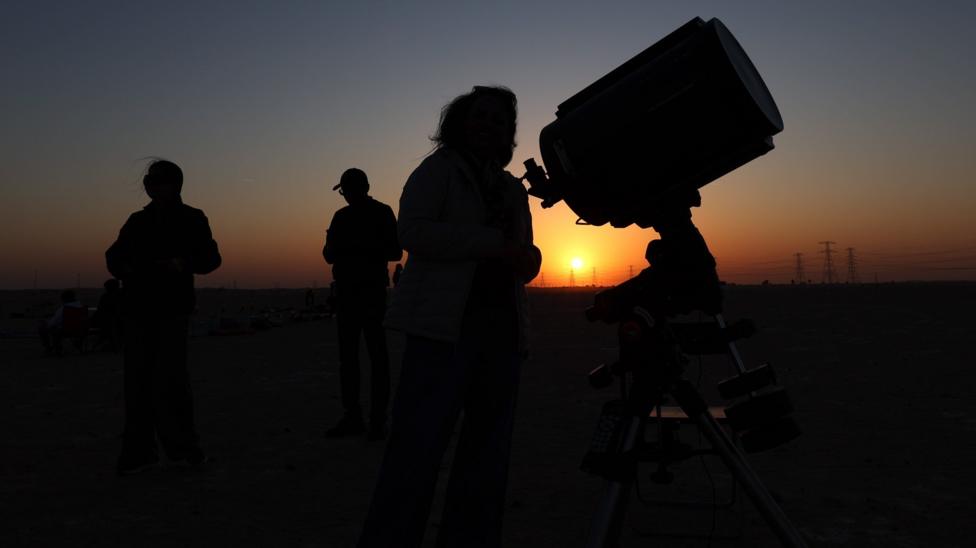
To view the parade, stargazers should find a spot away from light pollution with a good view of the eastern horizon and let their eyes adjust to the dark for approximately twenty minutes. The best time to view the planetary lineup is roughly 45 to 60 minutes before sunrise. Saturday night will turn progressively more cloudy and windy with outbreaks of rain moving eastwards, and an early frost remains likely under clearer skies in the south and east despite increasing breezes and cloud cover. Sunday night is forecast to be drier as the day’s rain and hill snow clear, though wintry showers will affect northern Scotland alongside plenty of cloud, and odd showers will pop up around north-west facing coasts while the rest of the night remains mostly clear and dry apart from occasional mist or fog patches.