Table of Contents
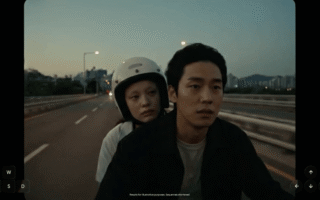
Design platform Canva has introduced its first proprietary AI image model, named Canva Craft, which is now available globally to all users and built specifically for professional designers.
Development and In-House Benefits
While Canva has previously integrated third-party AI tools and launched creative AI features like Magic Media in 2023, the new model was developed following the company’s acquisition of Leonardo.Ai and an expansion of its internal AI research. Canva’s head of AI research, Stefano Corazza, told CNET that keeping the artificial intelligence technology in-house helps the company lower cloud costs and speed up inference times.
Canva Craft utilizes a two-stage architecture that, when paired with the platform’s prompt-improvement tools, allows the model to reason before generating a design. Corazza stated that the model was trained using Canva’s library, public and licensed databases, and information from users who consented to training, resulting in more comprehensive and complex designs.
Corazza explained that the AI can formulate a complete layout plan for an image just like a human designer. By carefully positioning elements to tell a story, the model mimics the traditional design process, according to Corazza.
Benchmarking and Editing Capabilities
Early benchmarking on DesignArena places Canva Craft in fourth place overall among image models, outperforming major competitors such as Microsoft’s MAI-Image and Google’s Nano Banana while trailing OpenAI’s ChatGPT Images. The tool also scores high for generating product-focused imagery and portraits, though it ranks lower in the marketing subcategory.
The platform emphasizes the ability to edit AI outputs, addressing a common challenge where generators produce images that require minor adjustments. Building on previous features like Magic Layers—which separates AI designs into editable basic elements—Canva Craft allows users to modify its generated results.
Industry Controversy and Verification Challenges
Generative AI remains controversial among photographers, illustrators, and artists who have raised concerns regarding copyright violations in AI training data, the generation of abusive material, and the potential replacement of human creators. Creative companies, including Canva and Adobe, maintain that these technologies are simply tools offered to creators.
Reflecting ongoing debates in the industry, VSCO CEO Eric Wittman commented on a LinkedIn post by Canva CEO Melanie Perkins regarding Canva Craft, stating that real photographers will always surpass AI for portraits. Meanwhile, human creators face the growing challenge of verifying their work as human-made amid sporadic digital verification methods across design platforms.