Table of Contents
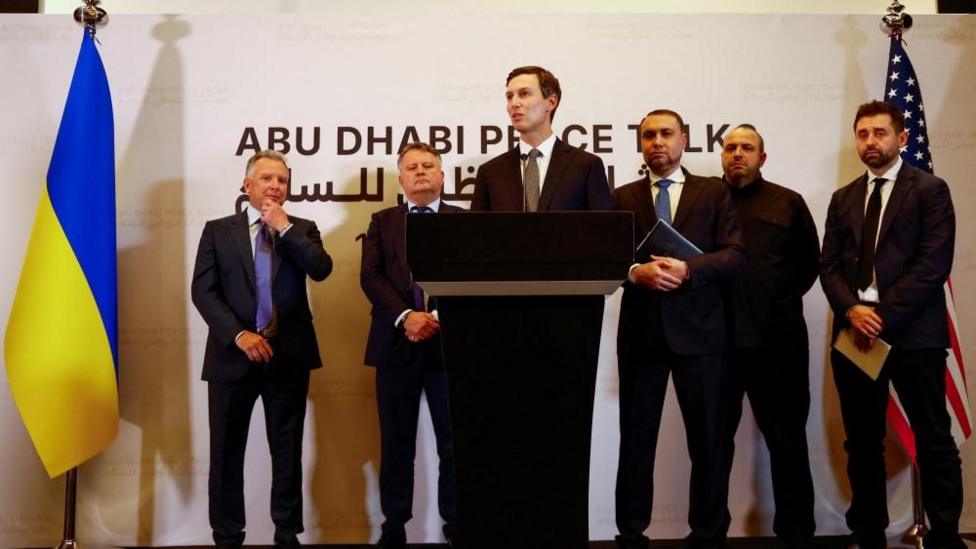
Trilateral negotiations held in Abu Dhabi between Russia, Ukraine, and the United States have concluded following two days of discussions aimed at resolving the ongoing war in Ukraine. While American representatives noted some potential openings, the talks ended without a significant breakthrough to end the conflict, which has persisted for nearly five years.
Challenges in Negotiations
Davyd Arakhamia, representing the Ukrainian delegation, described this session as one of the most challenging rounds of talks since they began in February. He noted that the Russian side appeared to be operating under rigid directives, making it difficult to achieve flexibility in the discussions. Despite these hurdles, Arakhamia reported a sense of positive momentum and called for a follow-up meeting to be arranged as soon as possible.
Both Moscow and Kyiv confirmed that preparations are underway for a large-scale exchange of prisoners of war, which is expected to take place in the near future.
Diplomatic Next Steps
Following the conclusion of the Abu Dhabi meetings, it was announced that US negotiators Steve Witkoff and Jared Kushner are scheduled to travel to Moscow on Thursday to meet with Russian President Vladimir Putin. They are subsequently expected to travel to Dublin for discussions with Ukrainian President Volodymyr Zelensky.
The current talks have focused on establishing a new security architecture for Europe. For Kyiv, this involves seeking guarantees that allies will provide support in the event of future attacks, even without formal NATO membership. Conversely, Moscow continues to emphasize its desire to limit NATO’s influence in Eastern Europe, a long-standing concern for the Kremlin.
European Involvement and Security Frameworks
Kushner stated that the US aims to develop a new security framework to ensure lasting peace, a goal echoed by Russian negotiator Vladimir Medinsky, who called for a fair and updated security system. While representatives from Britain, NATO, and various EU nations were present in Abu Dhabi, the Kremlin maintained that its delegation did not engage with them, citing a lack of official communication channels with the EU.
The role of European nations remains a point of contention. While some European officials argue that their involvement is essential for regional stability, Moscow has largely dismissed their participation. A German government spokesperson emphasized that no agreements could be implemented without a consensus among NATO members. Kushner indicated that the US intends to include European partners in the process, noting that this would be a topic of discussion during his upcoming meeting with President Putin.
Territorial Disputes and Lack of Trust
A significant disagreement persists regarding the timeline for a ceasefire. Kyiv and its European allies advocate for a ceasefire to precede security framework discussions, whereas the Kremlin insists that fighting should only cease once a final agreement is reached. Kushner noted that any peacetime security framework is contingent upon the war ending, which he stated cannot happen until there is a resolution regarding territory and other bilateral issues.
The status of the Donetsk region, much of which is currently occupied by Russia, remains a primary obstacle. Moscow has demanded that Ukraine cede the remaining parts of the region under its control, while Kyiv seeks to maintain its position by freezing the current contact line. Kushner acknowledged that these territorial negotiations are the most difficult aspect of the process, citing a profound lack of trust between the two sides.