Table of Contents
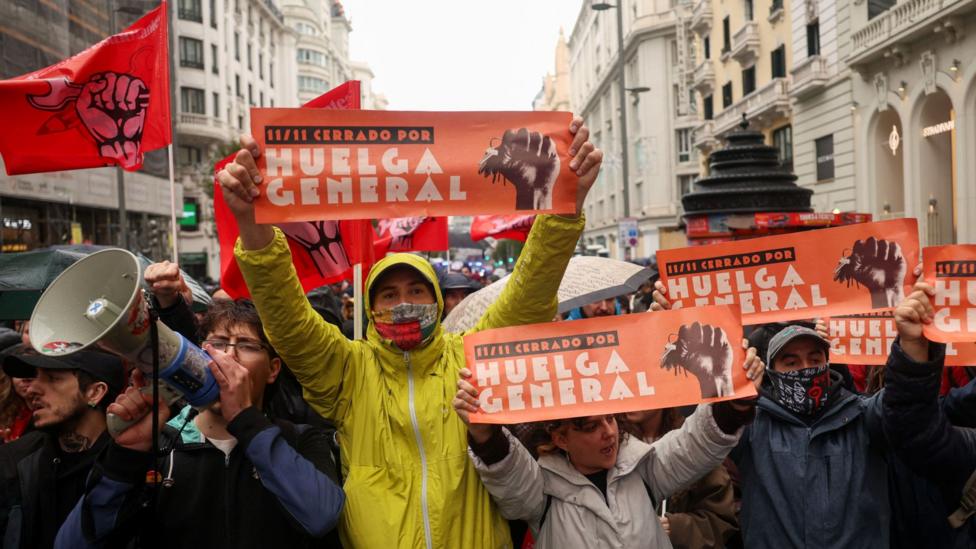
Public services and transport networks across Spain experienced significant disruption on Wednesday during the country’s first general strike in 14 years. Organized by major labor unions, the industrial action was called to protest the high cost of living and the ongoing housing crisis.
Strike Participation and Impact
The leaders of Spain’s primary labor unions expressed satisfaction with the turnout. Pepe Álvarez of the UGT union described the strike as a success with “massive” participation, while Unai Sordo of the CC OO union characterized the level of support as “very significant.” Conversely, the Spanish Confederation of Business Organisations reported that participation was “low and uneven,” noting that the impact varied depending on the specific sector and region.
The most severe disruptions were reported in major industrial hubs, including Madrid and the north-eastern region of Catalonia, where traffic was blocked on several key roads. The interior ministry reported that dozens of individuals were arrested in connection with various incidents, and local media outlets noted that some estate agency offices were targeted during the protests.
Data from the grid operator Red Eléctrica indicated that electricity consumption in the industrial sector dropped by 7.5% during the early hours of Wednesday. This figure is notably lower than the 15% drop recorded during the last general strike in 2012.
The Housing Crisis
The strike was largely fueled by public anger over soaring rental prices and the recent eviction of 87-year-old Maricarmen Abascal from her Madrid apartment of seven decades. Abascal died in a hospital weeks after her eviction. According to the property portal Idealista, the average monthly cost for a 50-square-meter apartment in Madrid reached €1,170 in October. This represents nearly half of the average gross monthly salary in Spain, which stands at approximately €2,460, far exceeding the 30% affordability threshold recommended by housing experts.
For many, the situation has become unsustainable. Gonzalo Álvarez, a 27-year-old sales worker and housing activist, told the BBC that the eviction of Abascal served as the “little fire” that ignited the current protests. Álvarez, who spends half of his salary on rent for a one-bedroom apartment, stated that buying a home is “completely impossible” given current market conditions and wage levels.
Political Tensions Ahead of Elections
The strike occurs just weeks before parliamentary elections scheduled for November 29. Prime Minister Pedro Sánchez called for snap elections last month after the parliament rejected his proposed housing reforms. In a departure from typical government responses to industrial action, Sánchez and his ministers have expressed support for the workers’ demands regarding affordable housing.
The opposition People’s Party (PP) has strongly criticized the government’s stance. PP leader Alberto Núñez Feijóo dismissed the strike as “nonsense” and used harsh language to describe the unions. Party spokesman Miguel Tellado accused the government of weaponizing the strike to influence voters against the prospect of a right-wing government, which polls suggest is the likely outcome of the upcoming election.
Miguel Garrido, vice-president of the CEOE business association, also criticized the action, arguing that the strike is motivated by politics rather than labor concerns. Demonstrations were scheduled to take place in major cities throughout the day, with the scale of the protests expected to serve as a barometer for public sentiment ahead of the November vote.