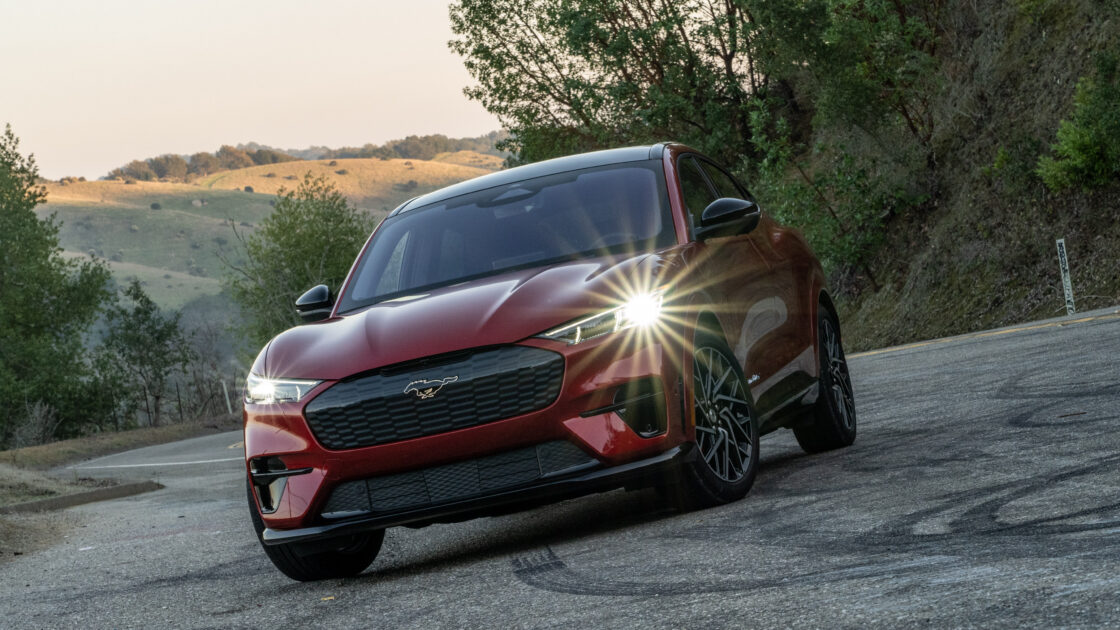
Electric vehicle batteries degrade over time, but data published by Ford reveals that their health holds up better than many drivers might expect. A new report from the automaker shows that 2021 Mustang Mach-E electric SUVs averaged 92% battery health after more than five years of driving.
Examining Long-Term Reliability
As reported by CNET, Ford analyzed the battery state of health for more than 36,000 Mustang Mach-E SUVs sold in the US and Canada from the initial 2021 model year. Across an estimated 2 billion cumulative miles driven, the fleet retained an average of 92% battery health. This long-term reliability is a major concern for early adopters and potential buyers, particularly as more used and off-lease electric vehicles enter the market. Shoppers often hesitate to purchase higher-mileage EVs out of fear that degraded batteries will fail to meet range needs or require expensive replacements.
The study found that about 95% of the surveyed vehicles retained between 87% and 97% of their original battery health. Depending on the specific configuration, the 2021 Mustang Mach-E originally offered an EPA-estimated range between 211 and 305 miles, translating to a loss of roughly 16 to 24 miles over five years. Predictably, heavier mileage led to increased wear. Around 2,000 vehicles surpassed 100,000 miles while retaining approximately 91% health, and a smaller group of roughly 30 drivers reached 200,000 miles with an average battery health of 88%. At the extreme end, one owner accumulated over 400,000 miles on an original battery, though Ford did not disclose the specific health metrics for that vehicle.
Comparison With Independent Industry Data
Ford’s findings align with an independent study published earlier this year by Aviloo, an Austrian EV battery diagnostics firm. By analyzing more than 500,000 electric vehicles from 20 global brands, Aviloo discovered that many popular models maintained over 90% battery health at high mileages. The study reported that Tesla’s Model Y retained about 90.3% battery health at 93,205 miles (150,000 kilometers). Meanwhile, the Volkswagen ID4 and Hyundai Ioniq 5 showed retention rates of 90.6% and 92.8% respectively over the same distance, while an older first-generation Nissan Leaf showed heavier degradation at 86.3%.
Ford engineers and battery chemists designed the Mach-E battery to last at least a decade, utilizing an older nickel-cobalt-manganese chemistry for the 2021 models evaluated in the report. Future models, including the upcoming Fathom small electric pickup built on Ford’s new Universal Electric Vehicle platform, will transition to lithium iron phosphate chemistry. This upcoming architecture will feature unique charging requirements, different battery management calibrations, and robust bidirectional charging capabilities.