Table of Contents
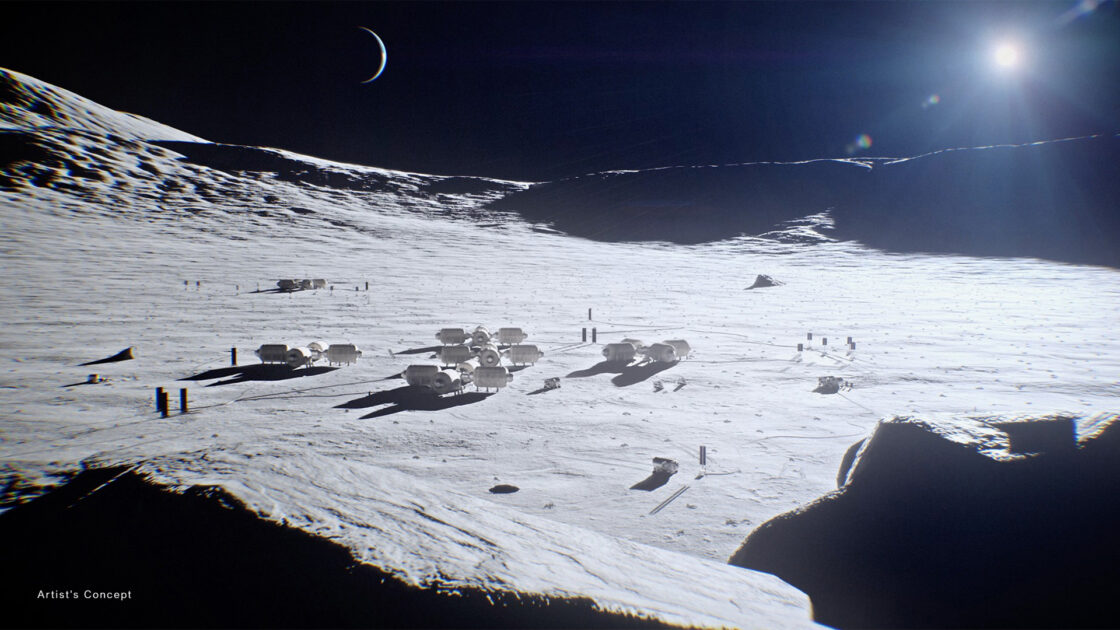
NASA recently concluded its Max Power event at the Kennedy Space Center in Florida, revealing a series of major updates regarding its Ignition initiative to establish a permanent moon base by 2032. The aerospace technology expo featured panel discussions, technology demonstrations, and announcements detailing how the agency plans to accomplish this ambitious lunar goal.
Commercial Partnerships and Infrastructure
The costly Moon Base Program relies heavily on partnerships with commercial aerospace companies, including Blue Origin, Firefly Aerospace, Intuitive Machines, Lockheed Martin, Northrop Grumman, SpaceX, Voyager Technologies, and ispace-US. Many of these firms also supply technology for the Artemis program, which aims to send astronauts back to the moon in 2028 following its third mission in 2027. NASA views the Artemis missions as vital precursors to the upcoming moon base, highlighting the significance of past setbacks such as the explosion of Blue Origin’s New Glenn rocket in May.
Cargo Landers and Orbital Transfer Vehicles
As reported by CNET, the CLPS 2 contract forms a core part of the Commercial Lunar Payload Services initiative, designed to deliver supplies and equipment to the lunar surface ahead of human arrival. This new contract builds upon CLPS 1.0 to develop necessary infrastructure and vehicles like cargo landers, backed by a $10 billion budget alongside an expanded CLPS 1.0 budget increased from $2.6 billion to $4.2 billion.
To transport these landers from space to the moon’s surface, NASA announced $1.3 billion in funding distributed to Blue Origin, Arrow Science and Technology, and Impulse Space. These companies will manufacture Orbital Transfer Vehicles to function as long-distance freight trucks. Additionally, the agency outlined three slated missions: risk-reduction research and deployment assessment, MoonFall drone scouting to identify base locations, and infrastructure testing.
Nuclear Rovers and Surface Power
NASA highlighted Promise, also known as the Polar Rover for Observation, Mapping and In-Situ Exploration, awarding Blue Origin a $94 million development contract alongside a $140 million performance-based lunar delivery contract. Managed by the Jet Propulsion Laboratory at Caltech upon deployment, the nuclear-powered rover will analyze regolith, search for ice, and explore areas unaffected by solar power during two-week lunar nights and permanently shadowed regions.
Focusing on long-term surface habitability, NASA awarded energy storage and transmission contracts to Honeybee Robotics and Yank Technologies. Their solar arrays, batteries, and wireless power hardware will contribute to the Mini-Communications and Solar Tower, known as miniCast, which will be assembled at the Marshall Space Flight Center in Alabama before lunar deployment.
Student Innovation Challenge
To address various obstacles facing lunar habitation, NASA introduced the Moon Base Student Challenge, offering $1 million in prize money for winning student concepts.
“We are inviting students from across the country to help solve some of the problems that stand between humanity and a permanent presence on another world,” Isaacman stated during his address, as reported by Space.com.
While the challenge does not target one specific hurdle, it invites students to address any issues associated with lunar bases, building on past student contributions regarding lunar dust clouds and human-capable landers.