Table of Contents
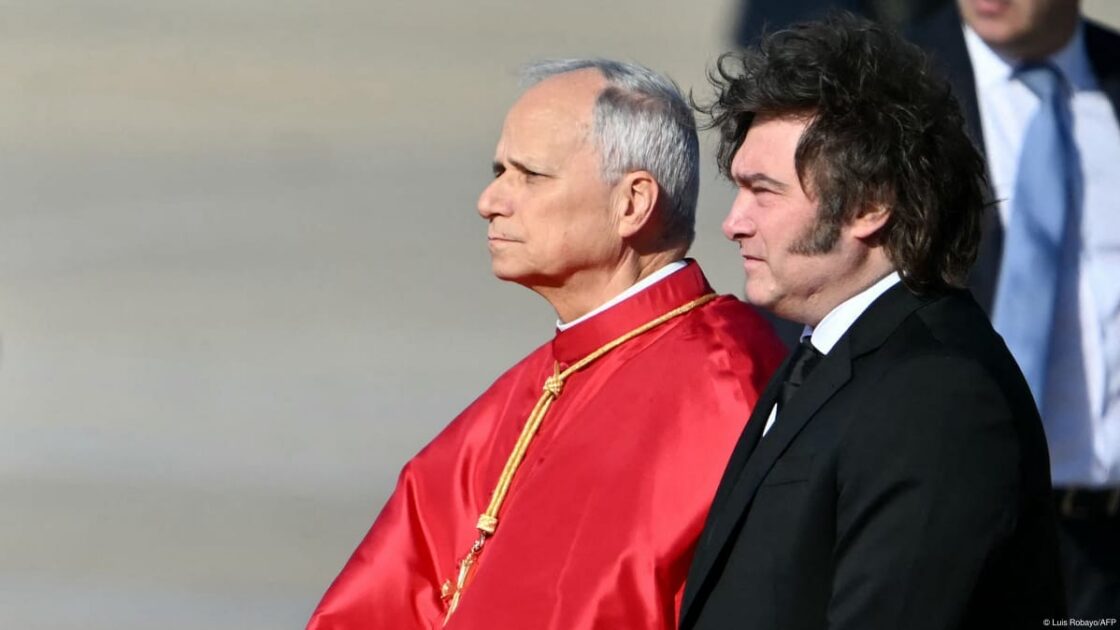
Millions of people gathered in Buenos Aires on Monday to witness Pope Leo XIV, highlighting the significant influence the US-born pontiff holds in Argentina. The visit comes amid growing speculation regarding the Pope’s stance on the economic policies of Argentine President Javier Milei.
Tensions over economic policy
During an open-air Mass, attendees expressed the importance of the Pope’s presence for national unity and faith. Justin McLellan, a Vatican correspondent for the National Catholic Reporter, told DW that the public reception has been overwhelmingly positive, noting that many Argentinians are strong supporters of the Pope.
However, the visit follows remarks made by the Pope on Sunday that many observers interpreted as a critique of President Milei’s administration. The President has implemented strict austerity measures, including significant cuts to social services and the elimination of numerous public sector jobs. During his Sunday address, the Pope stated, “The economy must be at the service of the people, rather than people being at the service of the economy.” He further highlighted the struggles of those who cannot meet their household needs despite working hard.
Jocelyne Cesari, a professor of religion and politics at the University of Birmingham, told DW that the Pope’s comments were “carefully calibrated” to target specific government policies without explicitly naming the President. Some supporters of Milei have suggested online that the Pope, who recently returned to his duties following cancer surgery, has exceeded his mandate.
The papacy and political influence
Historically, the papacy wielded direct political power, but modern popes have generally shifted toward broader moral guidance rather than party politics. Pope Leo XIV has previously faced friction with political figures, including US President Donald Trump, who criticized him earlier this year. In response to such pressures, the Pope has maintained that he does not view his role as that of a politician, but rather as a messenger of the Gospel.
Cesari explained that the papacy is inherently political because the Pope serves as a head of state, a diplomat, and a representative for over 1 billion Catholics. “The strategy of the pope is to position himself as a moral authority, his role is not just to say ‘vote for X or Y.’ His role is to say there are some moral teachings that can be applied to social life and communities, but people must make their personal decisions,” Cesari told DW.
Potential impact on future elections
As Argentina prepares for its general election in October 2027, experts are divided on whether the Pope’s perceived criticisms of Milei will influence voters. McLellan suggested that the visit could elevate the voice of the Catholic Church in Argentina and provide support to local bishops who have already voiced concerns regarding the government’s austerity programs.
Conversely, Cesari expressed skepticism regarding the direct impact of the Pope’s words on individual voting behavior. She noted that Catholics do not vote as a unified bloc and pointed out that many supported Milei in 2023, even after the President had previously made disparaging remarks about the Pope’s predecessor, Francis. President Milei, a right-wing libertarian, has a history of clashing with the Church, though he adopted a more conciliatory tone on Monday by describing the late Pope Francis as an “exceptional figure.”
As geopolitical tensions persist, observers note that Pope Leo XIV’s diplomatic nature remains a critical asset in navigating his relationship with leaders like Milei and Trump.