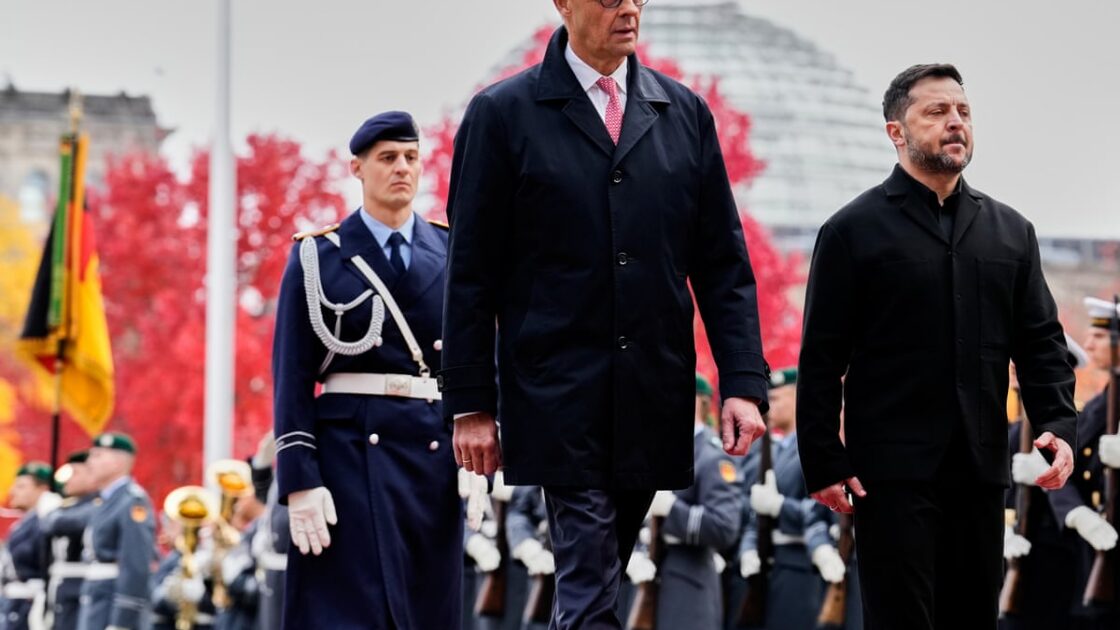
German Chancellor Friedrich Merz has signalled he will block the European Union’s seven-year budget unless member states reach a deal on financial aid for Ukraine. The intervention has sparked accusations of blackmail from central European leaders and set the stage for contentious discussions at an upcoming summit.
Accusations of Blackmail
The German leader’s stance has angered leaders in central Europe who are net beneficiaries of EU funds but refuse to participate in funding rounds supporting Ukraine’s war effort. Slovakia’s Prime Minister Robert Fico criticised the move during a press conference in Bratislava, stating that what the chancellor is doing is typical blackmail and declaring he will not give in.
Fico spoke alongside Czech counterpart Andrej Babiš, whose populist government also rejects participating in future loans for Ukraine. Babiš questioned the rationale behind Merz’s position, noting he did not understand why the German leader was making such demands.
Financing Demands and Previous Loans
In a letter to European Council President António Costa, seen by World News | The Guardian (theguardian.com), Merz argued that supporting Ukraine remains a shared vital interest, yet bilateral assistance is distributed unevenly and carried mostly by only a few member states. The EU previously agreed to lend Ukraine €90bn to cover costs for 2026 and 2027, but relentless Russian bombardment has prompted President Volodymyr Zelenskyy to seek an additional €70bn to cover a budget shortfall.
While the EU has pledged to find €45bn of that amount with allies like the UK and Canada covering the rest, previous efforts to utilise frozen Russian sovereign wealth worth €210bn were blocked by opposition led by Belgium. Hungary, Slovakia, Czechia, and Bulgaria have opted out of the funding rounds, leading Germany to demand budget cuts and strict funding conditions during negotiations for the 2028-34 multiannual financial framework.
Upcoming Budget Talks
Merz wrote in his letter that a collective commitment without exception is an essential pre-requisite for resolving the funding shortfall and discussing further financial matters. A German government official added that financial support for Ukraine from all member states is essential to successfully complete the budget framework, while Berlin also seeks to shift decision-making on Ukraine funding to a qualified-majority vote to prevent blockades.
António Costa faces the task of brokering an agreement by the end of the year before upcoming elections in France, Poland, and Italy complicate the process. A spokesperson for Costa confirmed receipt of the letter and stated that Ukraine financing will be discussed at an informal European Council in Dublin and a dedicated budget summit on November 26-27.