Table of Contents
Paraguay’s largest private investment project, a massive eucalyptus plantation and pulp mill led by the forestry company Paracel, is facing intense backlash from local residents and Indigenous communities over environmental and land concerns. An investigation by The Guardian, Consenso, and the Paraguay Post has documented widespread accusations of water contamination, harmful pesticide use, worsening drought, and land disputes across 12 communities.
Promises and Reality in Tacuarita
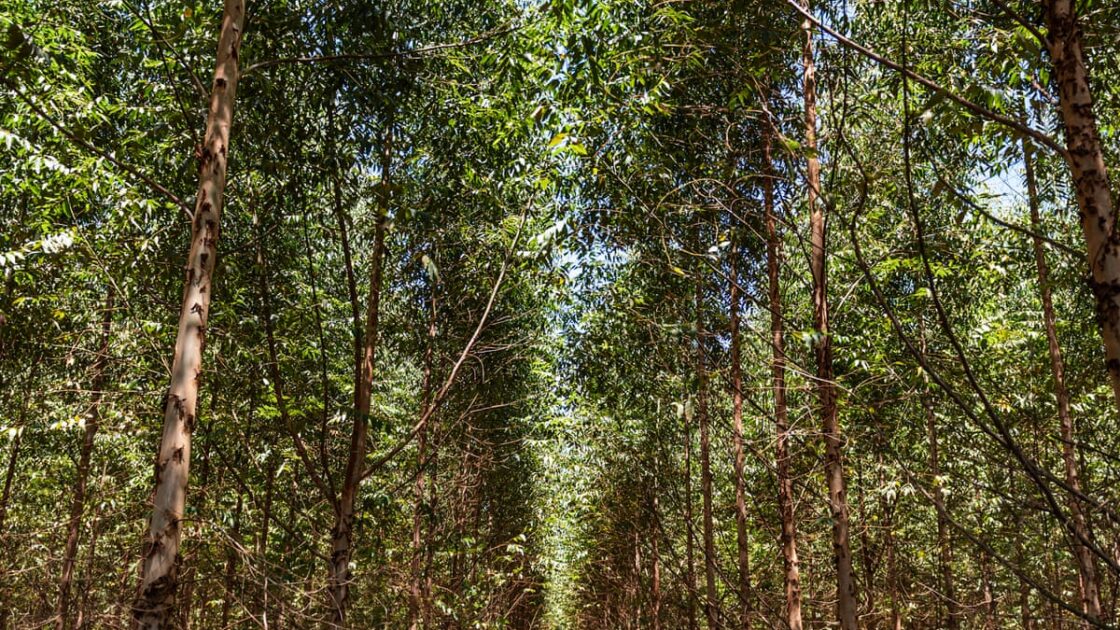
When Paracel first arrived six years ago in Tacuarita, an Indigenous community in Paraguay’s poorest region, the company improved dirt roads, dug an electric-powered well, and provided forestry jobs. Florencio Garcete, chief of the Mbya Guaraní community, stated that the company fulfilled all their promises. However, residents note that employment has dwindled, and eucalyptus plantations now begin less than 200 metres from their homes and crops.
Paracel is a joint venture involving the Paraguayan Zapag group, Austrian pulp producer Heinzel, and Swedish firm Girindus Investments. The project represents an estimated $5bn investment to plant 162m eucalyptus trees and build an industrial processing plant in the northern Concepción region. Financed by the Inter-American Development Bank (IDB) and the Paraguayan government, the company asserts it is protecting existing ecosystems and reforesting former ranchland to combat global heating.
The project was heavily championed by former president Santiago Peña, whose administration faced sudden uncertainty after his recent removal and arrest over a bank collapse, a case unrelated to Paracel. Benjamín Valiente, a human rights defender with the local Catholic diocese, described Paracel as a hidden monster murdering nature for profit.
Pesticide Concerns and Land Disputes
Official documents show that Paracel’s plantations are treated with sulfluramid, an insecticide that degrades into a forever chemical linked to human cancer and banned in the EU and China, two of the company’s main export markets. Paracel stated it had no record of staff telling locals that water would be contaminated, emphasizing its significant contributions to regional development in a 39-page response.
Farmers in Puentesiño accuse Paracel of occupying land decreed 50 years ago for impoverished residents. Bernardino Galeano, a local leader, recounted that after an organization occupied a disputed property to plant maize and cassava, drones sprayed an unknown substance at night, causing residents to suffer headaches, vomiting, and diarrhea. Police evicted them in September 2025, and Galeano now faces criminal charges. Paracel maintained that a government demarcation confirms its property title and that it conducted only ground-based spraying during the occupation.
In Amambay, the Indigenous Paĩ Tavyterã community of Cerro Akangué rejected the project during consultations, with local resident Ana Valiente stating the company simply insisted the project would proceed regardless of their opposition. A 2002 civil society report criticized Paracel for failing to translate key documents and misleading communities, claims that Paracel categorically denies, pointing to 52 meetings held in Guaraní with government oversight.
Environmental and Health Warnings
Factory construction workers reported mass food poisoning, forced overtime, and dismissals for protesting, though Paracel stated it prohibits forced overtime, dismissed no one over complaints, and replaced the catering company involved. Official inquiry documents also showed that 252 hectares of forest cover were lost at Rancho Z between 2004 and 2021 before Paracel acquired it in 2020, though satellite images and local accounts continue to raise scrutiny.
Experts and local fishers warn that the pulp mill and chemical runoff threaten local water sources, including the Paraguay River, which supplies Concepción. Between 2023 and 2025, Paracel utilized hundreds of tonnes of agrochemicals, including glyphosate and sulfluramid derivatives. Paracel acknowledges the known dangers of these chemicals but maintains that workers are trained to use them responsibly and that monitoring has detected no agrochemicals in local water sources.
Regional authorities, such as Concepción governor Liz Meza, defend the partnership, describing Paracel as a once-in-a-lifetime opportunity to build infrastructure like roads and a cancer clinic. Meanwhile, international experts and civil society organizations continue to question the long-term ecological impacts, carbon-credit validations, and regulatory oversight of the rapidly expanding forestry sector in Paraguay.