Table of Contents
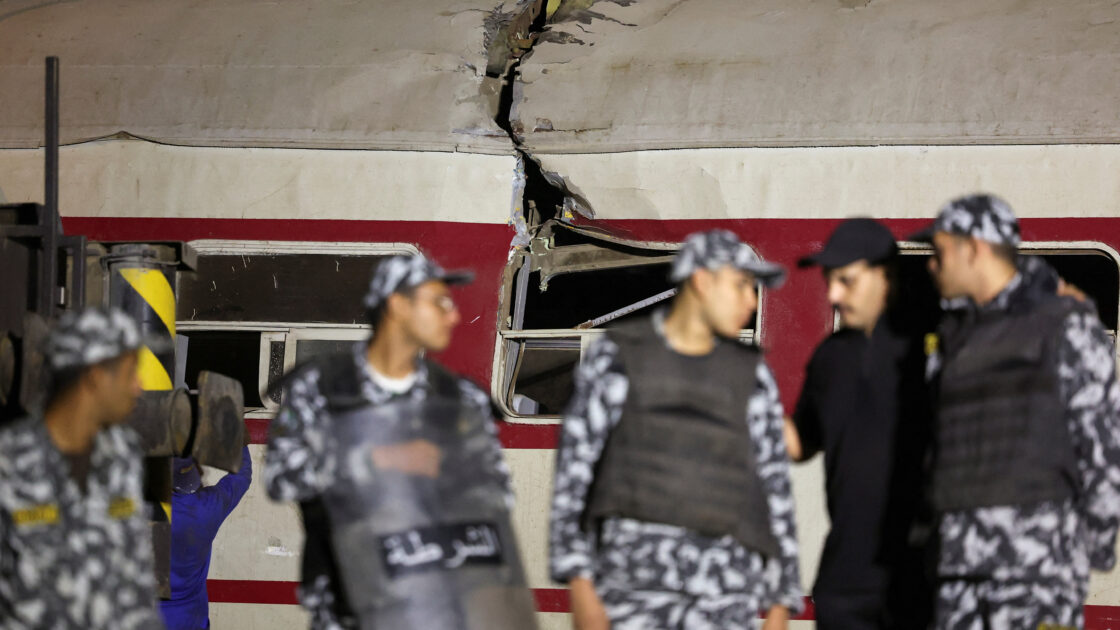
A deadly train collision on the outskirts of Cairo killed at least seven people and injured more than 125 others, according to Egypt’s Ministry of Health and Population. The disaster has prompted urgent calls from politicians and parliamentarians for political accountability and raised questions regarding the effectiveness of millions of dollars invested in railway upgrades.
Accident Details and Investigation
The crash occurred on Sunday when a train traveling between Giza and Fayoum struck the rear of another train operating on the Cairo-to-Aswan route. The impact caused the second train to derail onto a countryside road situated in the al-Ayyat district. Following the incident, President Abdel Fattah el-Sisi instructed authorities to launch an urgent investigation to hold anyone found negligent accountable.
The al-Ayyat area serves as a major railway corridor connecting Cairo and southern Egypt, featuring heavy traffic and multiple switches. Opposition figures noted that the location has a history of fatal railway disasters, including a 2002 fire that claimed over 370 lives, a 2009 collision that killed 15 people, and three separate collisions in 2016 that resulted in a total of 14 deaths.
Parliamentary Reactions
The Egyptian parliament’s Transport and Communications Committee summoned Transport Minister Kamel el-Wazir to an emergency session to review the circumstances of the crash and discuss preventive measures. Abdel Moneim Imam, a member of Parliament and head of the Justice Party, told Al Jazeera that the repeated incidents in al-Ayyat demonstrate a lack of genuine accountability for responsible officials.
“The recurrence of train accidents in the al-Ayyat area, despite what the Transport Ministry has repeatedly announced regarding the development of the railway system, reflects the absence of genuine accountability for the officials responsible for those accidents,” Imam stated to Al Jazeera.
Imam added that taking decisive measures after previous tragedies could have prevented the latest crash, while criticizing the parliamentary majority for protecting the transport minister and preventing effective oversight.
Ahmed el-Derby, secretary of the parliamentary transport committee, told Al Jazeera before the committee meeting that the session was not intended to confront el-Wazir with premeditated accusations. However, el-Derby maintained that officials must bear responsibility for mistakes occurring during their tenure, regardless of personal involvement.
“Officials bear responsibility for mistakes that occur during their tenure, even if they did not personally make those mistakes,” el-Derby told Al Jazeera, adding that investigations are necessary to determine liability without resorting to hasty dismissals.
Broader Policy Failures
Atef el-Maghawry, head of the Tagammu Party’s parliamentary bloc, told Al Jazeera that the ongoing accidents point to broader government failures rather than issues isolated to the Transport Ministry.
“Despite the ministrys announcements about upgrading the railway network and signalling systems, the recurrence of accidents in al-Ayyat points to a crisis that goes beyond the the Transport Ministry and reflects broader government policies,” el-Maghawry explained to Al Jazeera, calling for a change in government policies and the dismissal of the entire government.
Meanwhile, Irene Saeed, head of the Reform and Development Party’s parliamentary bloc, demanded financial transparency regarding how the Transport Ministry spent loans obtained in 2026. Saeed asked for details on what portion of the funding went toward safety, signalling, and maintenance, alongside safety records for 2025 and 2026. Official ministry data indicates that approximately $37bn was allocated to transport investments between 2014 and 2024.
Technical Factors
Hassan Mahdy, a highway engineering professor at Ain Shams University, cautioned against drawing early conclusions before investigations conclude, noting recent shifts toward electronic systems meant to manage train movements and minimize human error.
Mahdy stated that investigators must determine why the first train stopped on the main track, exploring potential technical failures or the activation of emergency brakes, and verify whether signalling systems adequately warned the second driver. El-Derby noted that the signalling director indicated a stop instruction was issued, though it remains unconfirmed if the driver received the warning in time.
“The results of the investigations will reveal all the circumstances of the accident, whether the cause is linked to the human element or a technical flaw in the system,” Mahdy told Al Jazeera.