Table of Contents
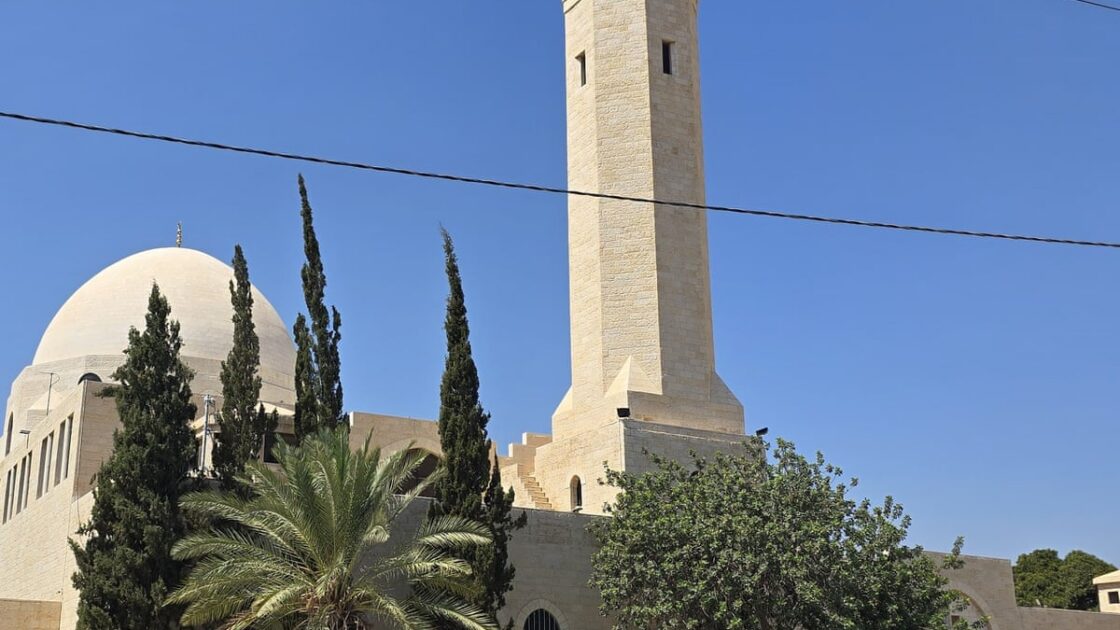
The Abu Obeida mosque in Deir Alla, located in a hot and arid area of the Jordan valley, maintains an unexpectedly green oasis of trees and flowerbeds. This vegetation is sustained by drip irrigation using wastewater captured from ritual ablution taps rather than the municipal water network.
Water Scarcity and Ritual Washing
Muslims across Jordan perform wudu, the ritual washing of hands, face, and feet, five times daily before prayer. In a nation where renewable fresh water amounts to just 61 cubic metres per person annually—far below the United Nations scarcity threshold of 500 cubic metres—water conservation is critical.
Ahmed al-Rawsan, founder of the Jordanian Aqua Conservation Association (JACA), which manages the Abu Obeida mosque system, stated that locals understand water scarcity because they experience it daily. He added that the goal was to demonstrate that mosques, which teach conservation religiously, can also practice it.
Jordan has a population of 11.3 million, with nearly 11 million practising Muslims, and imports the majority of its food. Municipal water is rationed and available through pipes for as little as 12 hours weekly in certain regions, forcing households to rely on rooftop tanks, which makes ritual washing water volumes significant according to JACA.
A 2025 peer-reviewed study estimates that 3.6 million mosques worldwide use 22.5 million cubic metres of water for ablution annually. The Ministry of Awqaf reports that Jordan contains more than 7,600 mosques.
Treatment and Expansion Challenges
JACA has worked on this initiative since 2008, installing pipes beneath the Abu Obeida mosque’s ablution area to direct used water to a treatment unit. After cleaning and filtering, the water flows to the exterior garden to nourish plants that would otherwise require water from the stressed municipal supply.
Al-Rawsan explained that because soap is not used during wudu, the water lacks chemicals and can be treated solely through natural sedimentation. The process passes the water through five layers of gravel and sand before it is redirected for irrigation.
A white sign on the stone wall of the Abu Obeida mosque displays the project’s goals of conserving water and improving the local environment, featuring the logo of the Ministry of Awqaf as a key partner.
Developing the project took JACA 18 years to expand across 18 mosques and schools due to financial, technical, and bureaucratic obstacles. Al-Rawsan noted that every location raised questions regarding who would maintain responsibility for the system between the imam and the caretaker, both ministry employees with different roles, leading to unmaintained systems when responsibilities were unclear.
To address this, JACA partnered with the ministry to integrate water conservation into Friday sermons and conducted awareness seminars for preachers.
Ministry spokesperson Mohammad al-Rawsan stated that training and awareness programmes have engaged 1,200 muezzins, 750 female preachers, 110 imams, and 28 technicians throughout the kingdom. Al-Tawalbeh added that between 2017 and 2024, the ministry executed rainwater harvesting projects in over 50 mosques, while more than 35 mosques currently utilize ablution water for cleaning and irrigation.
Broader Perspectives
Former irrigation minister Mu’tasim Sa’idan noted that Jordan already leads globally in water reuse, fully reusing approximately 150 million cubic metres of wastewater annually, with about 90% allocated to irrigation. However, Sa’idan expressed skepticism regarding the scale of ablution water, stating that the quantities are not as large as people imagine.
Awareness campaigns also face limitations, according to Abdullah Khaled, a worshipper at Amman mosques who frequently hears imams discuss Jordan’s water crisis and the religious duty to ration water. Khaled noted that the message does not always translate into action, as someone might listen to a conservation sermon on Friday and later leave a tap running or a water tank overflowing at home.