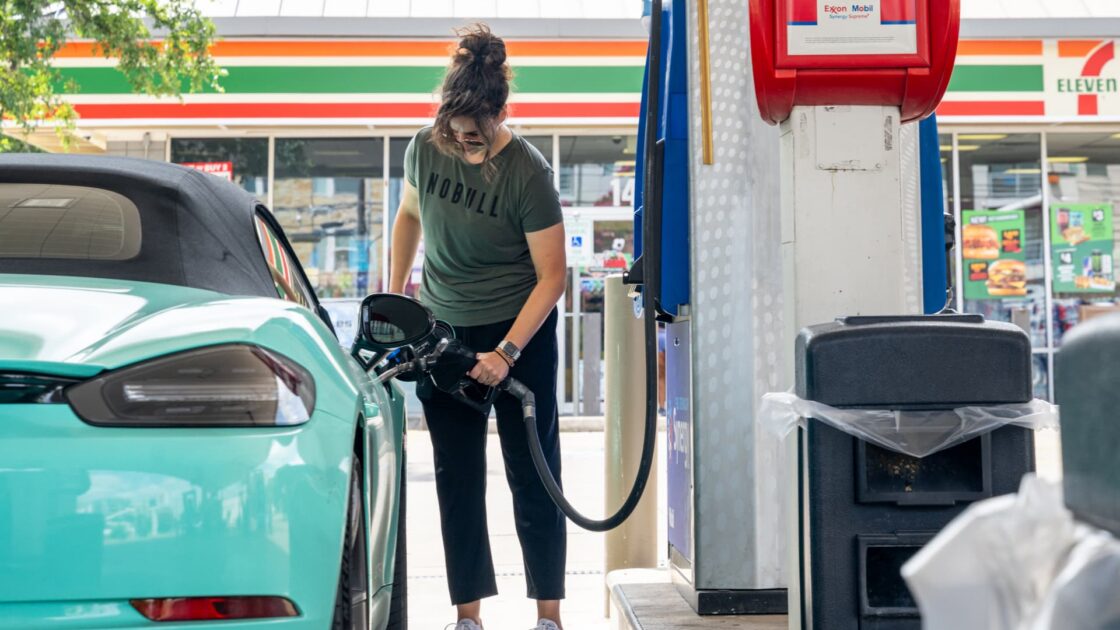
Drivers across the United States are seeing financial relief as gasoline costs decline. The national average for regular fuel dropped under $4 a gallon on Tuesday, marking the lowest price point since July.
Declining Prices and Seasonal Trends
Data from AAA shows the national average reached $3.9788 on Tuesday. Prices dropped by about 17 cents compared to the previous week and nearly 39 cents over the past month.
This downward trend follows a notable deceleration in energy inflation during October. The Bureau of Labor Statistics reported that energy prices rose by only 0.7% in October, representing a steep drop from the 5.2% increase recorded in September. The bureau’s gasoline index went up 1% during the month, compared to a 9.1% jump in September.
Bespoke Investment Group noted that part of this current financial relief is driven by regular seasonal patterns, as fuel costs typically decrease during this period of the year. The firm stated that while declining oil prices provide a boost, falling prices right now are entirely normal.
Crude Oil Market and Federal Reserve Outlook
The reduction in pump prices follows a significant decrease in crude oil costs. Brent crude, the international benchmark, briefly dropped below $90 a barrel on Tuesday for the first time since August. As reported by US Top News and Analysis (cnbc.com), remarks from U.S. President Donald Trump raised expectations for a resolution to the prolonged conflict between Washington and Iran.
Additionally, supply worries have eased as oil shipments from the Persian Gulf recover. ING reported that regional crude exports, including pipeline deliveries, have bounced back to roughly 80% to 85% of levels seen before the war. Analysts at ING pointed out that energy markets face continued pressure because expectations of reduced tensions in the Middle East lower geopolitical risks, while European gas prices also experience declines.
Despite the recent downward movement, Federal Reserve Governor Christopher Waller cautioned on Tuesday that energy shocks might cause longer-lasting impacts on inflation than they did prior to the pandemic. He expressed satisfaction over the recent drop in energy costs but emphasized that prices remain considerably high compared to the beginning of the year, adding that the final impact on inflation relies on which price levels are maintained.