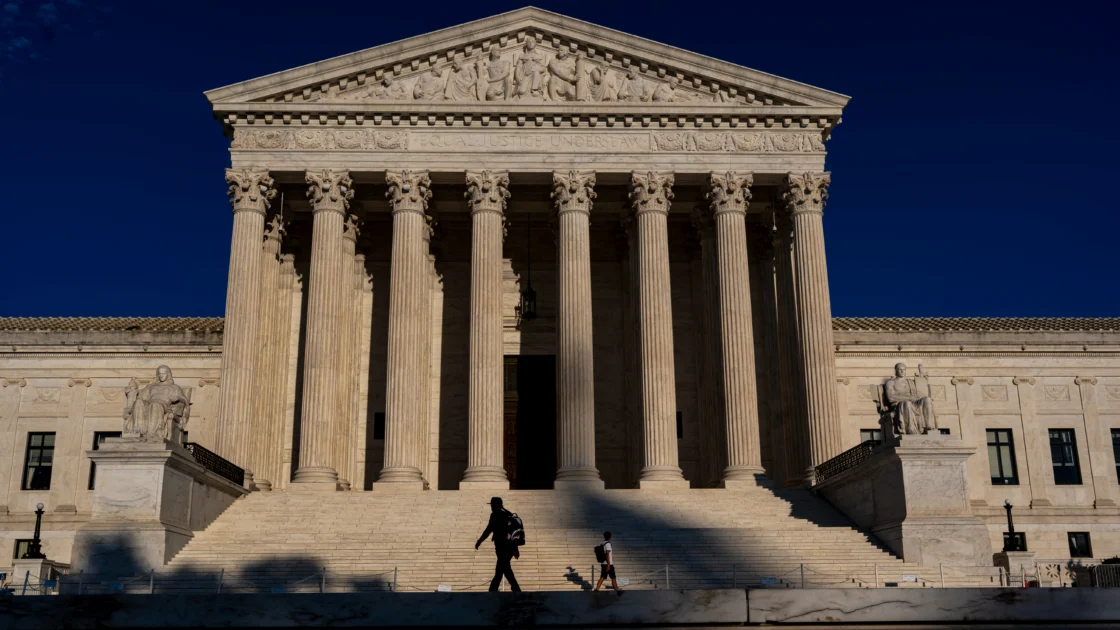
The U.S. Supreme Court is hearing a case that could determine whether federal law enforcement officers can be held accountable when they violate constitutional rights. The legal challenge stems from an incident five years ago when inmate Kekai Watanabe was beaten during a gang riot in a federal prison in Hawaii and subsequently denied proper medical care.
Legal Stakes and Precedents
Watanabe, now 40, sued a prison nurse for violating his Eighth Amendment right against cruel and unusual punishment after experiencing a seven-month delay in diagnosing a fractured tail bone. According to Georgetown law professor Steve Vladeck, who filed a “friend of the court” brief as reported by NPR, the case carries implications that extend far beyond prison walls and into American streets where immigration officers face accusations of misconduct.
Currently, pursuing these claims is difficult because the court demands that case facts match precedent precisely. The landmark federal prison case dates back to 1980, involving a prisoner who died from untreated asthma. Lawyers representing the nurse argue that Watanabe survived the 2021 attack, making his situation sufficiently different to warrant dismissal.
Perspectives on Accountability
Mary Hampton Mason, a former Justice Department employee of nearly 35 years who evaluated similar legal claims, stated that rogue officers are rare and that such problems usually stem from institutional failures. Mason noted that the Supreme Court established a right to sue federal officers for misconduct in a 1971 case known as *Bivens*, but argued the precedent has been hollowed out and should be overruled because it offers plaintiffs false hope.
Conversely, supporters of the prisoner contend that lawsuit statistics overlook settlements and the deterrent effect these actions have on bad behavior. Gregory Cui, an attorney at the MacArthur Justice Center, explained that financial liability can make individual agents hesitate before breaking the law. Cui also noted in a brief that the federal prison grievance process succeeds only 1% of the time for inmates seeking to improve medical access or conditions.
Legal experts emphasized that the Supreme Court agreed to hear the case while abuses by federal immigration agents and other officers receive heightened scrutiny. Vladeck warned that eliminating this legal avenue would grant federal law enforcement absolute immunity. Both sides acknowledge that Congress holds the power to establish a clear statutory path for individuals whose rights are violated by federal officers, though lawmakers have not yet advanced such legislation.