Table of Contents
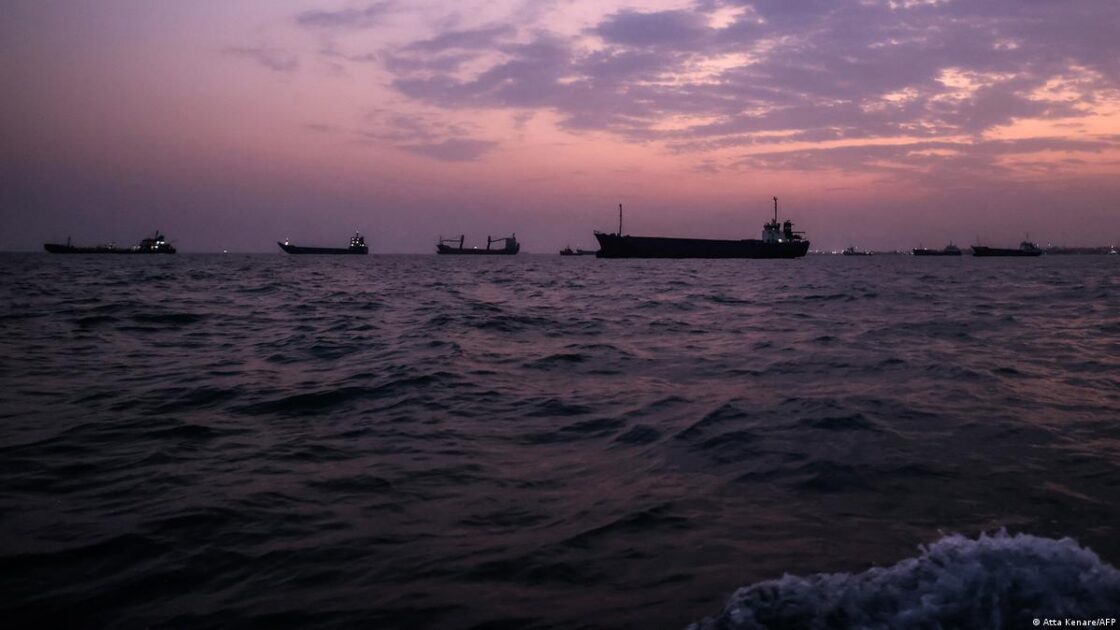
Attacks on commercial vessels in the Strait of Hormuz have put crews at risk and forced shipping companies to weigh dangerous passages against delayed cargoes and higher costs. While merchant ships continue using the crucial waterway, the sustainability of these voyages depends on Iran’s capacity to maintain attacks and the United States’ ability to protect shipping and absorb financial burdens, as reported by Deutsche Welle: DW.com.
Geographical advantages and economic limits
Ali Mohammadi, a France-based expert in Iranian affairs, stated that Iran’s geography and equipment enable it to continue targeting ships. However, he noted that Tehran faces strict economic constraints rather than military ones, explaining that prolonged conflict heavily impacts the national economy. Reliable data on Iranian weapons stockpiles and replenishment capabilities remain scarce, and intermittent attacks differ significantly from shutting down the waterway entirely. Even a total closure would prove unsustainable due to high political repercussions and disruption to friendly nations, according to Mohammadi, who added that threatening shipping allows Iran to increase confrontation costs and seek negotiation leverage.
Traffic trends and energy export impacts
Data from the UK Maritime Trade Operations Center (UKMTO) weekly report published on November 6 recorded 325 transits through the strait between October 29 and November 4, representing a 17% increase from 277 the previous week. Nevertheless, traffic remains approximately 65% lower than pre-war levels according to the UKMTO assessment.
Dalga Khatinoglu, an expert on Iran’s energy and macroeconomics, pointed out that vessel counts do not tell the whole story regarding energy supplies because cargo volumes and routes are equally important. Khatinoglu told Deutsche Welle: DW.com that Middle Eastern crude oil exports across all regional routes have largely recovered to pre-war volumes, occasionally surpassing them in September and October. In contrast, refined petroleum product exports have fallen by about half from a pre-war average of 6.2 million barrels daily. Furthermore, liquefied natural gas (LNG) exports from Qatar and the UAE remained severely disrupted as of September, trailing pre-war levels by roughly 10% despite minor improvements.
Skyrocketing shipping and insurance expenses
Khatinoglu emphasized that recovering export volumes have failed to offset the financial impact of persistent regional insecurity. Citing recent figures from the Organization of the Petroleum Exporting Countries (OPEC), he noted that average freight rates for large crude tankers traveling from the Middle East to East Asia surged roughly 12-fold, climbing from $3.18 (€2.84) per barrel at the start of the year to $37.13 a barrel by late October, leaving Asian importers facing steep costs.
Addressing potential solutions, Mohammadi argued that safeguarding the strait and restoring commercial confidence requires an end to the war and a permanent security agreement rather than a purely US military presence. Khatinoglu echoed this sentiment, stating that oil prices cannot normalize solely through US naval protection for vessels in the waterway.