Table of Contents
A significant electoral shift swept across the United States as Democrats secured a decisive victory in the midterm elections on November 3. The party captured majorities in both the US House of Representatives and the Senate from President Donald Trump’s Republicans, while also claiming gubernatorial victories in traditionally Republican strongholds like Texas.
Power Dynamics and Presidential Vetoes
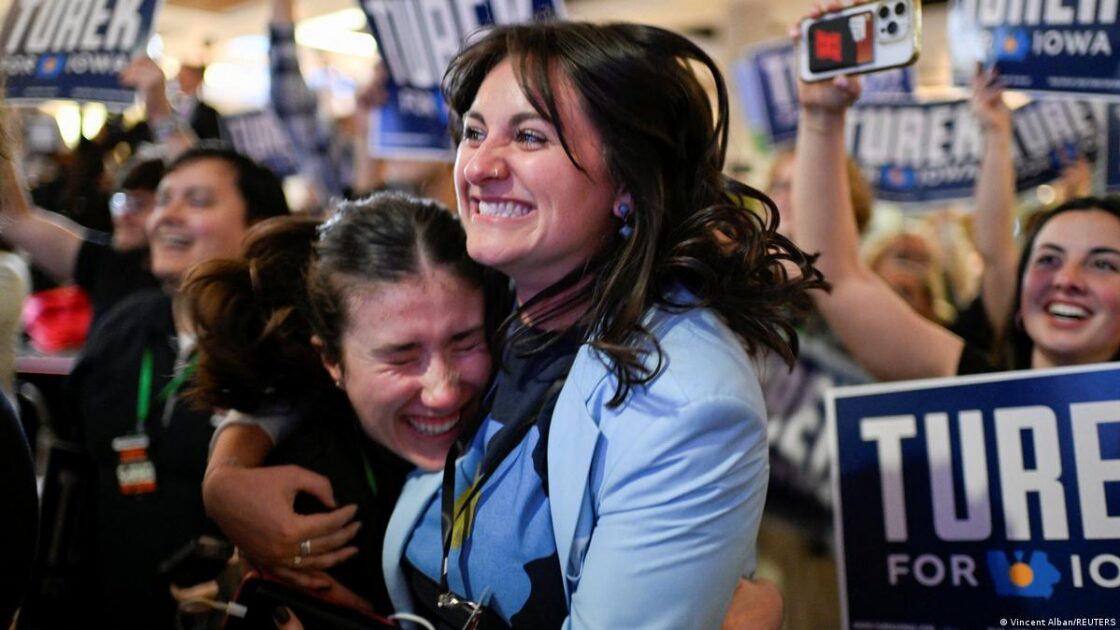
Celebrations unfolded nationwide as election results came in, though the White House emphasized on X the following day that Trump remains president. Trump retains the authority to veto any legislation passed by Congress, a power that requires a two-thirds majority in both chambers to override. He has also occasionally bypassed congressional decisions in the past.
Patrick Malone, a professor at the public administration and policy department at American University in Washington DC, told Deutsche Welle: DW.com that presidential vetoes can still be challenged even without a two-thirds Democratic majority. Some Republicans, particularly in the House, may distance themselves from Trump following strong electoral messages sent to neighboring districts, according to Malone, making bipartisan veto overrides a possibility.
Impeachment Prospects and Congressional Investigations
Discussions have emerged regarding a potential new impeachment effort, possibly tied to Trump initiating a war with Iran without congressional approval. While the US Constitution grants only Congress the power to declare war, the president holds military authority as commander-in-chief, leaving the exact limits of this power legally disputed.
Beginning in January 2027, Democrats will hold the simple majority needed to bring charges in the House of Representatives, though they will fall short of the two-thirds Senate majority required for a conviction and removal from office. While some Democrats argue that initiating impeachment is essential to keep the president accountable, others remain cautious. Democratic Senator Cory Booker warned against focusing exclusively on Trump rather than addressing the problems of the American people.
Malone noted that Democrats will leverage their oversight role to launch investigations into Trump, his family, and his government. He explained to Deutsche Welle: DW.com that such congressional investigations carry a powerful impact on public opinion and effectively capture public attention.
Cabinet Pressure and Defense Funding
While Trump is expected to remain in office, Defense Secretary Pete Hegseth faces potential removal as observers anticipate Democratic demands for his replacement. Brandon Conradis, a former journalist for Deutsche Welle: DW.com now working as an editor at Bloomberg Government in Washington DC, stated that while the firing decision rests with Trump, Democrats can apply political pressure.
With their congressional majority taking effect in January, Democrats control government spending decisions. Conradis explained that Democrats could condition the financing of Trump’s preferred projects on Hegseth’s departure. Hegseth faces scrutiny and partial responsibility for the limited success in the conflict with Iran, which could provide grounds for Trump to dismiss him.
Internal Divisions Within the Democratic Party
Following their midterm success, internal party unity is expected to fade quickly. The Democratic Party comprises several distinct factions rather than a unified governing coalition. The left wing features progressive figures such as Representative Alexandria Ocasio-Cortez, who champion aggressive policy proposals for environmental and social programs, as noted by Malone.
Meanwhile, mainstream liberal Democrats focus on pragmatic compromises, alongside a crucial group of moderate Democrats who won elections in former or conservative red districts. These moderates face challenges supporting far-left proposals in their home regions. Malone emphasized that simply opposing Trump will prove insufficient, requiring Democrats to forge a cohesive and positive governing agenda.