Table of Contents
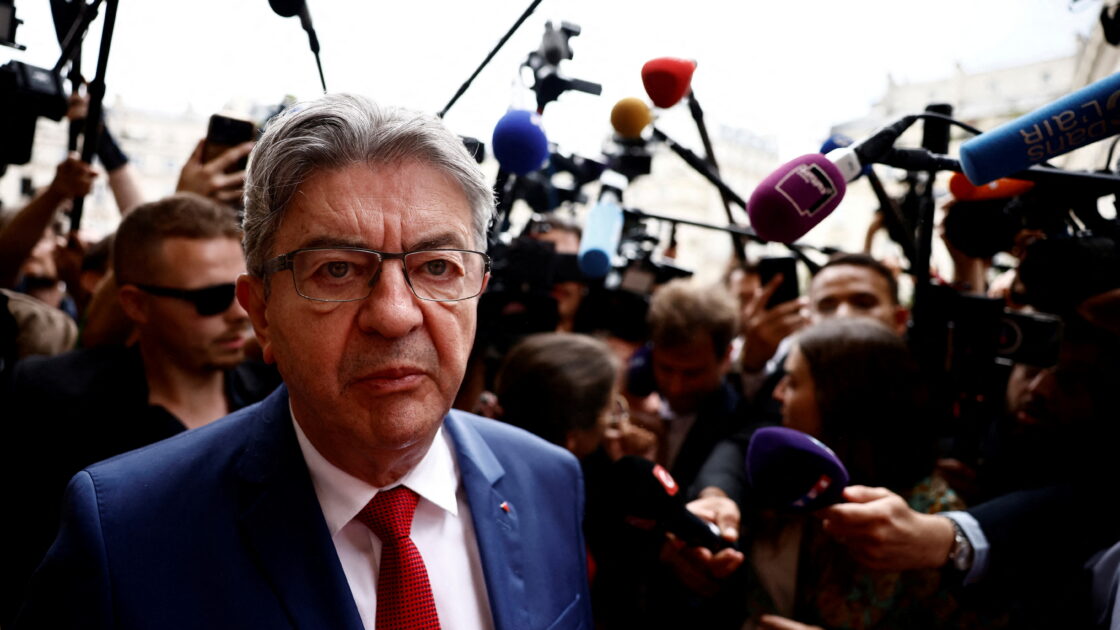
Hard-left French leader Jean-Luc Melenchon has drawn polarizing labels, ranging from a radical by right-wing opponents and a despot by former allies to a hero among students participating in nationwide protests. The France Unbowed party leader has risen as the strongest contender on the left and a potential challenger to far-right National Rally leader Marine Le Pen in the upcoming presidential election.
Policy Proposals and Economic Programme
Melenchon presented his programme at a rally in Le Bourget, north of Paris, following its online publication. His platform includes lowering the retirement age to 60, raising the monthly minimum wage to 1,700 euro ($1,900), pulling France out of NATO, and renationalising parts of the economy. He also proposes that France stop repaying debt owed to the European Central Bank, transforming it into a permanent interest-free loan to increase government spending capacity. Regarding Europe, he plans to keep France in the EU while refusing rules that conflict with national social, environmental, or economic programmes.
His party has gained momentum as student-led protests since mid-September expanded to include citizens frustrated by failing public services, rising living costs, and uncertain futures. Jacques Reland, a senior research fellow at the Global Policy Institute, told Al Jazeera that Melenchon aligns with the demands of the demonstrations by advocating for better wages, education funding, welfare measures, and an end to austerity cuts. Critics, however, argue his policies are radical and unrealistic.
France currently faces high budget deficits and debt levels, prompting economists to warn that Melenchon’s ambitious spending plans could drive investors to sell French government bonds and increase borrowing costs. Prime Minister Sebastien Lecornu criticized the debt proposal in September, stating that borrowing money and deciding not to return it constitutes theft. To finance these plans, the France Unbowed party points to higher taxes on wealthy individuals and corporations, including a minimum 2 percent wealth tax on billionaires, the restoration of the wealth tax, and increased taxes on large inheritances. Melenchon stated in October that financial capital has benefited and should therefore pay.
Political Background and Left-Wing Tensions
Melenchon’s programme draws on Keynesian-rooted economic interventionism, where the state actively corrects market imbalances. Beligh Nabli, a professor of public law at UPEC-Paris XII, told Al Jazeera that because other parties have abandoned this tradition, the France Unbowed party’s adherence to it creates an impression of radicalism that is actually moderate from the perspective of social democracy’s history.
Born in Morocco to French parents, the 75-year-old politician moved to France as a child and graduated in philosophy and modern literature. He joined the Socialist Party in the 1980s before leaving when it shifted toward liberal economics, eventually founding the Left Party in 2008, which evolved into his current party. Recent polls show the presidential candidate polling between 17.5 and 18 percent, leading other left-wing figures such as Raphael Glucksmann, Fabien Roussel, Marine Tondelier, and Francois Ruffin.
Divisions persist within the left-wing bloc regarding whether to support Melenchon’s lead to strengthen a united alliance. Furthermore, tensions have arisen over his strong support for Palestine, which includes refusing to describe Hamas as a terrorist organisation, accusing Israel of committing genocide in Gaza, and facing accusations from left-wing opponents that his rhetoric fuels anti-Semitism—claims he rejects.
Leadership Style and Electoral Challenges
Despite his left-wing momentum, Melenchon trails far behind Marine Le Pen, who would win a run-off against him by 70 percent to 30 percent, according to an October Toluna Harris Interactive poll. Analysts note that his combative political style and resistance to compromise hinder his ability to broaden support beyond his core base.
Melenchon has also faced internal criticism regarding his leadership and management style. Several former allies, including Thomas Guenole, Raquel Garrido, and Clementine Autain, have departed from the movement, describing it variously as a dictatorship governed by an autocrat, overly authoritarian, and lacking in democratic structure.
Reland remarked that the party functions with a supreme leader rather than as a democratic organization.