Table of Contents
The Czechoslovak Group (CSG) arms manufacturer announced in mid-October that it has acquired a stake in Canadian space technology manufacturer MDA Space as part of a broader strategy to sustain its recent financial boom. When it listed on the Amsterdam Stock Exchange earlier this year, CSG soared to become Central and Eastern Europe’s most valuable company with a market capitalization of €14.6 billion ($16.4 billion).
From 1990s Startup to European Defense Giant
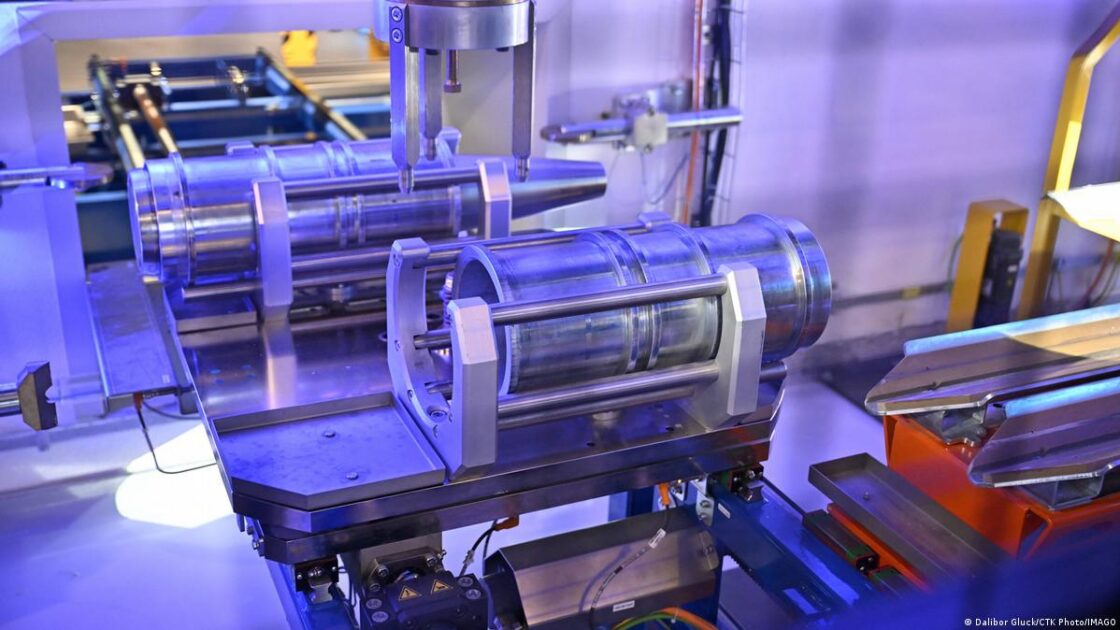
CSG started as a 1990s startup selling military surplus during the collapse of the Warsaw Pact. The company has since grown into Europe’s second-largest ammunition producer behind Germany’s Rheinmetall, with manufacturing operations across Europe and the United States.
Russia’s war in Ukraine serves as the primary driver behind the company’s surging fortunes and a broader boom across the Czech defense industry. Sector exports totaled €600 million in 2021, but expanded to €4.7 billion by 2025, fueled by orders from Kyiv and its European allies. European states procured approximately €11 billion in military support for Ukraine from Czech defense firms by the end of that year, with roughly €4 billion arriving via the Czech Ammunition Initiative.
Krzysytof Debiec of the Centre for Eastern Studies (OSW) told Deutsche Welle that the war was especially well-suited to Czech firms in its early stages due to historical links from the former Czechoslovakia. These firms specialized in Soviet-caliber ammunition, equipment repairs, and relatively unsophisticated systems that integrated rapidly with existing Ukrainian army stocks. Jan Jires, a former deputy defense minister and senior advisor at the International Institute for Strategic Studies, told Deutsche Welle that shifting US policies toward NATO and rising European defense budgets also accelerated the Czech defense boom.
Export Dependence and Domestic Challenges
Despite its market success, CSG’s share price has experienced erratic performance since its stock exchange launch, highlighting the volatile foundation of the Czech defense boom. The Prague government responded to the sector’s growth by transferring the defense portfolio from the Ministry of Defense to the Ministry of Industry and Trade to align exports with national economic policy.
Meanwhile, a populist ruling coalition took power a year ago with parties promising to reduce support for Ukraine or, in the case of the far-right Freedom and Direct Democracy party (SPD), holding pro-Russian positions. Consequently, the coalition halted contributions to the Czech Ammunition Initiative and delayed raising defense spending to meet NATO targets. This limits the domestic market, leaving the industry dependent on exports for about 90% of its revenue, mostly tied to Ukraine, and lacking a stable base for expansion.
Jires noted that Czech industry has outgrown national financial means and cannot rely on domestic demand for global relevance in the way German, French, or British companies do.
Shifting Warfare and Space Ventures
Global defense spending is projected to continue rising, but an end to the Ukraine conflict, shifts in US foreign policy, or a calmer geopolitical climate would severely impact Czech arms makers. Consequently, manufacturers are evaluating the future of warfare, which increasingly centers on drone swarms and technological races for unmanned aircraft.
Andor Sandor, a defense analyst and former commander of Czechia’s Military Intelligence Service, told Deutsche Welle that major questions remain regarding military size, equipment, procurement, and weapon delivery timelines. For CSG, where bullets and shells represent roughly 60% of sales, these considerations are critical. Debiec observed that Czech companies are reinvesting extraordinary profits to become more technologically advanced and diversified than they were in 2022.
CSG’s acquisition of MDA Space aligns with these innovation efforts, building on previous interests in British and German space technology firms. Citing global government space defense spending of €65.83 billion last year, CSG estimates the overall space economy will triple to €1.6 trillion over the next decade. The company views developing space capabilities as a natural extension of its activities, with plans for a dedicated space team.
Jires emphasized that Czech defense companies must position themselves to tap into defense and space funds under the upcoming European Union budget, which could reach €130 billion. Failing to secure these funds against competition from German, French, and Italian companies could cause Czech manufacturers to miss the opportunity to truly scale up.