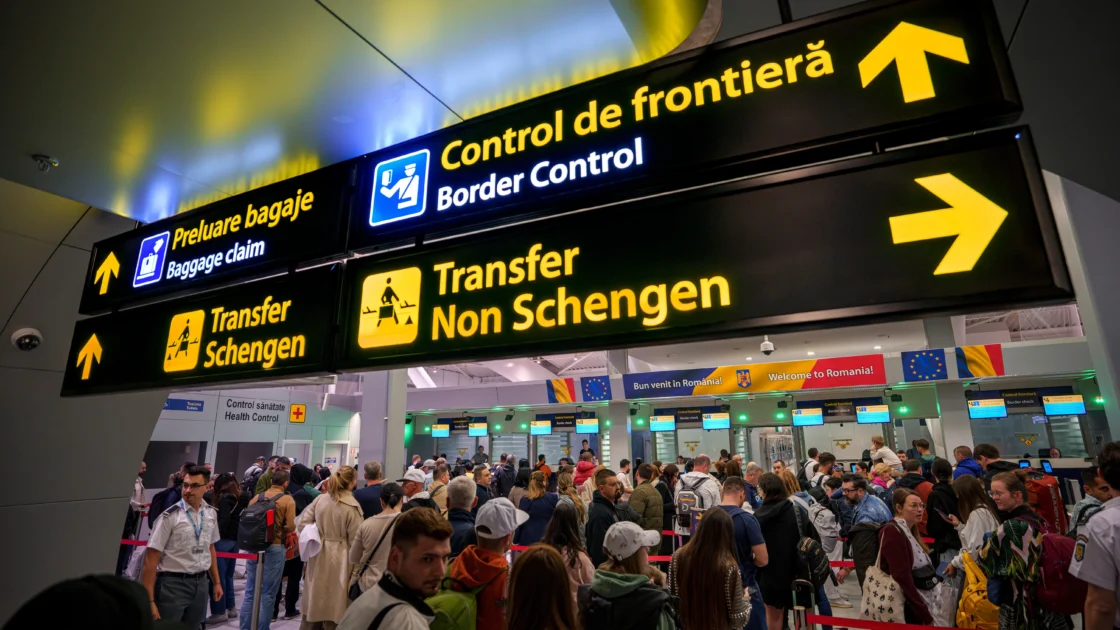
Authorities across Europe reported a fresh wave of bomb threats targeting multiple flights on Friday, following a string of similar hoaxes earlier in the week that prompted several flight diversions. Security threats were also directed at two major broadcasters during the incidents.
Flight Disruptions and Military Interceptions
While no suspicious items were discovered and no injuries were reported, the incidents heightened concerns as they followed recent disruptions across Europe, including attacks on supermarket refrigeration systems and drone incursions. The European air traffic authority, Eurocontrol, stated that the overall impact on continental aviation remained minimal, noting that it was aware of bomb threats affecting 14 flights on Thursday—representing just 0.05% of nearly 26,300 flights across the European network—and seven flights on Tuesday.
In Hungary, Defense Minister Romulusz Ruszin-Szendi reported that military fighter jets escorted three separate passenger planes through national airspace within an hour on Friday after each received bomb threats. The affected aircraft included flights traveling from Brussels to Sofia, and from Prague to Cyprus and Romania.
In France, the office of Prime Minister Sebastien Lecornu announced that four new bomb threats targeted aircraft flying over French territory. The planes landed safely at Paris’ Orly Airport, where bomb disposal experts conducted inspections without providing further details on the specific flights.
Additional incidents involved a Prague-to-Bucharest flight operated by Romanian carrier Tarom, a Ryanair flight from Lisbon to Rome, and a WizzAir flight from Prague to Rome that diverted to Venice before passengers were safely evacuated following a bomb alert. Security checks at all locations confirmed the absence of explosives.
Eurocontrol confirmed it is closely monitoring the situation in coordination with airlines, airports, and navigation service providers to mitigate any potential disruption to air traffic flows. At Prague’s Vaclav Havel Airport, spokesperson Denisa Hejtmánková stated that nine flights were threatened, encompassing arrivals from Denmark, Spain, and Britain, alongside departures to the Netherlands, Cyprus, Romania, Italy, and Britain. Czech police noted that implemented security measures resulted in minimal impact on normal airport operations. Meanwhile, Danish police deployed officers to Copenhagen Airport for the second consecutive day as a precautionary measure, concluding there was no danger to passengers or staff.
Unclear Motives and Broadcaster Threats
Although fake bomb threats occur relatively often, experiencing such a high volume in a short timeframe remains unusual. More than two dozen flights faced threats earlier in the week, leading to precautionary diversions.
It remains undetermined who is orchestrating the airline hoaxes amid heightened geopolitical tensions and warnings from officials regarding potential Russian hybrid threats in Europe. Authorities have not linked the threats to any specific state actor or group. However, an email sent on Thursday to Rome airport authorities, reviewed by The Associated Press, claimed to originate from an anti-feminist group targeting a feminist regime, while another European airport received a similarly worded message though a connection remains unconfirmed.
Paul Reuter, vice president of the European Cockpit Association, explained that bomb threats cause unnecessary tension for pilots, who nevertheless respond professionally by reviewing procedures, identifying diversion airports, and potentially carrying extra fuel. Reuter described the use of civil aviation for geopolitical disruption or hoaxes as totally unacceptable.
In addition to aviation targets, broadcasters also faced security threats on Friday. Dublin headquarters of Ireland’s national broadcaster, RTE, were evacuated following a bomb threat, forcing live broadcasts to switch to pre-recorded programming. Police and sniffer dogs cleared the area, allowing staff to return after a few hours. Ireland’s police force, An Garda Síochána, confirmed it is investigating the threat with media organizations.
Irish Prime Minister Micheál Martin stated that the threats against RTE and others illustrate how easily unconventional activities can cause disruption, fear, and anxiety. He added that a very significant security operation will be deployed next week when Dublin hosts meetings for the European Political Community and European Union leaders.
Separately, U.K.-based broadcaster Sky reported receiving a security threat. In a statement reported by the Sky News channel, the network stated it is working closely with authorities to keep personnel and operations secure, while Sky News continued normal broadcasting.
Authorities have not yet established whether the various aviation and broadcast incidents are linked.