Table of Contents
Motorola is launching the Signature 27, marking its first ultra-premium candy-bar smartphone in the US in six years with a $1,600 price tag. Preorders for the new device open on November 19, and the phone officially goes on sale on November 26.
Top Shelf Features and Display
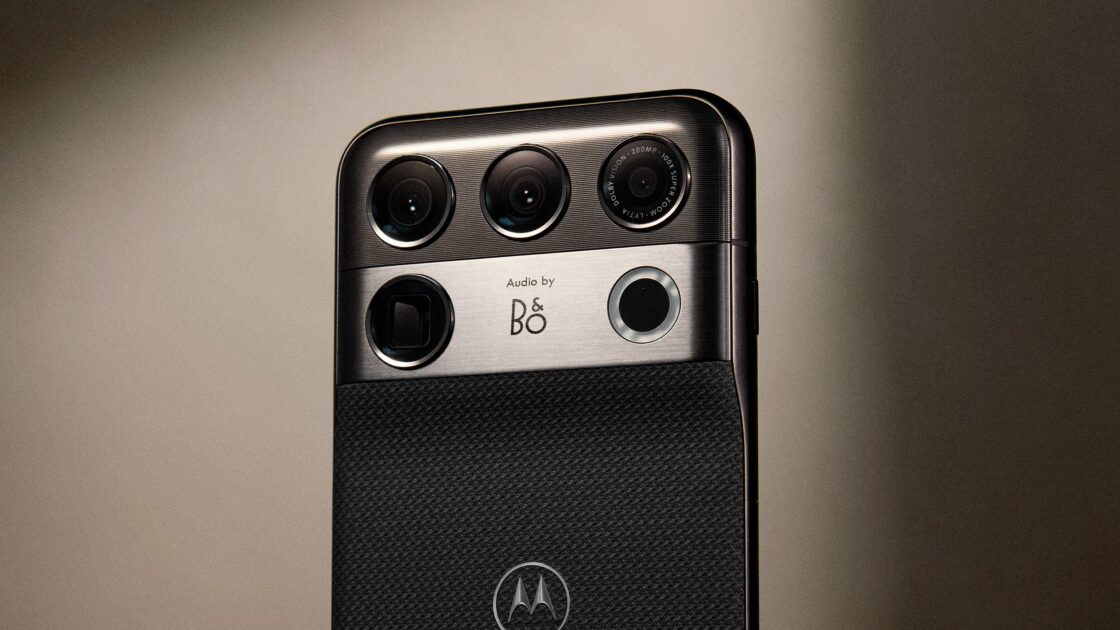
The Signature 27 features contoured edges, a thin design, and a ceramic and brushed aluminum camera plane, available in Pantone Capulet Olive and Pantone Coal Smoke. It is equipped with Corning’s Gorilla Glass Ceramic 3 and carries an IP68/69 dust and water resistance rating. The device sports a 6.8-inch “Extreme AMOLED Duo” display that utilizes tandem OLED technology, stacking two panels to achieve better energy efficiency and a 121 percent longer lifespan than standard AMOLED panels. While Motorola claims a peak brightness of 12,000 nits, this specification functions primarily as marketing, though the screen also includes 1.5K resolution, Dolby Vision, and Pantone Validated color calibration.
For imaging, the phone includes a 50-megapixel Sony Lytia L910 main camera featuring LOFIC technology to improve dynamic range in challenging lighting. It also houses a 200-megapixel periscope 3X telephoto camera with generative AI zoom up to 100X, a 50-megapixel ultrawide camera, and a 50-megapixel selfie camera supporting 4K video. A unique addition on the back is an Event-Based Vision Sensor (EVS) that pairs with Motorola’s Action Shot mode to freeze motion without blur. Motorola has also integrated a new video enhancement engine powered by AI.
Performance and Hardware
Under the hood, the Signature 27 runs on the Qualcomm Snapdragon 8 Elite Extreme Gen 6 chip, supported by a 40 percent larger thermal chamber for enhanced cooling. It comes with 12 GB of RAM, 512 GB of storage, and is among the first devices to support Wi-Fi 8. Powering the device is a 7,000-mAh silicon-carbon battery that promises up to 66 hours of battery life and supports 90-watt TurboPower fast charging alongside standard wireless charging. Audio capabilities are developed in partnership with Bang & Olufsen, and the device introduces speaker architecture designed for deeper bass and clear vocals.
On the software side, Motorola commits to providing seven years of software updates. The phone supports stock Android as well as GrapheneOS, a privacy-focused, de-Googled alternative. It also incorporates Google’s Android 17 Gemini Intelligence features, enabling task execution, AI widget creation, American Sign Language translation, and the Pixel 11-exclusive Rambler feature for improved speech-to-text dictation.
Market Strategy and Challenges
According to Nicole Hagen, head of global product marketing as reported by WIRED, Motorola has positioned itself as a lifestyle brand through luxury partnerships with companies like Pantone and Swarovski. Hagen noted that second-quarter 2026 revenue is up 15 percent year over year, with one-third stemming from the premium category, and cited strong customer satisfaction from international rollouts of the Signature model. For consumers seeking alternatives, she directs attention to the wider portfolio, ranging from Moto G to Motorola Edge devices.
However, industry analysts express skepticism regarding Motorola’s ability to capture market share in this high price tier. Nabila Popal, senior research director at IDC, told WIRED that average consumers do not base purchases purely on spec sheets, noting that in the second quarter of 2026, Apple held 80 percent of the US premium smartphone market and Samsung held 16 percent, while Motorola’s parent company Lenovo sat at one percent. Despite these hurdles, Motorola maintains a strong foothold in the US foldable market with 78 percent share, aligning the new handset with the broader hardware industry trend of premiumization.
Preorders for the Motorola Signature 27 begin on November 19 ahead of its November 26 release date.