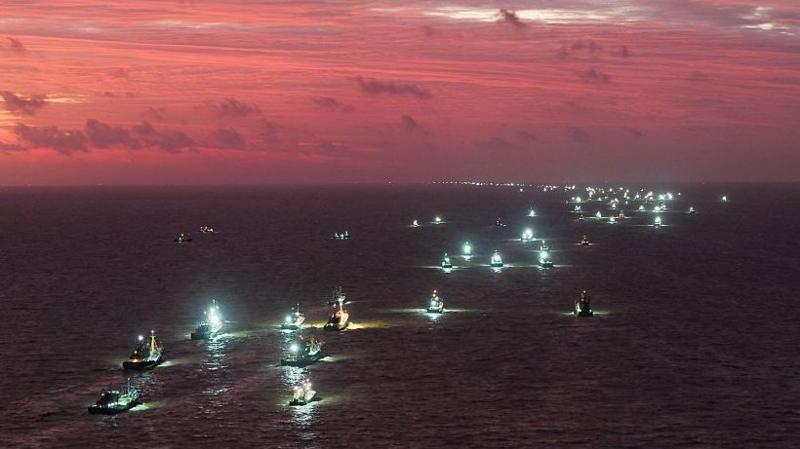
Coastal communities across the Philippines, Taiwan, China, and Japan are facing an extraordinary season of intense and unpredictable storms. These weather events, exacerbated by the El Niño climate pattern, have resulted in dozens of deaths, the closure of major airports, and significant damage to infrastructure and crops throughout East Asia.
The Impact of El Niño
El Niño is a natural climate phenomenon characterized by warm water pooling in the eastern Pacific and shifting wind patterns, which drive extreme weather globally. This year’s event is forecasted by the UK Met Office to be the strongest in living memory and is expected to persist until February or March.
The Pacific Ocean has reached record temperatures, causing it to be described as “burning with fever” by Ana Liza Solis, head of climatology at the Philippines’ national weather bureau. According to the Accumulated Cyclone Energy (ACE) metric, which tracks storm intensity, the current season in South East and East Asia is projected to be nearly double the 30-year average. Because typhoons are forming further east and remaining over warm waters for longer periods, they are intensifying more than usual.
Recent Storm Activity
The region has experienced a series of severe weather events over the past few months. In October, Typhoon Champi, equivalent to a category five hurricane with winds reaching 295km/h, forced the closure of much of Taiwan. While the storm did not make landfall, it caused widespread flight cancellations and power outages in Okinawa, Japan, and the Philippines’ Batanes archipelago.
Earlier in the year, Japan faced the simultaneous arrival of Typhoon Mekkhala and Severe Tropical Storm Higos in June, leading to the evacuation of one million people. China also suffered from the impact of Tropical Storm Narra in July, Super Typhoon Dolphin in August, and Typhoon Saudel, all of which caused flooding, displacement, and transport disruptions.
Climate Risks and Preparedness
Climatologists are using simulations to understand how rising temperatures amplify these risks. Rafaela Jane Delfino, a Manila-based climatologist, noted that warmer conditions could increase total accumulated rainfall by 26%, a finding she described as “very, very scary.” This is particularly concerning for the Philippines, where flooding is a primary disaster risk. In response to recurring flood-related paralysis of cities, some residents have protested against corruption, alleging that funds intended for flood-control projects are being misused.
Governments across the region are taking steps to mitigate the damage. Japan has advised citizens to stockpile essentials and secure outdoor items, while China is upgrading its monitoring systems and identifying vulnerable areas. In the Philippines and neighboring countries, authorities are providing increased support to farmers to protect food production, particularly rice.
The United Nations Development Programme in Asia and the Pacific has warned that the window for government action regarding El Niño is closing. The organization emphasized that the severity of an El Niño event is often determined by long-term planning, such as infrastructure placement, water management, and the strength of social safety nets. The agency stated that every El Niño serves as a test of regional resilience and should act as a catalyst for further development.