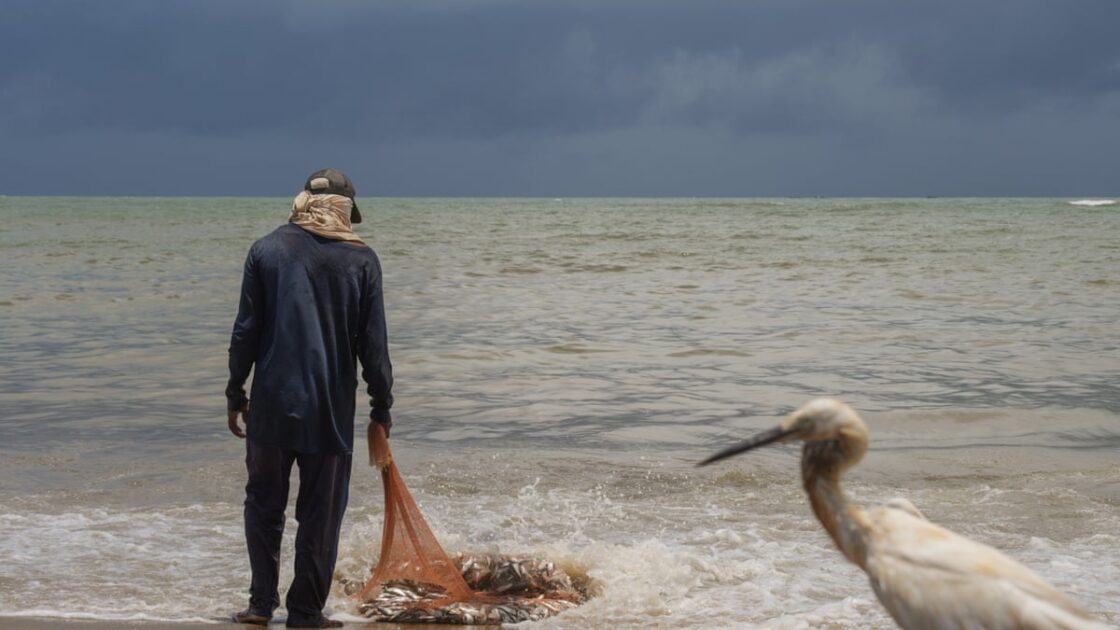
Five years after the MV X-Press Pearl container ship disaster off Sri Lanka’s west coast, local fishers continue to deal with environmental fallout, damaged fishing grounds, and unpaid compensation. Tons of toxic plastic pellets, known as nurdles, continue to wash ashore alongside dead marine life.
The Disastrous Spill and Ongoing Pollution
The Singapore-flagged container ship caught fire in May 2021 about 10 miles off the coast while carrying 1,486 containers, including hazardous materials such as nitric acid. As the blaze intensified, containers fell into the sea and billions of plastic nurdles spilled before the vessel sank. In the following weeks, hundreds of dead marine animals, including more than 100 turtles and dozens of dolphins, washed ashore.
Roger Peiris, who worked for the YMCA at the time and advocated for affected communities, says the local coconut trees turned black and died as a result of the disaster. Five years later, nurdles continue to wash ashore on beaches like Pamunugama. Local fisher Jude Sulanta explains that the problem worsens during the monsoon season when strong winds push the pellets onto the beach, while calm seas leave them stuck on the ocean floor.
Damaged fishing grounds have severely affected livelihoods. Fishers report continued damage to fishing nets, which they suspect is caused by contaminants from the spill, alongside changes in rocky reefs where fish traditionally gather and breed. Ranga Fernando, a generational fisher, notes that inherited knowledge of fishing grounds has become less reliable since familiar patterns changed.
Jude Anthony, who farms fish in the Negombo lagoon, says nurdles and other pollution inundated his pens after the disaster and killed stock he had spent months raising. While fishers acknowledge that wider pollution from urban development was already impacting the industry, they believe the X-Press Pearl disaster compounded these problems and pushed locals to sell their boats or seek work abroad.
Legal Battles and Unpaid Compensation
The disaster sits at the center of a sprawling legal battle over responsibility. In July 2025, Sri Lanka’s supreme court ordered the companies behind the X-Press Pearl to pay an initial $1bn, with further compensation to be determined. The court also found serious failures by several Sri Lankan state authorities and ordered a fresh investigation into corruption allegations regarding compensation assessment and recovery.
More than a year later, almost all of the court-ordered sum remains unpaid. The Centre for Environmental Justice (CEJ), which helped bring the supreme court case, notes that only about $1m has been paid so far. Hemantha Withanage, co-founder and chair of the CEJ, states that they are challenging the non-enforcement of the court order nationally and internationally, describing the situation as an example of how corporations discriminate against less powerful developing countries.
A spokesperson for X-Press Feeders acknowledges that the sinking had an impact on Sri Lanka’s environment, but states they cannot assume all nurdles collected today originate from the incident, noting other substantial spills in Sri Lankan waters. The spokesperson adds that they respectfully disagree with the supreme court ruling and could not make payment because the ruling relied on assessments by Sri Lanka’s Marine Environment Protection Authority that international experts have since discredited, while also failing to consider ongoing compensation proceedings in Singapore.
Meanwhile, fishers claim that the classification of claimants for interim compensation excluded many affected individuals. Anthony Nishantha, a local fisher who helped lawyers, argues that smaller-scale fishers lacked the documentation, time, or connections to make claims compared to larger operators and the dry fish industry. An initial government-appointed expert panel assessment put the environmental damage at $6.4bn, and co-chair Prof Prasanthi Gunawardena notes that researchers predicted long-term fishing losses following the initial debris and ship impacts.
Left disillusioned by years of meetings, claims, and uncertainty, Anthony reflects on the plight of small-scale workers, stating that no one cares about the little guy and that fishers are ultimately left with little choice but to carry on working and living.