Robert, Ryan, and Kirby Carlisle are three engineers who spent their early careers at SpaceX during the Falcon 9 era, witnessing firsthand the transformation of the global launch industry. After launching, refurbishing, and selling rockets, the brothers decided to chase a lifelong dream by starting their own space company. Instead of building rockets, however, they chose to focus on spacecraft.
Building Infrastructure on Water
The three brothers established Argo Space in late 2022 to construct infrastructure in space. Their goal centers on in-space transportation while eliminating the reliance on propellants shipped from Earth. They selected water as their propulsion method, noting that it can potentially be harvested on the Moon and exists throughout the Solar System. Robert Carlisle stated in an interview that the company was founded on water.
The widespread availability of water forms the foundation of the company’s plan to create a transportation network connecting low-Earth orbit, geostationary orbit, and the Moon. This approach aims to provide affordable logistics services such as satellite resupply, refueling, repair, and redeployment. Within their design, water serves multiple purposes beyond propulsion, acting as both a coolant and a radiation shield. The spacecraft cools components ranging from its thrusters to its avionics using water, which raises the propellant mass fraction and allows the vehicle to carry more fuel to travel farther and perform additional tasks. Robert Carlisle explained that water-based transportation will eventually create a profit incentive to harvest water from the Moon’s shallower gravity well.
First Demonstration Mission
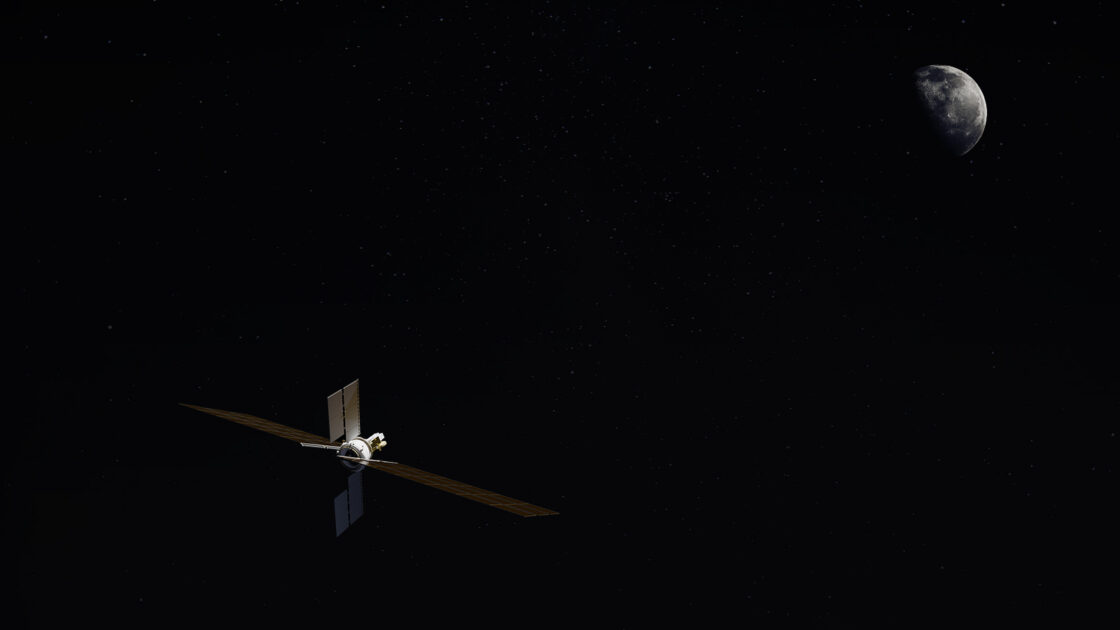
Argo Space launched its first demonstration mission, named Navigator, in July on a Falcon 9 rideshare. Although the company successfully established contact with the spacecraft, one of its two rollout solar arrays failed to deploy properly. Flight controllers spent approximately half a day troubleshooting the problem and assessing the health of the vehicle.
Despite these efforts, the spacecraft remained in a power-negative state as its battery drained continuously. Consequently, the mission lacked sufficient energy to test the water-based propulsion system.