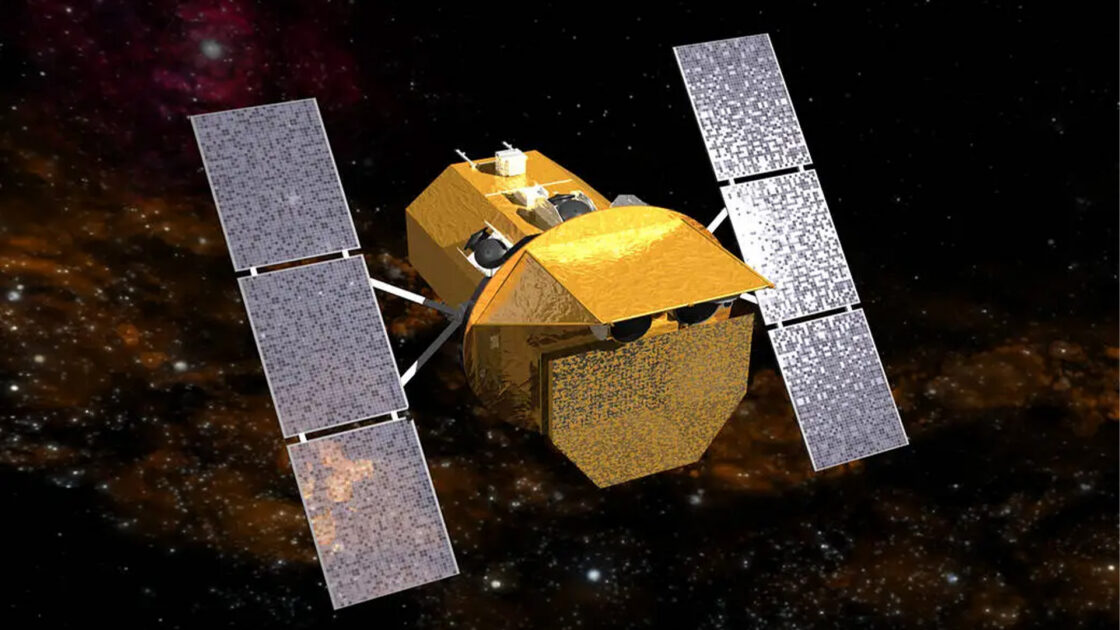
The Neil Gehrels Swift Observatory, formerly known as the Swift Gamma-Ray Burst Explorer, is approaching the final days of its mission. Launched into orbit on November 20, 2004, the space telescope is expected to make its atmospheric reentry nearly 22 years to the day after its launch.
Reentry Details and Safety
NASA states that the telescope is projected to hit the atmosphere on November 4 at approximately 3:30 a.m. ET, though the agency notes there is an 11-hour window of uncertainty for the exact timing. Most of the spacecraft is expected to burn up during reentry, with only a small number of components surviving to reach Earth.
The precise location where any surviving fragments will land depends on the exact moment of reentry. However, NASA explains that these surviving pieces are restricted to a band between 20.6 degrees south latitude and 20.6 degrees north latitude, encircling the middle of the Earth just above and below the equator.
Regarding potential risks, NASA stated that the likelihood of anyone on Earth being harmed is low, estimated at approximately 1 in 2,100. Both NASA and the Space Force will continue tracking the reentry trajectory and providing updated predictions.
A Historic Mission and Scientific Legacy
Originally designed for a two-year primary mission, the observatory far exceeded expectations. Shawn Domagal-Goldman, director of the Astrophysics Division at NASA, stated in a previous release that Swift provided an exceptional return on investment by remaining productive for more than ten times its planned lifespan.
The telescope was built to solve the mysteries surrounding gamma-ray bursts. Its instruments enabled it to quickly detect these bursts, pinpoint their origins, and analyze them for further study. Bradley Cenko, Swift’s principal investigator at NASA’s Goddard Space Flight Center, explained that the observatory typically took about a minute to detect a burst, relay its coordinates to other observatories, and reposition its own telescopes to capture images before the afterglows faded.
Swift’s initial objectives achieved immense success, enhancing scientific understanding of gamma-ray bursts, their contribution to the formation of black holes, and the history of the early universe. Although its primary mission concluded, the spacecraft performed so effectively that NASA opted to keep it operational to continue gathering data.
On January 10, 2018, the spacecraft was officially renamed the Neil Gehrels Swift Observatory to honor the pioneering NASA astrophysicist who led the agency’s Astroparticle Physics Laboratory from 1995 until his death in 2017. Over its 22-year operational run, the observatory scanned more than 2,000 gamma-ray bursts, captured 1.5 million images using its ultraviolet and optical telescope, and transmitted 12 terabytes of data. This information contributed to an estimated 7,000 research papers, averaging nearly one study per day.
NASA attempted to rescue the observatory during the summer of 2026, but the effort was ultimately abandoned following a series of engineering challenges and control issues, sealing the telescope’s fate. Following the failed rescue, NASA reactivated the instruments to record data for as long as possible before its scheduled descent.