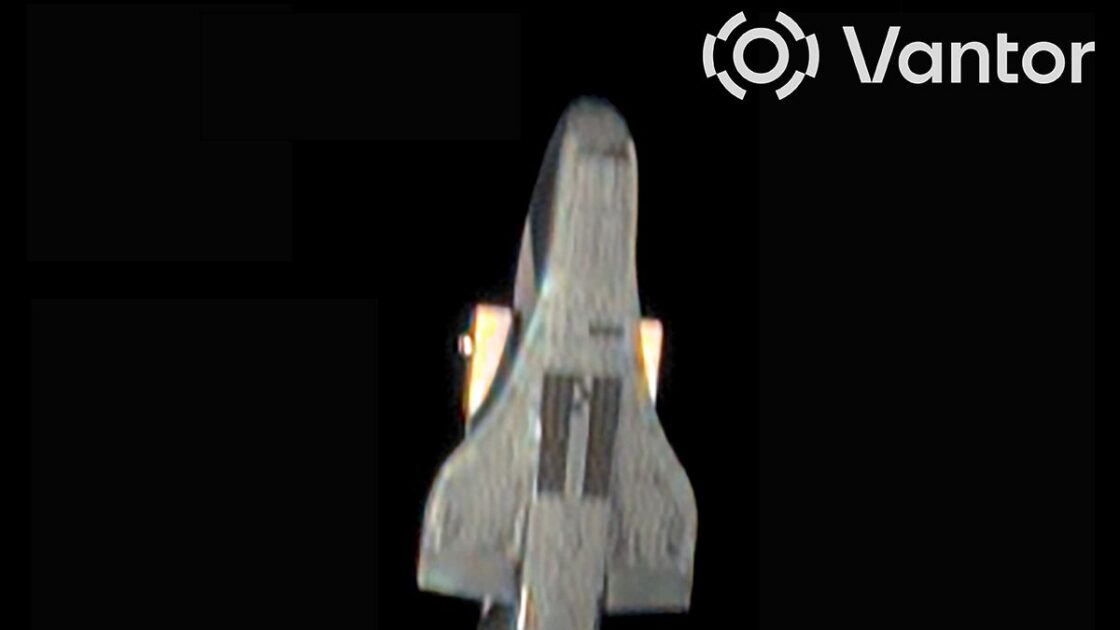
The Pentagon recently published a detailed, unclassified image of China’s secretive reusable spaceplane, highlighting its striking design similarities to the X-37B operated by the US Space Force. Captured by a commercial imaging satellite, the photograph offers a clear look at the delta-winged vehicle’s configuration.
Operations and Capabilities
According to a Defense Intelligence Agency (DIA) report cited by WIRED, China has conducted four spaceplane missions since 2020, with current missions lasting up to nine months. By comparison, the US Space Force flies two X-37B vehicles in rotation, with missions extending up to two-and-a-half years. Both spacecraft launch inside conventional rocket payload shrouds and land autonomously on runways after completing their orbital flights.
The DIA report notes that spaceplanes offer enhanced maneuverability compared to traditional satellites. While the Chinese vehicle has operated exclusively in low-Earth orbit, American X-37B flights have reached altitudes exceeding 24,000 miles. Furthermore, tracking data analyzed by astrophysicist Jonathan McDowell reveals that China’s current spaceplane successfully deployed and recaptured a sub-satellite multiple times using what is believed to be a robotic arm.
Imaging from Space and Anti-Satellite Weapons
The high-resolution photograph of the Chinese craft was captured by Vantor, a commercial imaging satellite provider formerly known as Maxar. This observation highlights the growing field of non-Earth imaging (NEI), which allows commercial and government operators to inspect classified or proprietary spacecraft during chance orbital encounters.
The DIA assessment also details China’s advancement in counterspace weapons, noting that the Chinese military views ground-based directed-energy weapons as ideal systems to disrupt, degrade, or damage satellites. The intelligence agency reported that China possesses multiple ground-based lasers and may field space-based directed energy systems by the late 2020s, alongside testing anti-satellite missiles, robotic arms, and satellite refueling capabilities.
Meanwhile, other global powers continue expanding their own orbital capabilities. Air Force Secretary Troy Meink acknowledged that the Pentagon has fielded weapons in space, while Russia pursues nuclear weapon ambitions and operates systems designed to approach foreign spacecraft closely.