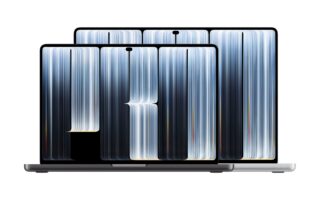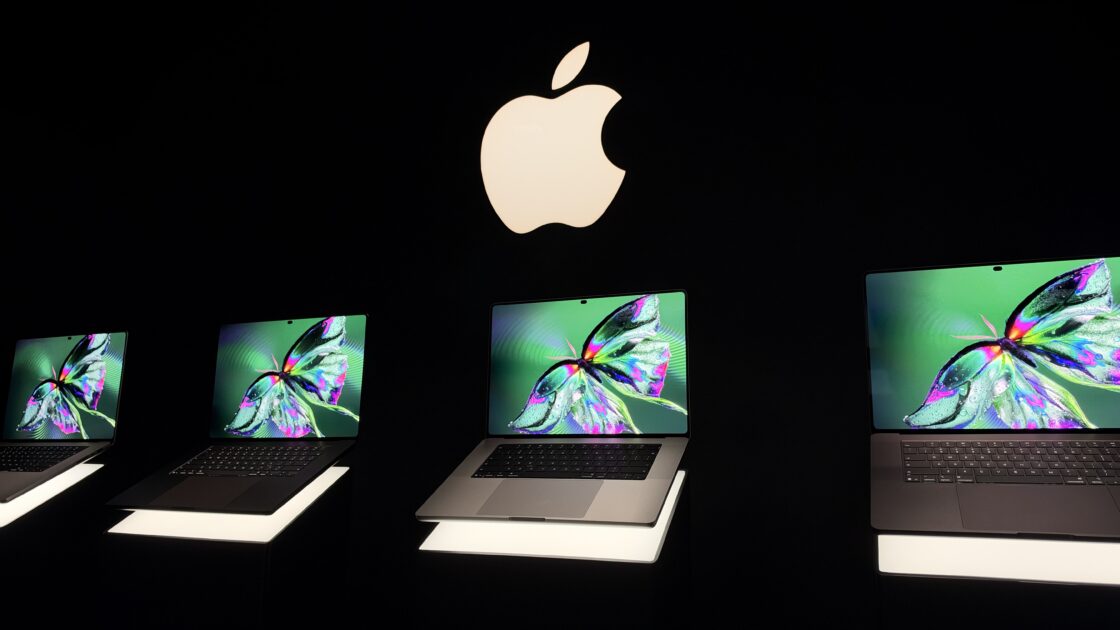
Apple has announced its new 14- and 16-inch MacBook Pro models featuring an OLED touchscreen display, marking the company’s arrival to both technologies in a laptop line. Known under the name PROLED, the redesign includes several hardware updates aimed at professional content creation, though it retains the processor options and ports of previous versions.
New Features and Pricing Details
Aside from the screen update, the new MacBook Pro models add touch support, the iPhone’s Dynamic Island, a 16TB configuration, improved speakers with Dolby Atmos support, better microphones, a thinner and lighter design, and Genlock support. The laptops carry a $400 premium over standard models. The 14-inch M5 Pro variant starts at $2,899 compared to $2,499 for the non-OLED version, while the M5 Max model begins at $4,499 compared to $4,099. Upgrading to the 16TB option requires moving to the M5 Max, setting the minimum buy-in at $11,499 with 36GB of memory. Preorders opened on Wednesday, and shipping is scheduled to begin Nov. 6.
Weight reductions include drops to 3 pounds from 3.4 pounds for the 14-inch model, and to 4 pounds from 4.7 pounds for the 16-inch version. Audio updates bring enhanced bass, spatial audio with Dolby Atmos, and sound improvements when the laptop is closed. Executive Producer Bridget Carey reported from hands-on testing that the touchscreen functions well as a supplemental tool for quick actions like zooming or dragging and dropping. Carey noted that the vibrant OLED display offers a clear leap in quality, with minimal smudging and reduced light reflections compared to Windows competitors like the Lenovo Yoga 9i. MacOS controls adapt to touch by enlarging elements when necessary, allowing users to accurately navigate windows.
Display Capabilities and Limitations
The PROLED XDR screen features an expanded color gamut covering the Adobe RGB color space and a large portion of Rec. 2020 for video mastering. Peak brightness reaches 2,000 nits, though SDR brightness caps at 1,000 nits unless automatically adjusted for bright sunlight. The display delivers 1,000 nits full screen in both SDR and HDR modes. Apple lists a 1-nit minimum brightness specification to match its mini-LED models, though OLED’s native minimum is lower. The panel technology is categorized generically by Apple as tandem OLED.
Potential downsides include unchanged battery life, indicating the OLED display did not yield power savings. Touch implementation presents a mixed bag because desktop operating systems differ from mobile platforms built for touch input. To accommodate screen poking, Apple stiffened the hinge and added image stabilization to the webcam. Some proposed touch uses, such as playing piano on the screen, felt awkward, while simulating mobile app interfaces offered more utility. Additionally, refresh rates remain capped at 120Hz without manual setting options above 60Hz.