Table of Contents
The European Union is seeking a larger role in Indo-Pacific security as the United States focuses elsewhere in the Eastern Hemisphere. India has increasingly pursued new defense partnerships and closer ties with the European bloc to support its rising economic and global ambitions.
Building Defense Ties Amid Challenges
India and the EU signed a Security and Defense Partnership in January, which was followed by their first formal Security and Defense Dialogue in March and further meetings throughout the year, including the fifth Maritime Security Dialogue in Brussels last month. Despite a shared desire to boost maritime security cooperation, working together in the Indo-Pacific remains challenging because India and European countries maintain different defense priorities.
Mohan Kumar, a former Indian ambassador to France, told Deutsche Welle: “Europe can be a credible defense partner of India, especially in the maritime theater in general and Indo-Pacific in particular.” However, he added that European distractions such as the conflict in Ukraine act as a limiting factor.
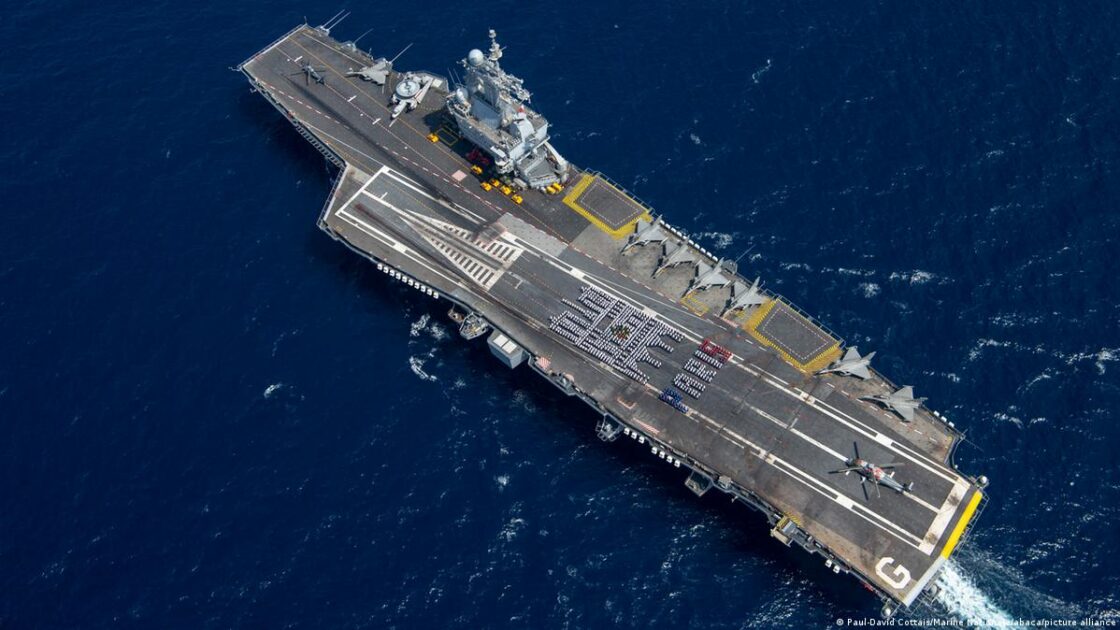
France serves as a notable exception due to its established military presence in the Indian Ocean. Kumar noted that France’s presence in Reunion Island and Mayotte allows for ongoing cooperation that can be intensified. Another Indian diplomat, Javed Ashraf, described France as a strong and consistent security partner across all areas of defense cooperation, noting that the partnership benefits from an acceptance that the two sides may not always agree.
Internal EU Divisions and Bilateral Partnerships
While France maintains the EU’s strongest military force and nuclear capabilities, cooperation between Paris and New Delhi does not automatically create a unified European security role across the Indo-Pacific. Tara Kartha, a former member of India’s National Security Council Secretariat, stated that Europe as an entity has very little role in Indo-Pacific security despite a strategy announced in 2025, pointing to political differences among EU members.
These divisions were evident during an EU summit in Brussels where leaders showed disagreements over funding and national priorities alongside support for Ukraine. Consequently, much of the expanding cooperation takes place directly between New Delhi and individual European nations, including Germany, Spain, Italy, and Poland.
Ashraf explained that Brussels could signal broader support for these member-state partnerships and provide access to EU-funded programs in areas such as maritime security, space, critical minerals, chips, and defense technologies. Kumar added that India could also access drone technology based on European experience gained in Ukraine, while India becomes an important source of defense supplies for a re-arming Europe.
Obstacles Involving Russia and China
Experts warn that closer defense ties do not indicate a shared strategic outlook. Differences between Brussels and New Delhi are particularly apparent regarding Russia and China. India continues to rely heavily on Russian equipment and technology while diversifying its supplies, whereas European governments have been in a standoff with Russia following its 2022 invasion of Ukraine.
Gulshan Sachdeva, a professor of European Studies at Jawaharlal Nehru University in New Delhi, stated that buying major defense items like French fighter jets or German submarines is one thing, but integrating India’s defense industry into the European value chain is more difficult as long as Russia remains Europe’s primary security concern.
China presents another major challenge as a rival to India with an ongoing border dispute. While the EU also views China as a systemic rival, its member states differ on balancing security concerns with economic ties.
The new partnership establishes a framework for engagement without creating a joint security commitment. Ashraf stated that while both sides can strengthen mutual capabilities, they are unlikely to exert a visible influence on the global security order, making maritime domain awareness, information sharing, defense technology, and selective industrial cooperation the most realistic paths forward.