Table of Contents
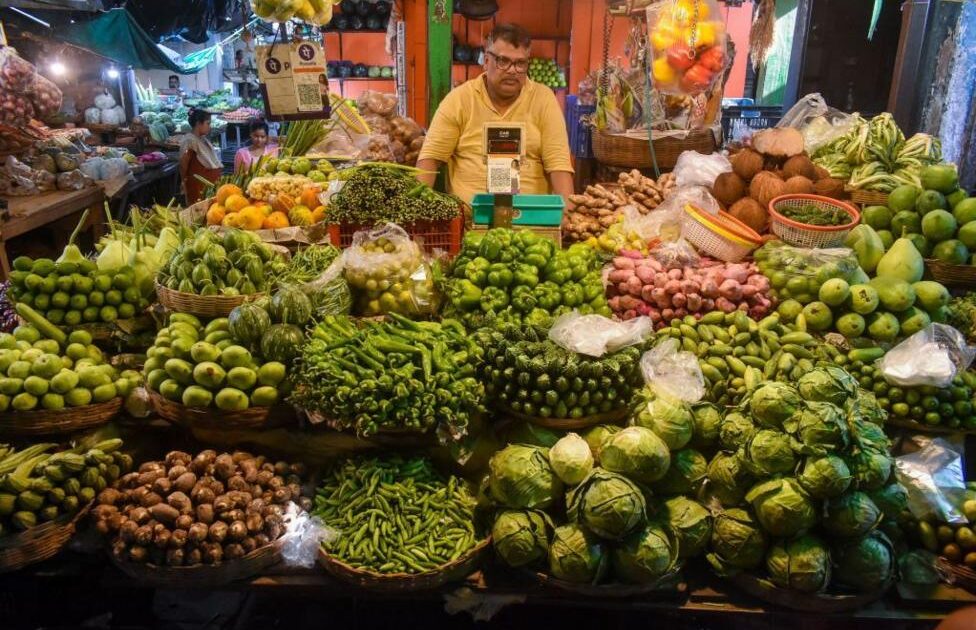
India is facing a renewed surge in inflation, with retail inflation climbing to 6.09% in October from 5.54% in September, according to government data. The primary driver behind this increase is food inflation, which jumped significantly to 8.94%, placing heavy financial pressure on households across the country.
Unequal Impact Across Regions and Income Groups
The price squeeze has hit rural India harder than urban areas, recording a food inflation rate of 9.09% compared to 8.68% in cities. Economists point to weather disruptions, supply shortages, and rising input costs as the main catalysts behind the upward trend. Because nearly 60% of Indian farmland relies on rainfall, the country remains highly vulnerable to monsoon irregularities. This year, the southwest monsoon was 13% below normal and unevenly distributed, while intensifying El Niño conditions further threatened agricultural output.
A survey by LocalCircles reveals that six out of ten consumers are paying over 20% more for household essentials each month than they did a year ago. Consequently, 74% of respondents are cutting back on discretionary spending such as dining out and entertainment, while half are purchasing smaller quantities of basic necessities.
Although food accounts for a smaller portion of overall Indian household spending than in the past—making up 36.75% of the consumer price index basket—it remains the biggest driver of inflation. Poorer populations bear the heaviest burden because they spend a larger share of their income on food. According to Crisil, the bottom 20% of rural households faced 6.9% inflation in October, compared to 6.5% for the richest 20%. In urban regions, the corresponding rates were 6.1% and 5.3%.
Rajeswari Sengupta, an associate professor at the Indira Gandhi Institute of Development Research, notes that adjustability is remarkably low for a developing nation where a substantial portion of income goes toward food.
Broad-Based Price Increases and Supply Chain Vulnerabilities
The rising costs are clearly visible in everyday meals. Crisil’s Roti Rice Rate analysis found that a home-cooked vegetarian thali became 12% more expensive year-on-year in October, driven by spikes in the prices of onions, tomatoes, vegetables, edible oil, rice, and cooking gas. A non-vegetarian thali rose in price by 9%.
Pushan Sharma, director of intelligence at Crisil, explains that price hikes have expanded beyond just a few isolated commodities. Rice prices increased by about 10%, pulses by 8%, edible oil by 13%, and LPG by 10%. While consumers can occasionally reduce their consumption of specific items like onions, substituting staples such as rice, pulses, and cooking oil is considerably more difficult.
Food inflation is compounded by inefficiencies in storage, processing, and transportation. Perishable goods like onions and tomatoes frequently cause sudden price volatility. Onions, for example, are harvested mainly in spring and stored for months, causing prices to surge as stocks dwindle. Tomatoes face sharp spikes during summer months when heat stress impacts production and arrivals decline. Economists highlight that India still lacks adequate infrastructure to sort, grade, store, and process perishable produce, leading to massive waste during gluts and severe shortages later.
Broader Economic Risks and Policy Challenges
Additional pressures stem from energy shocks that raise the costs of transport, irrigation, and agricultural inputs, alongside global market trends for imported items like edible oil. Despite these challenges, India maintains some safeguards, including comfortable cereal stocks and a free-food program that covers nearly 800 million citizens.
Sengupta warns that food inflation carries wider economic risks. If workers demand higher pay to cover basic living costs and businesses respond by raising prices, initial supply shocks can trigger a broader wage-price spiral that central banks work hard to prevent.
This dynamic creates a complex balancing act for the government. Authorities attempt to protect farmers through minimum support prices while simultaneously trying to appease politically sensitive consumers through export restrictions and stocking limits when staple prices spike. Meanwhile, long-term consumption surveys indicate that Indian households are diversifying their diets by consuming more dairy, fruit, and meat, making food affordability and access more critical than ever.