Table of Contents
German business leaders and politicians are increasingly viewing Africa as a vital economic frontier. At the sixth German-African Business Summit in Accra, Ghana, participants highlighted a growing sense of urgency for German firms to expand into the continent amid global trade disruptions.
Shifting focus due to global instability
German companies are seeking new markets as they face significant challenges in traditional regions, including the impact of wars in Ukraine and Iran, high energy costs, restrictive US tariffs, and slowing economic growth in China. German President Frank-Walter Steinmeier noted that while German firms previously relied on secure revenue from North America and China, current geopolitical shifts have destabilized those certainties.
“One could also say that it is time for new horizons, time to take a closer look at economic opportunities still waiting for us,” Steinmeier stated during the summit.
Africa’s economic potential
Africa offers several strategic advantages, including some of the world’s fastest-growing economies, such as Ethiopia and Rwanda. As many advanced nations face aging populations, Africa is projected to provide a massive influx of workers in the coming decades. Germany has already initiated a migration pact with Kenya and is negotiating a similar agreement with Ghana to address domestic labor shortages.
Beyond labor, the continent’s growing consumer class is creating demand for German goods ranging from vehicles to cosmetics. Furthermore, Africa’s mineral wealth and renewable energy potential are essential to the European Union’s goal of diversifying supply chains and reducing dependence on China. Germany has already committed billions of euros to green hydrogen projects in nations like Mauritania and Namibia.
Amin Amidu Sulemani, energy and infrastructure commissioner at the Economic Community of West African States (ECOWAS), told DW that the partnership is mutually beneficial. “We don’t have the capital to develop them [natural resources]. So foreign investors are coming to help us develop those resources. Whilst we are getting jobs and industrialization is taking place, they are also making profits,” Sulemani said, adding that the focus is on processing resources within Africa rather than simply exporting raw materials.
Challenges and competition
Despite the potential, German investment in Africa remains limited, accounting for less than 2% of total German foreign investment over recent decades. Companies face significant hurdles, including corruption, governance issues, unreliable energy, and foreign exchange risks. Business leaders also point to a lack of adequate financing, excessive bureaucracy, and a fragmented German strategy that treats diverse African nations as a single, high-risk entity.
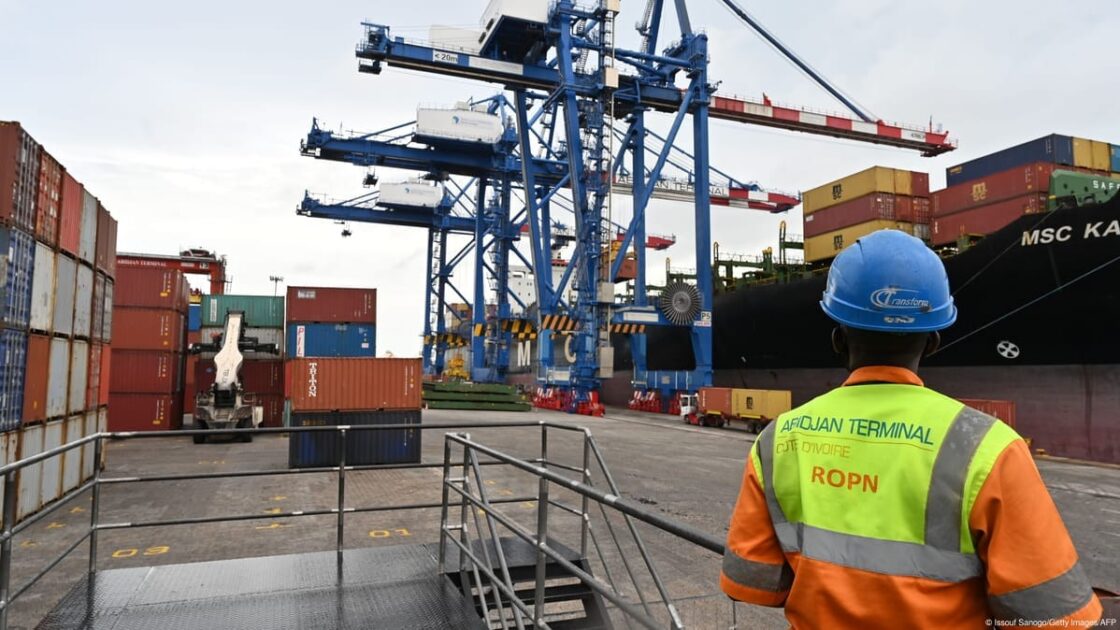
While German firms have been hesitant, competitors from the UAE, Turkey, and India have expanded their presence. According to the 2026 World Investment Report by UNCTAD, investors from the Gulf and Asia are heavily involved in African energy, logistics, and infrastructure. For instance, the UAE has invested in major projects such as the $34 billion Infinity Power renewable energy project in Mauritania and a $24 billion real estate development in Egypt.
Khadi Camara, deputy CEO of the German-African Business Association, told DW that German firms need to adapt their approach. “German companies can be a bit more bold and maybe also innovative in the way they approach the continent,” Camara said. “We see that in the companies that are successful, they don’t do business as usual.”
To remain competitive, industry representatives are calling for improved risk-sharing, better financing guarantees, and a reduction in bureaucratic obstacles. President Steinmeier encouraged businesses to embrace these challenges, warning that failure to act could lead to German firms being sidelined by international rivals.