Israeli students, academics, and activists are demanding the immediate release of a Palestinian undergraduate student who was detained by police from his university dormitory earlier this month and is currently held without charge. Mahdi Tunsi, a 26-year-old sociology and criminology student at the Hebrew University of Jerusalem, attended a closed-door court hearing in the city on Tuesday.
Arrest and Administrative Detention
Israeli police stated that the student was arrested over suspected ties to terrorism. Authorities have applied for administrative detention, a measure that permits the state to imprison individuals indefinitely without formal charges using secret evidence that the detainees cannot view. Dr Yael Berda, one of the student’s professors, described the action as a political arrest. Tunsi is a Palestinian resident of occupied East Jerusalem and collaborates with prominent Jewish-Palestinian campaign groups. His arrest occurred a month after an Israeli general election where Arab-led parties secured a record 19 seats in the Knesset, resulting in Prime Minister Benjamin Netanyahu’s right-wing coalition losing its majority. Berda noted a subsequent escalation in campaigns targeting Palestinian rights.
Demonstrators gathered outside the Jerusalem District Court on Tuesday, holding placards featuring a black-and-white photograph of Tunsi and chanting “shame” together. Dr Ofer Cassif, a member of the Knesset representing the Arab-led Joint List alliance, stated that the process lacks due process and criticized administrative detention as a term for abduction and hostage-taking, adding that people must oppose such actions. The volume of individuals held under administrative detention has more than doubled since the Hamas-led assault on Israel on October 7, 2023, which initiated the ongoing Gaza war. Figures published in October by HaMoked, an Israeli rights organization based on Israel Prison Service data, showed more than 3,100 people in administrative detention, predominantly Palestinians from the occupied West Bank.
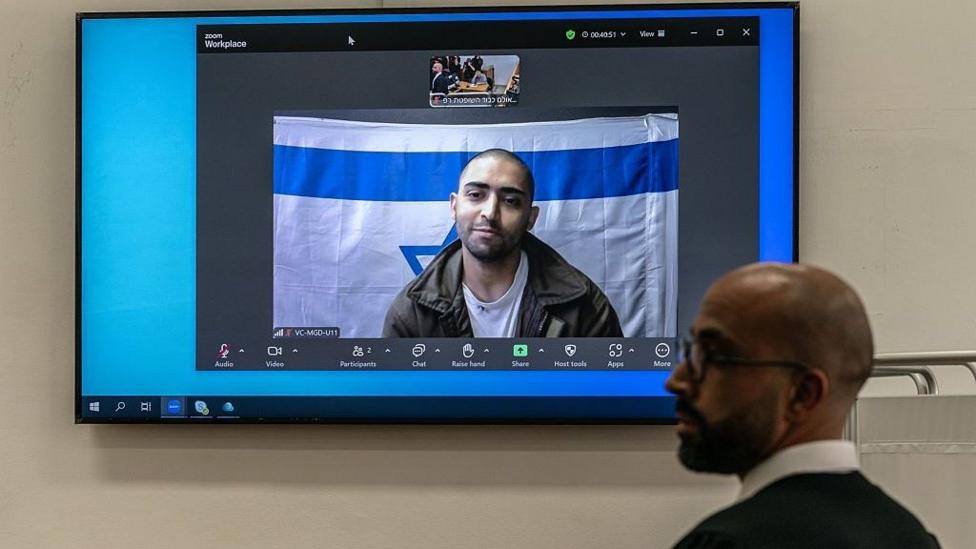
The Israeli government maintains that its administrative detention policy complies with international law and serves as a necessary preventative tool against terrorism. In an official statement, Israeli police indicated they would not provide further comments regarding the investigation. During Tuesday’s court appearance via video link from prison, Tunsi appeared with his hair and beard shaved off. Friends also reported that he lacked his glasses and necessary medication, despite a judge’s request for these items to be provided in detention. The Israel Prison Service stated that it followed court directives, noting that once procedures and approvals were finalized, the detainee’s lawyer was informed that eyeglasses could be handed over immediately subject to security protocols.
Court Proceedings and University Response
Berda attempted to enter the courtroom for the Tuesday hearing but was refused entry. According to Berda, Tunsi himself remains unaware of the evidence gathered against him. The presiding judge announced that additional time is required to evaluate the state’s administrative detention request, with a decision anticipated within days. Berda called for either the presentation of evidence or his release, demanding his freedom or a transfer to a criminal track that would allow him to mount a defense. While Tunsi could not vote in the general election due to lack of Israeli citizenship, Berda mentioned that he felt engaged and supportive of Arab party participation. Noga Kaplan, a fellow student at the Hebrew University, described him as a compassionate person deeply dedicated to his studies.
Following the arrest, the Hebrew University released a statement confirming it was notified shortly before the incident occurred. The institution stated it is not involved in the legal proceedings and lacks information to comment on the arrest circumstances or the ongoing case, while expressing concern for his well-being and a desire for a prompt resolution respecting his rights. Tunsi resides in Silwan, an East Jerusalem neighborhood where Israeli authorities have evicted Palestinians in recent years over claims that properties were built illegally, with Israeli settlers subsequently occupying some of those homes. Kaplan remarked that political activism largely ceased after October 7 due to widespread fear of repercussions, noting that Tunsi viewed education as a way to discuss the situation in class while avoiding public actions that aligned with his primary concerns.
The judge is expected to issue a decision on the state’s request for administrative detention in the coming days.