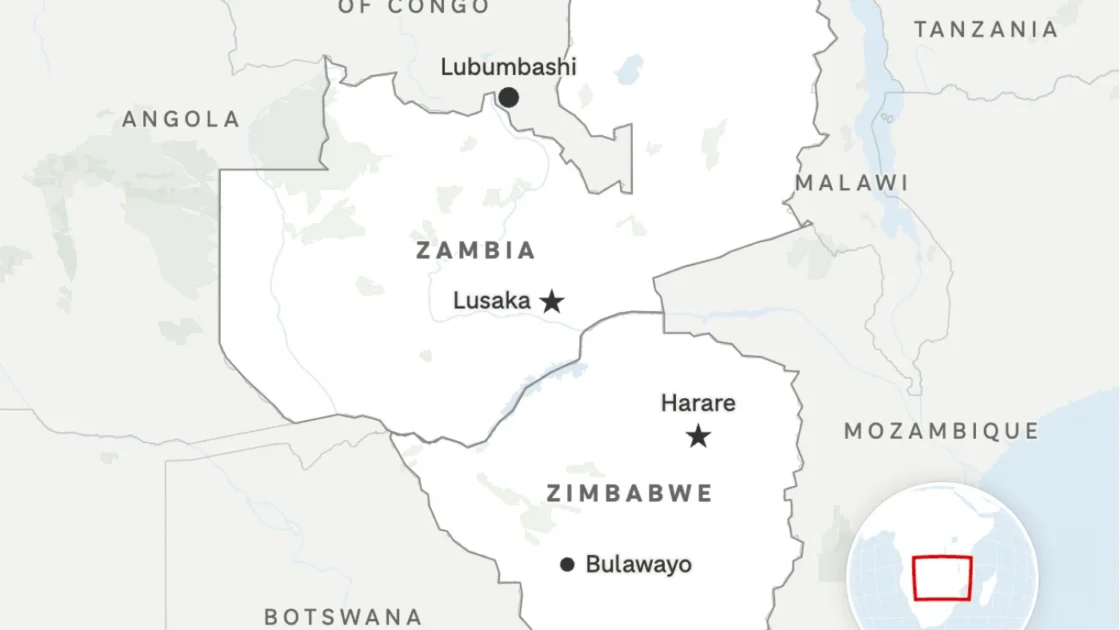
Zambia and Zimbabwe, two nations that have made significant progress in controlling their HIV/AIDS epidemics, now face uncertain futures following a major shift in U.S. global health strategy. Over the past two decades, both countries saw dramatic declines in new infections, but recent changes under the Trump administration have led to vastly different outcomes for their respective health systems.
A New Aid Framework
The U.S. administration, which dismantled the U.S. Agency for International Development in 2025, is now prioritizing government-to-government aid agreements. This shift has resulted in a new, albeit smaller, health aid deal for Zambia, while negotiations with Zimbabwe collapsed entirely, leaving that nation without U.S. health funding as of this fall.
In Zambia, the agreement announced on October 8 aims to channel aid primarily through the national government to strengthen public health infrastructure. However, the process was marked by controversy. Asia Russell, executive director of the advocacy group Health GAP, told NPR that activists exposed plans to condition health funding on access to Zambia’s copper and rare earth minerals. While those mineral rights were eventually decoupled from the health agreement, the situation left many concerned about the government’s capacity to manage the epidemic.
A Zambian health worker, who spoke to NPR on the condition of anonymity due to fears of government retaliation, expressed concern that the new strategy sidelines non-governmental organizations that were previously essential for reaching vulnerable populations. She noted that stigma against marginalized groups, including the criminalization of homosexuality, remains a barrier to care. She also questioned the quality and oversight of the government’s plan to recruit 40,000 health workers, stating, “It feels like doing it right is not the priority, but people’s lives are at risk.”
Zambian Health Minister Roma Chilengi stated during a press conference that the government intends to hire 15,000 frontline workers, including doctors and nurses, alongside community health staff.
The Collapse of Aid in Zimbabwe
In Zimbabwe, the situation is more severe following the breakdown of negotiations in February. Zimbabwean officials described the proposed terms as lopsided, citing requirements to provide biological samples and data without guarantees of receiving resulting treatments. The U.S. Embassy in Zimbabwe described the failure of the talks as regrettable, but the result was a complete loss of over $100 million in annual U.S. health aid.
A Zimbabwean health worker told NPR that he is baffled by the withdrawal of support after 20 years of investment. He warned that HIV medications are already dwindling in his community and predicted a significant negative impact within six months. He also expressed concern that the loss of U.S.-led monitoring systems will make future health data from the country difficult to verify. While the Zimbabwean Ministry of Health and Child Care did not respond to requests for comment, Health Minister Dr. Douglas Mombeshora previously pledged to expand the country’s health workforce and infrastructure.
The U.S. State Department did not address specific concerns regarding these agreements but stated it remains committed to working with partner governments to define shared global health priorities.
Muted Public Response
Despite the potential for a public health crisis, there has been little public outcry in either country. Health workers and advocates like Russell suggest that citizens are afraid to speak out due to the risk of government reprisal. “People are trying to not lose more than they’ve already lost,” the Zambian health worker explained.
As these nations navigate this transition, global health experts are closely monitoring the situation. Jennifer Kates, a senior vice president at KFF, noted that her team is scrutinizing the implementation of the Zambian agreement and described Zimbabwe as a critical case to watch, given its heavy reliance on previous U.S. support and the current uncertainty surrounding its health sector.