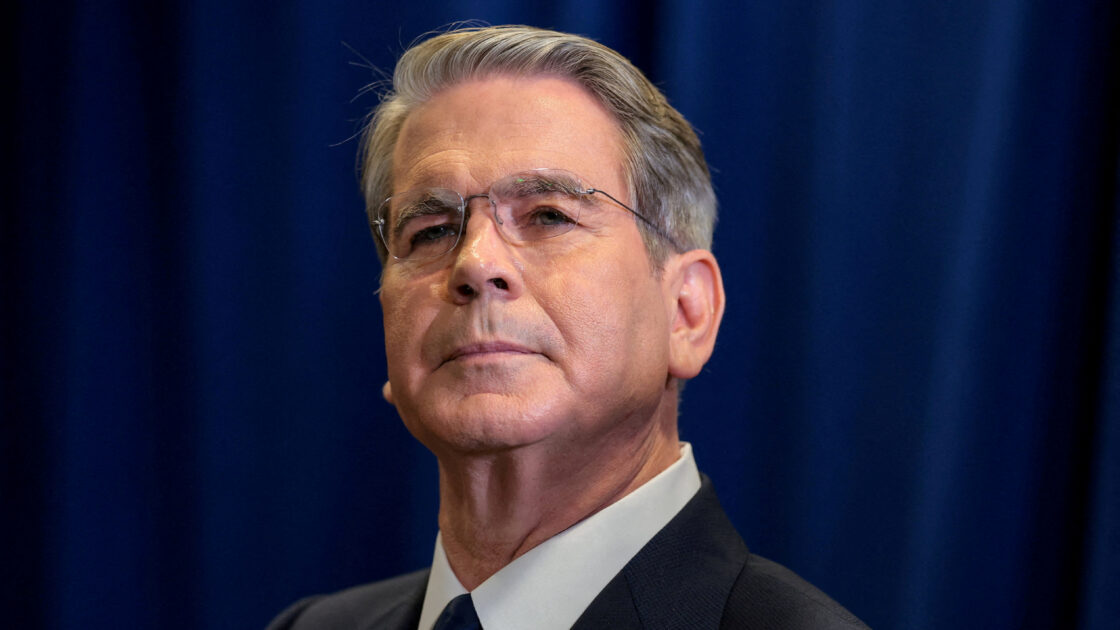
US Treasury Secretary Scott Bessent has urged the Federal Reserve to avoid raising interest rates in response to an energy supply shock resulting from the ongoing conflict with Iran. Speaking in an interview on CNBC, Bessent stated that the underlying US economy remains very strong while the central bank should look toward the future rather than reacting to lagging data.
Federal Reserve Policy and Inflation Pressures
The central bank chose to maintain interest rates at 3.75 to 4 percent during its most recent policy meeting. According to CME FedWatch, the market currently projects an 89.4 percent probability that rates will increase to 4.00–4.25 percent during the upcoming meeting on December 9. Despite constant pressure from the White House to lower rates, the Federal Reserve has kept rates steady five times and increased them once since the US-Israeli war on Iran began, battling inflationary pressures driven primarily by surging energy costs. Energy prices jumped 20.4 percent year over year by September, though a government shutdown prevented the Labour Department from collecting October 2025 data, leaving no year-over-year comparison available for October 2026.
Bessent’s comments followed a stronger-than-expected jobs report from the Labour Department showing the addition of 165,000 jobs in October, a metric that typically strengthens the argument for monetary tightening. Emphasizing that he is not directing the central bank’s decisions, Bessent stated that officials should maintain an open mind. He pointed out that the Fed implemented three rate cuts over the same timeframe last year and argued that a dramatic reversal based strictly on an energy supply shock would not be his approach if he served on the board.
Conflicting Views Among Officials and Consumer Impact
Meanwhile, other high-ranking Federal Reserve figures have advocated for tightening monetary policy. Fed Governor Christopher Waller stated at a London conference hosted by King’s Business School and the Money Macro and Finance Society that he intended to support a quarter-point rate increase at the December 8-9 meeting unless the core consumer price index registered a monthly increase of 0.3 percent or higher. Waller added that a 50-basis-point increase should be evaluated if inflation reached that higher threshold, and subsequent data confirmed a 0.4 percent monthly increase in the CPI report.
American consumers continue to experience elevated expenses at gas stations as fuel prices gradually decline from recent peaks. The national average for a gallon of petrol stands at $3.87, representing a decrease from $4.34 a month prior, but remaining significantly higher than the $2.98 recorded on February 28 when the US and Israel initially launched strikes against Iran.