Table of Contents
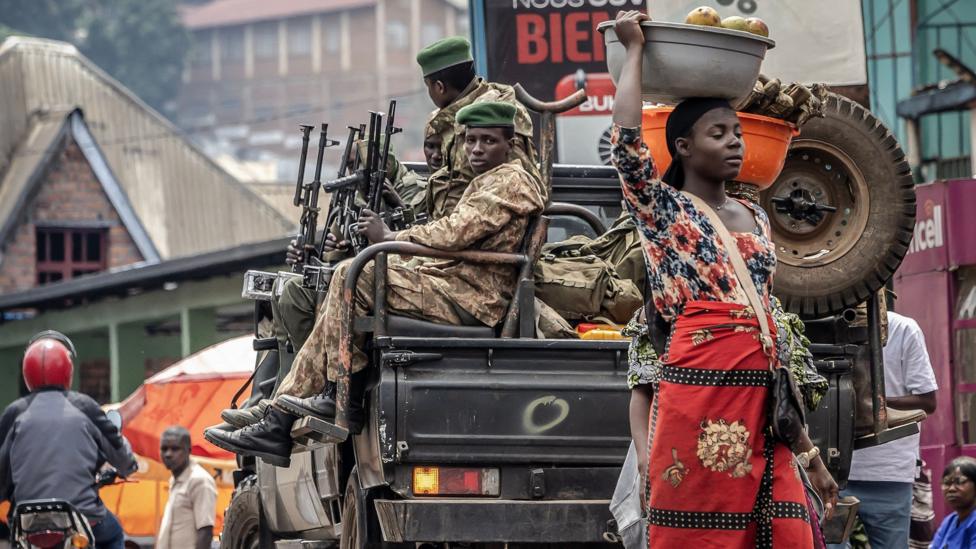
The United States has imposed economic sanctions on Rwanda’s defence ministry and a major financial institution over alleged support for the M23 rebel group in the eastern Democratic Republic of Congo. The measures aim to increase pressure on Kigali to withdraw its troops and halt backing for the insurgents.
US Treasury Allegations and Financial Restrictions
US Treasury Secretary Scott Bessent stated that Rwanda must stop supporting the M23 and pull its troops out of the eastern DRC. The US Treasury reported that Rwanda’s defence ministry directed thousands of soldiers to fight alongside the M23, supplying them with weapons, equipment, logistics, and training.
According to Washington, the rebel group has captured mineral-rich locations, including gold-mining sites in South Kivu and the Rubaya coltan-producing area in North Kivu. The US alleged that conflict minerals enter Rwandan supply chains, noting that the country exports a larger volume of minerals than it produces.
The sanctions also targeted Zigama Credit and Savings Society, a financial institution serving Rwandan security forces. The US stated that the bank facilitated tens of millions of dollars in transactions for the M23 and the Congo River Alliance political wing, financed military equipment imports from China, and enabled the transport of gold from rebel-held zones to Kigali.
The sanctions freeze assets under US jurisdiction and generally bar American individuals and businesses from engaging in transactions with the designated entities unless authorised or exempt, with violations carrying penalties for both domestic and foreign parties.
Peace Agreements and Regional Reactions
The new penalties follow previous US sanctions against the Rwandan army and four senior military commanders in March 2026, as well as restrictions on the Gasabo gold refinery and three mining companies accused of smuggling conflict minerals in June 2026. The actions build upon the Washington Accords, a US-brokered peace agreement signed by the Congolese and Rwandan presidents in December 2025 to end a conflict that intensified in early 2025 when the M23 seized Goma and Bukavu. Rwanda has consistently denied backing the M23.
Prior to the announcement, on 24 October, DR Congo President Félix Tshisekedi urged the international community to exert stronger pressure on Rwanda to secure lasting peace. As reported by Reuters, the DR Congo foreign ministry welcomed the sanctions and called on Rwanda to fulfill its commitments under the Washington Accords, respect the UN Charter, and withdraw its forces from Congolese territory.
Rwandan government spokesperson Yolande Makolo told the BBC that the Washington Accords include clear security commitments regarding the neutralization of the DR Congo-supported FDLR genocidal militia, which she stated remain unmet and without accountability. The FDLR is a militia linked to the perpetrators of the 1994 Rwandan genocide, and Kigali cites its presence in the eastern DRC to justify its military presence. Makolo added that Rwanda remains prepared to fully implement the peace agreement if the DRC fulfills its obligations and the mediator holds all parties accountable.
International Sports Partnerships and Rebel Coalition
External pressure has also extended to Rwanda’s international sports partnerships. US Senators Jeff Merkley and Marsha Blackburn sent a letter to NBA commissioner Adam Silver on 23 October, questioning whether the league’s commercial relationship with Kigali aligns with its commitments to human rights. The NBA has not issued a substantive response.
Rwanda has utilized high-profile sports sponsorships to elevate its global standing. The country secured a 10-year agreement to host Formula 1’s African Grand Prix in the early 2030s, although its sponsorship deal with Arsenal ended in 2026, and Bayern Munich concluded its commercial partnership with Visit Rwanda.
Meanwhile, the M23 recently joined a new rebel alliance named the Front for the Refoundation of the Nation, led by former Congolese President Joseph Kabila, which seeks to overthrow President Tshisekedi’s government.