Table of Contents
The US midterm elections are on track to become the most expensive in history for candidates and political donors. Research group OpenSecrets reports that close to a record $12bn has been spent by candidates and outside political groups on campaigning.
Campaign Spending and the Role of Super PACs
Campaign finance records show that Elon Musk alone has contributed $445 million to the Republicans. Critics question the massive expenditures during an election cycle where affordability and the cost of living remain primary concerns for voters, arguing that current policies give corporations, wealthy donors, and special interest groups excessive influence over candidate and policy selection.
US campaigns are funded through direct candidate fundraising—where Democratic candidates are expected to surpass $2.2bn compared with $1.4bn by Republicans—and through independent outside spending by corporations, unions, and other associations. Following a 2010 US Supreme Court ruling treating election communications as protected political speech, alongside a lower court decision removing contribution size limits for non-coordinating groups, Federal Election Commission data shows outside spending has nearly tripled over the past decade from $4.12bn in 2016 to an estimated $11.9bn for the 2026 midterms.
This outside spending is largely driven by independent expenditure-only political action committees known as super PACs, which face no contribution limits and support candidates or parties through advertising and other initiatives. Major super PACs include the Republican-aligned Senate Leadership Fund at $489 million and MAGA Inc at $353 million, alongside Democratic-aligned groups such as the Senate Majority PAC at $248 million and the House Majority PAC at $192 million. Other groups include Musk’s America PAC and George Soros’s Democracy PAC.
Dark Money and the Influence of AIPAC
Super PACs report contributions and financial activity monthly during election years and semi-annually in non-election years. However, because contributors can include organizations whose funding sources remain undisclosed, funds often pass through multiple entities—known as shell PACs—making original sources difficult to trace. OpenSecrets reports that these “dark money” contributions will surpass a record $1.5bn in the midterms, up from $1.35bn in 2024.
New York Mayor Zohran Mamdani accused the nonprofit lobbying group American Israel Public Affairs Committee (AIPAC) of spending millions in dark money on pro-Israel candidates. Public records reviewed by Al Jazeera indicate AIPAC channelled millions through shell PACs. Founded in the 1950s by Isaiah Kenan, AIPAC has grown to over 6 million members and states on its website that it supports pro-Israel candidates regardless of background while opposing anti-Israel ones.
Much of AIPAC’s spending operates through the United Democracy Project (UDP), a registered affiliated super PAC. Al Jazeera reported that AIPAC has directed funds from Republican donors to support moderate Democrats in attempts to block progressive or pro-Palestine candidates. Examples include spending nearly $15 million for George Latimer against Jamaal Bowman in a New York primary, $5.24 million for Wesley Bell against Cori Bush in St Louis, and $20.7 million against Abdul El Sayed in Michigan. In response, a coalition of progressive advocacy groups called Reject AIPAC launched a campaign urging federal candidates to refuse endorsements or contributions from AIPAC and aligned PACs.
Spending Hotspots and the Cost-of-Living Crisis
The highest spending has concentrated in competitive toss-up states like Georgia, Texas, and Michigan. In Michigan’s Senate contest between Republican Mike Rogers and Democrat Abdul El-Sayed, estimated spending reached $333m, with Rogers raising $23m directly and El-Sayed $54m, while outside groups spent roughly $169m for Rogers and $94m for El-Sayed.
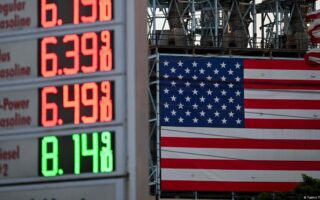
This spending coincides with a cost-of-living crisis driven by soaring fuel prices resulting from the Trump administration’s war on Iran. Disruption in the Strait of Hormuz since February pushed diesel costs up by 65 percent and fertilizer by up to 40 percent, subsequently raising food prices. El Sayed has campaigned specifically on reforming election funding and removing money from politics.
According to the Iran War Energy Cost Tracker, Americans have spent at least $150bn on petrol and diesel since the war began, representing a 30 percent increase due to war-driven price hikes. Al Jazeera noted that the $12bn spent on the midterms could alternatively cover 8 percent of those extra fuel costs, amount to roughly $92 per household, offset the $12bn in Department of Education spending cuts included in the 2026 fiscal budget, or increase the $47bn National Institutes of Health research budget by one-quarter.