Table of Contents
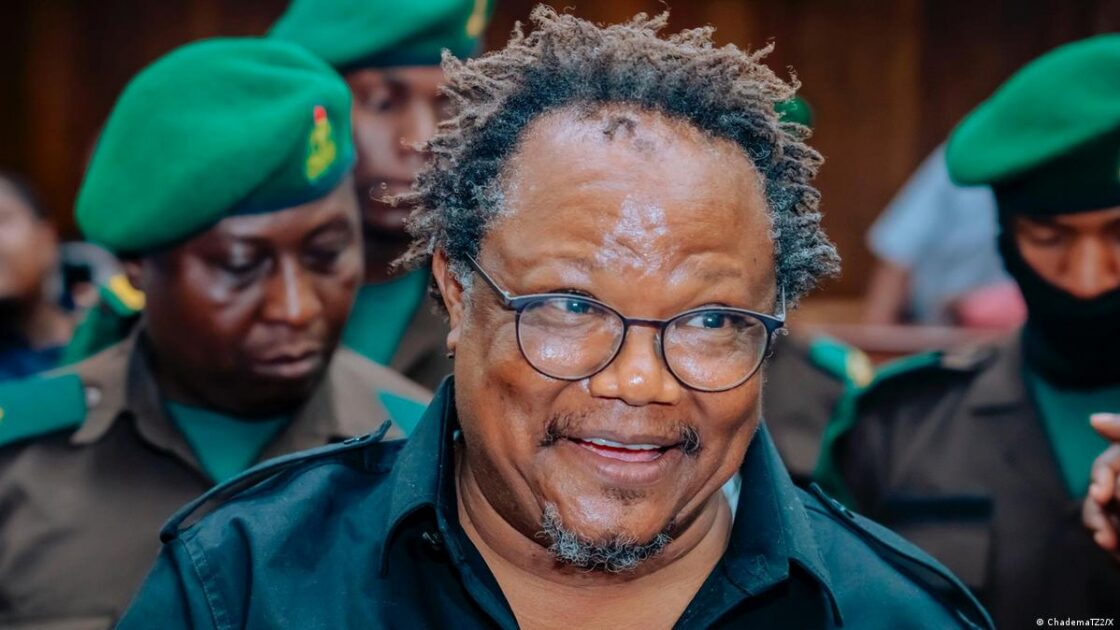
Tundu Lissu, leader of Tanzania’s main opposition Chadema party, was sentenced to four years in prison for incitement on November 6, following heavy unrest during the October 2025 elections. On the same day, he was cleared of treason charges, which could have carried a death sentence if he had been found guilty.
Tanzania’s most dramatic trial in decades
Lissu, a lawyer and outspoken critic of the ruling Chama Cha Mapinduzi (CCM) party, has a history of clashing with the political establishment. He has faced repeated arrests and detentions over the years, and in 2017, he survived an assassination attempt by unknown gunmen outside his home in Dodoma, sustaining multiple bullet wounds.
His latest legal troubles continued in the run-up to the general election after his arrest in April 2025 in the southwestern town of Mbinga, keeping him and the opposition in the public eye.
Why was Tundu Lissu arrested?
Prosecutors accused Lissu of encouraging the public to prevent the 2025 election from taking place and charged him with one count of treason. They presented social media posts as legal evidence, in which he called on Tanzanians to boycott the vote due to concerns about potential electoral malpractice.
The election proceeded without Chadema on October 29 and was marked by unprecedented violence in Tanzania, with security forces firing live ammunition at protesters. Francis Ibrahim, an independent political analyst based in Dar es Salaam, told Deutsche Welle: “heads have to roll from the law enforcement side who overstretched their mandate, all the way to the people who financed, planned and organized [this crackdown].”
Incumbent President Samia Suluhu Hassan was declared the winner with 98% of the vote following the election violence, a nationwide internet shutdown, and a curfew.
What does the verdict mean for democracy?
Lissu commented that the judiciary acted under pressure and rejected the verdict because incitement was not part of the initial charges brought against him in 2025. Chadema officials have indicated plans to appeal the court decision, while the government has not yet issued a statement on his conviction.
Ibrahim believes the dismissal of the capital treason charge could signal an effort toward rapprochement with voters. “What I can tell you is that they are looking for a political deescalation that could solve the crisis,” he explained to Deutsche Welle, suggesting Lissu might eventually have a small role in politics. He added that a new constitution requires everyone at the table, which could mean Lissu might be released early to participate in negotiations.
However, when President Suluhu Hassan met representatives from over a dozen political parties in late July to discuss national reconciliation and constitutional reform, Chadema officials were excluded from the consultations.
Politics at play behind the verdict?
Public opinion on the verdict is mixed, with many Tanzanians viewing the trial as politically motivated. Ruqaya Mohammed, National Deputy Secretary of the opposition ACT-Wazalendo party’s youth wing, told Deutsche Welle, “we are getting into a darker space in our political arena,” and added that it is time for the nation to have open dialogue on legal and electoral reforms.
Most other citizens remain hesitant to speak publicly due to fear of reprisal. A musician and human rights advocate who spoke to Deutsche Welle on condition of anonymity stated that Tanzanians lack freedom of expression. “You saw the terror atmosphere and climate of fear outside the court premises when Tundu’s judgement was … read. Such is the broader display of what Tanzania looks like,” he said, adding that opposition politics has been suppressed for years and Lissu’s conviction is a continuation of that trend.