Table of Contents
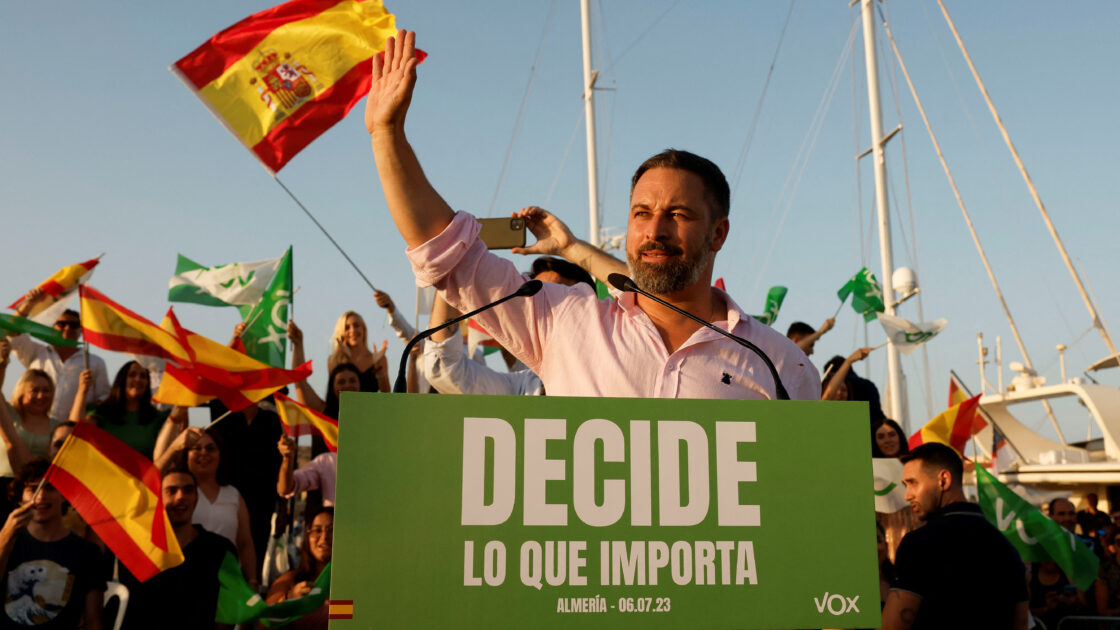
Santiago Abascal leads the far-right Vox party into Spain’s upcoming snap election with a campaign focused on prioritizing Spanish nationals, cutting regulations, and deportations. Opinion polls place Vox in third position, potentially positioning the party as a crucial kingmaker in a coalition government.
Origins and Rise of Vox
Abascal previously served as a regional lawmaker for the conservative Popular Party (PP) in the Basque Country before departing in 2013, when he criticized the then-prime minister for showing weakness regarding Catalan separatism. Alongside others, he established Vox to position the new organization to the right of the PP, emphasizing Spanish unity and opposing regional autonomy.
Carles Ferreira, a politics lecturer at the University of Girona, noted as reported by Al Jazeera that the group initially functioned as ultra-conservatives before adopting the playbook of Europe’s populist radical right. The party gained national prominence during the 2017 Catalan independence crisis by filing legal complaints and strongly opposing the secession attempt. Following this crisis, Vox secured 12 seats in Andalusia’s regional parliament and subsequently entered the national parliament with 24 seats.
Core Policies and Controversies
The party manifesto demands the immediate expulsion of undocumented immigrants and introduces the concept of “remigration” to remove individuals deemed not to contribute or who rely on public benefits. Al Jazeera noted that Spain’s foreign-born population grew from 6.3 million to 10.4 million over eight years, according to the National Statistics Institute.
Steven Forti, a contemporary history professor at the Autonomous University of Barcelona, stated to Al Jazeera that Vox shifted its rhetoric toward the alleged Islamisation of Spain as Catalan separatism faded. Conversely, the party views Latin American migrants more favorably through the concept of Hispanidad, treating them as sharing a common language and cultural heritage rooted in the colonial era.
On social matters, Vox maintains a strictly conservative stance by opposing abortion, dismissing LGBTQ advocacy, and rejecting gender-based violence as a distinct legal category. Although it was the sole party to oppose renewing Spain’s cross-party pact against gender-based violence in 2025, its current manifesto advocates more broadly for replacing gender ideology laws while strengthening judicial protection for women.
Electorate and Electoral Impact
Vox has seen its support increase from 13 percent to approximately 20 percent over the past three years. While its base remains largely male, the party has expanded its reach among women, vocational and secondary education graduates, and voters aged 35 to 44 as well as those under 35.
Paco Camas, head of public opinion in Spain for Ipsos, explained to Al Jazeera that the party successfully presents itself as an antiestablishment movement addressing institutional disaffection and economic uncertainty among younger men. Vox supporters frequently cite government and politicians, immigration, and border management as their primary concerns.
The party is actively drawing supporters away from the PP, with polls indicating that 15 to 20 percent of previous PP voters plan to switch to Vox due to its uncompromising stance on security, identity, and immigration. Camas added that some right-leaning voters view the PP as overly cautious and mainstream, driving them toward Vox as a sharper ideological alternative.