Table of Contents
The Philippine government is promoting the US-led Pax Silica initiative as a major driver for economic growth, promising billions in investment and thousands of new jobs. However, the project has sparked widespread protests from groups concerned about the displacement of local communities, environmental damage, and the country’s deepening dependence on Washington.
The Pax Silica Initiative
Pax Silica is a coalition led by the United States designed to secure supply chains and challenge China’s influence in critical minerals, semiconductors, and technologies vital for artificial intelligence infrastructure. The Philippines joined the initiative in April 2026, designating a 1,618-hectare site in New Clark City, Tarlac province, as a primary industrial hub. The government projects the hub could eventually attract $70bn in investment and create over 130,000 jobs over the coming decades.
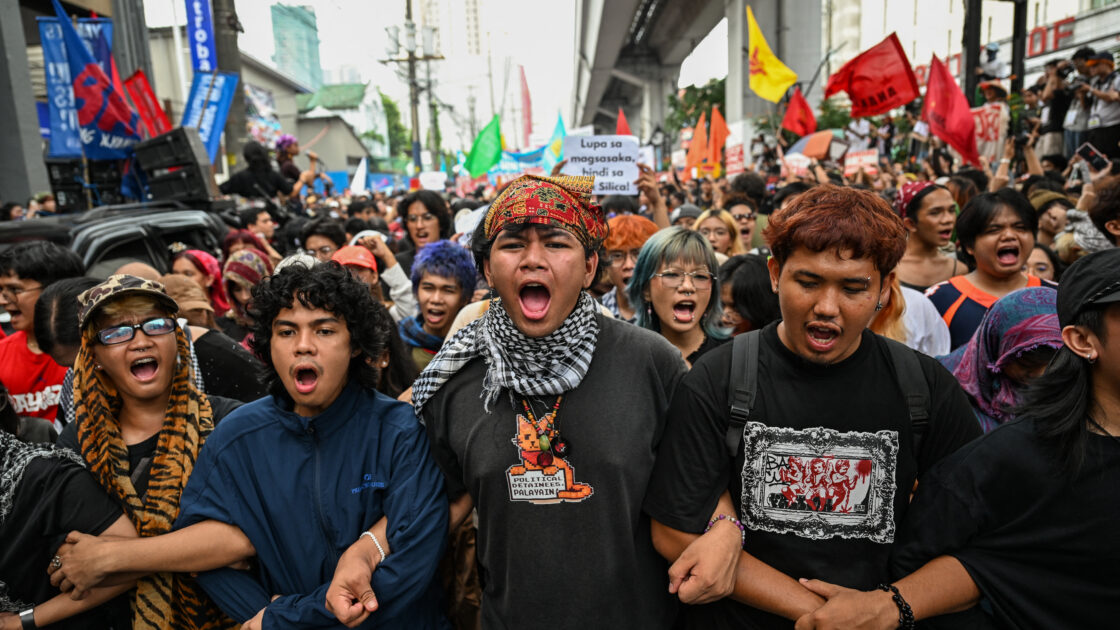
Critics argue that the project prioritizes foreign interests over national sovereignty and local welfare. On November 15, ahead of Donald Trump’s visit to Manila for the ASEAN summit, Philippine police arrested more than 200 demonstrators who were protesting the initiative. Opponents view the project as a form of neo-imperialism that threatens the livelihoods of farmers and Indigenous groups.
Environmental and Social Concerns
The Aeta Hungey community in Sapang Kawayan is among those facing potential relocation. Approximately 200 residents risk losing access to their homes, farmland, water, and ancestral burial grounds. The community has been seeking formal recognition of its land rights since 1994, a process that remains unresolved.
Water usage is another significant point of contention. The Bases Conversion and Development Authority (BCDA) estimates the industrial hub will require between 65 and 90 million litres of water daily. While the BCDA intends to rely on surface-water harvesting, environmentalists warn of the strain this will place on resources, especially given the Philippines’ vulnerability to drought. On November 4, the Philippine Atmospheric, Geophysical and Astronomical Services Administration (PAGASA) confirmed the presence of a strong El Nino expected to last through the first half of 2027.
Geopolitical Tensions and Student Protests
Beyond economic development, observers suggest Pax Silica serves as a tool for US military expansion. Semiconductors are essential components in modern weaponry, and the initiative aligns with existing defense agreements, such as the Enhanced Defense Cooperation Agreement (EDCA), which grants US forces access to Philippine military facilities. During his November 17 speech at the ASEAN summit, Donald Trump emphasized the importance of the Philippines as a key ally and highlighted new agreements regarding technology and critical minerals.
President Ferdinand Marcos Jr. has defended the partnership, citing the deep historical ties between the two nations. He stated, “There is no part of our lives in the Philippines that is not involved with the United States in some way, in some shape or form or another.”
In response, a broad coalition of students, scientists, faith leaders, and activists has organized against the project. On November 13, students at major institutions, including the University of the Philippines, De La Salle University, and Ateneo de Manila University, held coordinated walkouts. Similar protests have occurred in the Bangsamoro Autonomous Region, where residents view the initiative as a continuation of historical land dispossession. The movement has also gained international support, with solidarity demonstrations reported in 23 cities across 14 countries.
As the movement grows, critics are calling on the Marcos administration to prioritize the needs of the Filipino people and regional multilateralism over the geopolitical rivalries of major powers. They argue that true economic progress must be balanced with human security and environmental sustainability.