Table of Contents
China aims to become the global leader in artificial intelligence and recognizes that cutting-edge semiconductors are essential for this ambition. Vice Premier Ding Xuexiang leads the Communist Party’s Commission on Science and Technology to enhance the country’s technological innovation and strategic competitiveness against the United States.
US Chip Restrictions and Nvidia’s Role
The United States currently leads in manufacturing technology and chip design. The Biden administration restricted advanced semiconductor and chip manufacturing equipment exports to China in 2023 for national security reasons, which Beijing criticized as arbitrary and unilateral.
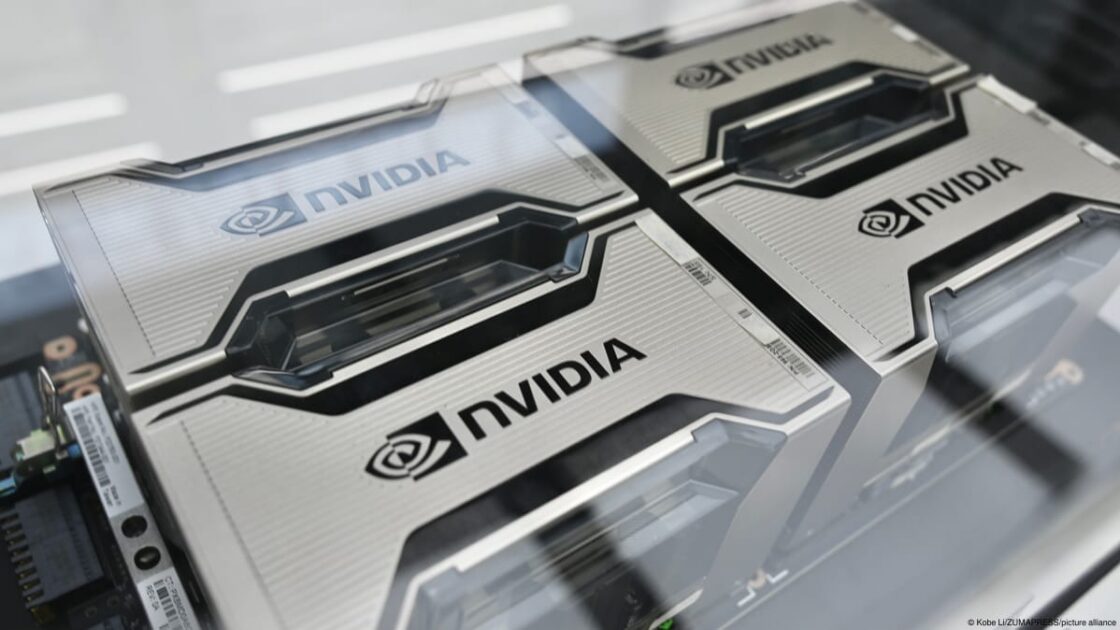
Despite these tensions, US chipmakers remain attracted to China’s large market. Jensen Huang, the 63-year-old co-founder of American AI chip manufacturer Nvidia, held significant popularity in China. Serving as an AI adviser to US President Donald Trump during his second term, Huang advocated for looser regulations on selling AI chips to China. In December, the Trump administration permitted Nvidia to ship H200 chips to China under an arrangement granting the US a 25% sales cut.
Priced at $27,000 (€24,000) each, Nvidia estimated Chinese demand at 2 million units, representing about $5.4 billion in sales.
The Nvidia Scandal and Reactions
Huang resigned from his position following revelations of extramarital relationships, including one with a businesswoman suspected by the United States of spying for Beijing. As reported by Deutsche Welle: DW.com – Top Stories (dw.com), the departure created turmoil in global semiconductor markets and political circles.
Washington plans additional restrictions to close loopholes enabling Chinese firms to acquire advanced American semiconductors. Conversely, Beijing denied any attempt to entrap Huang, dismissing the espionage claims as a smear campaign. Ahead of a meeting between President Xi Jinping and Donald Trump at the APEC summit in Shenzhen, Chinese Foreign Ministry spokesperson Mao Ning stated on November 13 that China opposes misusing export control measures that threaten global supply chain stability.
Chinese state-run media outlet Global Times criticized the coverage in an editorial, questioning the connection between Huang’s personal life and China while accusing US media of sensationalism. Social media users on Weibo similarly questioned whether political maneuvering or melodrama drove the resignation.
China’s Dilemma Between US Imports and Domestic Production
Vice Premier Ding faces a choice between maintaining reliance on American chips or supporting domestic producers. Approximately 600,000 Nvidia H200 chips currently await import approval in Hong Kong. Although the White House greenlit the shipments, Beijing has not yet approved them.
Karson Elmgren from the Institute for AI Policy and Strategy noted that this hesitation indicates China feels confident in replacing US chips over the medium term. Domestic AI products increasingly utilize local semiconductors to mitigate cyberattack risks from foreign actors, as highlighted in a study by Tiantian Wang from the Harbin Institute of Technology. Wang explained that national security priorities have driven autonomy in defense sectors, noting that radar systems in the Chengdu J-20 fighter jet and Dongfeng-41 intercontinental ballistic missiles use exclusively Chinese chips.
Despite these advancements, China still lacks domestic production equipment for state-of-the-art chips, which require lithography systems using ultraviolet light. Dutch manufacturer ASML halted exports of its most advanced machines to China following pressure from Washington. According to the Center for Technology & Statecraft, restricting these imports preserves the US technological lead, whereas continued ASML imports could allow China to match or surpass American production.
Consulting firm Deloitte reported that China plans significant investments to support long-term capital and research incentives. Policymakers intend to stabilize supply chains, expand self-sufficiency, and foster synergies to build a resilient industrial structure.