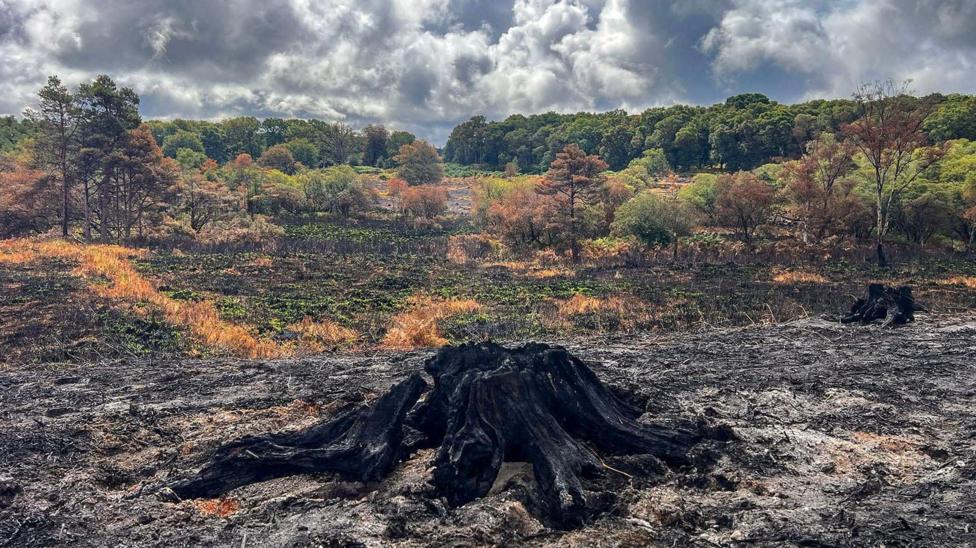
Restoration efforts are underway at the New Forest national park following a severe wildfire that devastated over one square kilometer (247 acres) of land. The blaze erupted after a van caught fire on August 9, resulting in extensive damage to rare heathland, ancient woodland, and carbon-storing peat layers in boggy zones.
Repairing the Fire-Damaged Landscape
Forestry England launched a long-term initiative to assist natural recovery in the impacted area, deploying specialist crews to shield vulnerable zones from winter weather and reseed heather patches. The flames swept across the surface vegetation before burning underground, which eradicated root systems and vital seed banks.
The incident forced the closure of the A31—a key commuter and tourist artery linking Hampshire and Dorset—for nearly two weeks at the peak of the emergency. The disaster arrived during a demanding summer season for local fire crews from Hampshire and the Isle of Wight, with firefighting costs projected at £600,000.
Dave Morris of Forestry England stated: “The scene immediately after the fire had gone through this part of the forest is something I will never forget.”
Morris added: “Large areas were reduced to piles of charcoal, burnt soils and torched trees. At that time, it was difficult to imagine it would ever fully return to a place where nature could thrive.”
Conservation Techniques and Natural Resilience
To accelerate regeneration, conservationists harvested seed-rich heather from surrounding forest sectors and distributed it over heavily damaged patches to create a protective layer that stimulates new growth. Forestry England previously utilized this exact method following a 1989 wildfire in the national park, which has since fully recovered.
Specialists are also developing strategies to safeguard the compromised roots of historic beech and oak trees affected by the summer flames. Meanwhile, wetland sections suffered minimal harm because boggy conditions acted as a natural firebreak, preventing wider destruction and facilitating the fastest recovery.
“The fire has reminded us that nature is remarkably resilient and in the boggy parts of the fire area we can already see plants and wildlife returning,” Morris explained.
Crews noted that full ecological recovery will require many decades, but targeted intervention will provide the necessary support for the ecosystem to heal.